
Launching a professional email service under your own brand can seem overwhelming, especially when every detail matters for your business identity and reliability. With so many technical decisions on the table, it’s easy to lose track of what actually matters for long-term success and client trust. The right email service provider can help you avoid common pitfalls that damage brand reputation and lead to communication breakdowns.
This list will give you practical steps, from customizing your branding to understanding managed infrastructure and privacy essentials. You’ll find out how to make smart choices that keep your email platform reliable, secure, and perfectly aligned with your brand. If you want to offer enterprise-grade email services with complete confidence, the insights ahead make all the difference.
Table of Contents
- 1. Define Your Branding And White-Label Requirements
- 2. Evaluate Managed Infrastructure And Uptime Guarantees
- 3. Automate Domain And DNS Validation Setup
- 4. Analyze Scalability And Usage-Based Pricing Models
- 5. Review API Integration And Automation Options
- 6. Check Client Support Tools And Management Features
- 7. Prioritize Data Privacy And Vendor Independence
Quick Summary
| Takeaway | Explanation |
|---|---|
| 1. Define Your White-Label Needs | Clearly outline branding and customization requirements to maintain brand control in email services. |
| 2. Assess Infrastructure Reliability | Ensure providers have robust managed infrastructure and clear uptime guarantees for seamless email operations. |
| 3. Automate Domain Validation | Look for providers that streamline DNS validation with automation to avoid email delivery issues. |
| 4. Prioritize Data Privacy | Choose email providers with strong data privacy practices and compliance to enhance customer trust. |
| 5. Analyze API Integration | Evaluate the provider’s API capabilities to transform your email service into an efficient, automated tool. |
1. Define Your Branding and White-Label Requirements
Building a successful email service provider strategy starts with crystal-clear branding and white-label requirements. For IT managers and resellers seeking to establish a professional email platform, understanding the nuanced details of white-label customization is not just important—it’s essential.
White labeling enables businesses to offer professional email services under their own brand without developing complex technical infrastructure from scratch. By selecting the right white-label strategy, organizations can dramatically accelerate their time to market while maintaining complete brand control.
Key aspects of defining white-label requirements include:
- Domain and URL customization
- Logo and visual brand integration
- Consistent color scheme and design elements
- Fully branded email interface
- Custom login and user experience
Professional white-label solutions allow you to present a seamless, enterprise-grade email service that appears entirely developed in-house.
When evaluating potential email service providers, focus on providers offering comprehensive customization options. This means not just slapping your logo on a generic platform, but creating a truly integrated branded experience that reflects your company’s unique identity.
Businesses should assess potential partners based on:
- Depth of branding customization
- Technical infrastructure reliability
- Scalability of the solution
- Ease of implementation
- Support for ongoing brand evolution
Pro tip: Conduct a comprehensive brand audit before selecting a white-label email provider to ensure their customization capabilities align perfectly with your current and future branding requirements.
2. Evaluate Managed Infrastructure and Uptime Guarantees
When selecting an email service provider, the quality of managed infrastructure can make or break your business communications. Your email platform is the digital lifeline connecting you with clients, partners, and team members—downtime is simply not an option.
Managed infrastructure reliability goes far beyond basic server availability. It represents a comprehensive approach to ensuring seamless email operations through advanced technological safeguards.
Key infrastructure evaluation criteria include:
- Redundant server architectures
- Cloud-based failover capabilities
- Multiple geographic data center locations
- Real-time performance monitoring
- Automatic disaster recovery mechanisms
A robust email infrastructure transforms technical complexity into reliable, uninterrupted communication.
Businesses should demand transparent service level agreements that clearly outline:
- Precise uptime percentage guarantees
- Incident response timelines
- Data recovery protocols
- Performance monitoring methodology
- Compensation for service interruptions
Understanding these technical details helps you select a provider capable of meeting your organization’s communication reliability standards.
Pro tip: Request documented uptime records and independent performance audits from potential email service providers to verify their infrastructure claims and ensure maximum operational reliability.
3. Automate Domain and DNS Validation Setup
Domain and DNS validation represent critical infrastructure checkpoints for any professional email service provider. Getting these technical configurations right means the difference between seamless email delivery and potential communication breakdowns.
The goal of automated DNS validation is to streamline complex technical processes that traditionally required manual intervention.
Key automated validation requirements include:
- Automatic MX record verification
- SPF record configuration checks
- DKIM signature validation
- DMARC policy enforcement
- Real-time domain authentication
Automation transforms domain validation from a complex technical task into a reliable background process.
Businesses should prioritize email service providers offering:
- Instant DNS configuration scanning
- Automated error detection
- Seamless record synchronization
- Comprehensive validation reporting
- Proactive configuration recommendations
Successful domain validation ensures your email communications remain secure, compliant, and professionally managed.
Pro tip: Request a comprehensive demonstration of your potential provider’s automated DNS validation workflow to understand exactly how they handle complex domain configuration challenges.
4. Analyze Scalability and Usage-Based Pricing Models
Scalability in email service pricing is not just about numbers—it is about strategic flexibility that grows with your business. Modern IT managers need pricing models that adapt as dynamically as their technological ecosystems.
The emerging trend of usage-based pricing models represents a revolutionary approach to service procurement. This strategy allows businesses to pay precisely for the resources they consume, eliminating wasteful upfront investments.
Key scalability considerations include:
- Granular consumption tracking
- Predictable cost projections
- Flexible infrastructure scaling
- Transparent billing mechanisms
- Minimal contractual restrictions
Effective scalability transforms fixed costs into strategic investments that align directly with business growth.
Businesses should evaluate providers based on:
- Detailed usage reporting capabilities
- Seamless upgrade/downgrade paths
- Per-user and per-feature pricing options
- Cost predictability algorithms
- Integration with existing billing systems
Understanding usage patterns helps negotiate more favorable and responsive pricing structures that support your long-term technological strategy.
Pro tip: Request comprehensive usage analytics and simulation tools from potential email service providers to accurately model your projected costs and infrastructure requirements.
5. Review API Integration and Automation Options
In the rapidly evolving digital ecosystem email APIs represent the critical infrastructure that transforms communication from manual processes to intelligent automated workflows. For IT managers and resellers seeking competitive advantage integrating robust API capabilities is no longer optional—it is essential.
Email API services enable developers to programmatically manage complex communication requirements without building infrastructure from scratch.
Key API integration considerations include:
- Comprehensive webhook support
- Real-time event tracking
- Multi-language SDK availability
- Secure authentication mechanisms
- Flexible deployment options
Powerful API integration turns email from a communication tool into a strategic business asset.
Businesses should evaluate providers based on:
- Technical documentation quality
- Integration complexity
- Performance scalability
- Security compliance standards
- Developer support resources
Successful API integration requires a strategic approach that balances technical capabilities with business objectives.
Pro tip: Request detailed API documentation and schedule a technical consultation with potential providers to thoroughly understand their integration capabilities and potential limitations.
6. Check Client Support Tools and Management Features
Effective email service management requires more than just sending and receiving messages—it demands sophisticated support infrastructure that empowers your team and delights your clients. The right client support tools can transform your communication strategy from reactive to proactively exceptional.
Customer service email management software enables businesses to streamline complex communication workflows with precision and efficiency.
Critical client support features include:
- Collaborative shared inbox systems
- Automated ticket routing
- Performance analytics dashboards
- Customizable workflow rules
- Integration with CRM platforms
Intelligent support tools convert communication challenges into strategic opportunities for exceptional customer experiences.
Businesses should evaluate support tools based on:
- Workflow automation capabilities
- Team collaboration features
- Reporting and analytics depth
- Scalability of support infrastructure
- Ease of user interface design
A comprehensive support toolset enables faster response times and more consistent customer interactions across your organization.
Pro tip: Request comprehensive demonstrations of potential providers’ support tool interfaces and conduct thorough testing with your actual team workflows to ensure seamless integration and maximum productivity.
7. Prioritize Data Privacy and Vendor Independence
In an era of increasing digital surveillance and data monetization data privacy has become more than a compliance checkbox—it is a fundamental business strategy. For IT managers and resellers email service providers represent critical infrastructure that must be evaluated through a rigorous privacy lens.
Email provider privacy practices determine the level of control and protection your organization maintains over sensitive communications.
Key data privacy considerations include:
- End-to-end encryption capabilities
- Transparent data handling policies
- Geographic data storage regulations
- User consent management
- Independent third-party audits
True vendor independence means controlling your data destiny without compromising operational efficiency.
Businesses should assess providers based on:
- Compliance with international privacy standards
- Data ownership and transfer policies
- Encryption and security protocols
- Absence of intrusive data scanning
- Clear contractual data protection terms
Prioritizing data privacy transforms email from a potential liability into a strategic asset that builds customer trust.
Pro tip: Request comprehensive documentation detailing a potential email provider’s data privacy framework and conduct a thorough review of their privacy policy before committing to their services.
Below is a comprehensive table summarizing the key strategies and considerations for building a professional email service provider platform, as discussed in the article.
| Main Topic | Details | Key Takeaways |
|---|---|---|
| Branding and White-Labeling | Define clear customization requirements: domain, logo, interface, etc. | Ensures professional and seamless integration of branding elements. |
| Infrastructure Reliability | Assess managed infrastructure with redundancy and uptime guarantees. | Guarantees uninterrupted communication operations. |
| Domain and DNS Automation | Automate validation processes for MX, SPF, and DKIM records. | Enhances email security and delivery robustness. |
| Scalable Pricing Models | Implement pricing strategies based on usage and flexibility. | Aligns cost with business growth and needs. |
| API and Automation | Use powerful APIs for seamless integration and feature enhancement. | Supports advanced communication tasks and automation workflows. |
| Support Tools | Evaluate collaborative and analytical tools for client and team management. | Improves customer service and operational efficiency. |
| Data Privacy and Independence | Demand strong encryption, transparent policies, and vendor independence. | Builds trust and ensures data security compliance. |
Unlock Your Perfect Email Service Provider Solution Today
Building a winning email service provider strategy is about more than just technology. The challenges of defining clear white-label branding, ensuring reliable managed infrastructure, automating domain validation, and adopting scalable pricing models demand a partner who understands your pain points. AtrioMail offers exactly that by empowering resellers and IT agencies to create fully branded, enterprise-grade email platforms without the headache of managing complex infrastructure.
With features such as seamless API integration, automated DNS validation for MX, SPF, DKIM, and DMARC records, and a usage-based pricing model designed to grow with your business, AtrioMail combines operational efficiency with complete brand control. Stop settling for generic solutions and start offering your clients a truly professional and reliable email service.
Ready to transform your email offerings with a platform designed for your success? See how AtrioMail can help you build a scalable, secure, and customizable email service tailored to your exact needs.
Explore AtrioMail’s Powerful Platform
Discover How White-Label Branding Empowers You
Start Your Free Trial Today
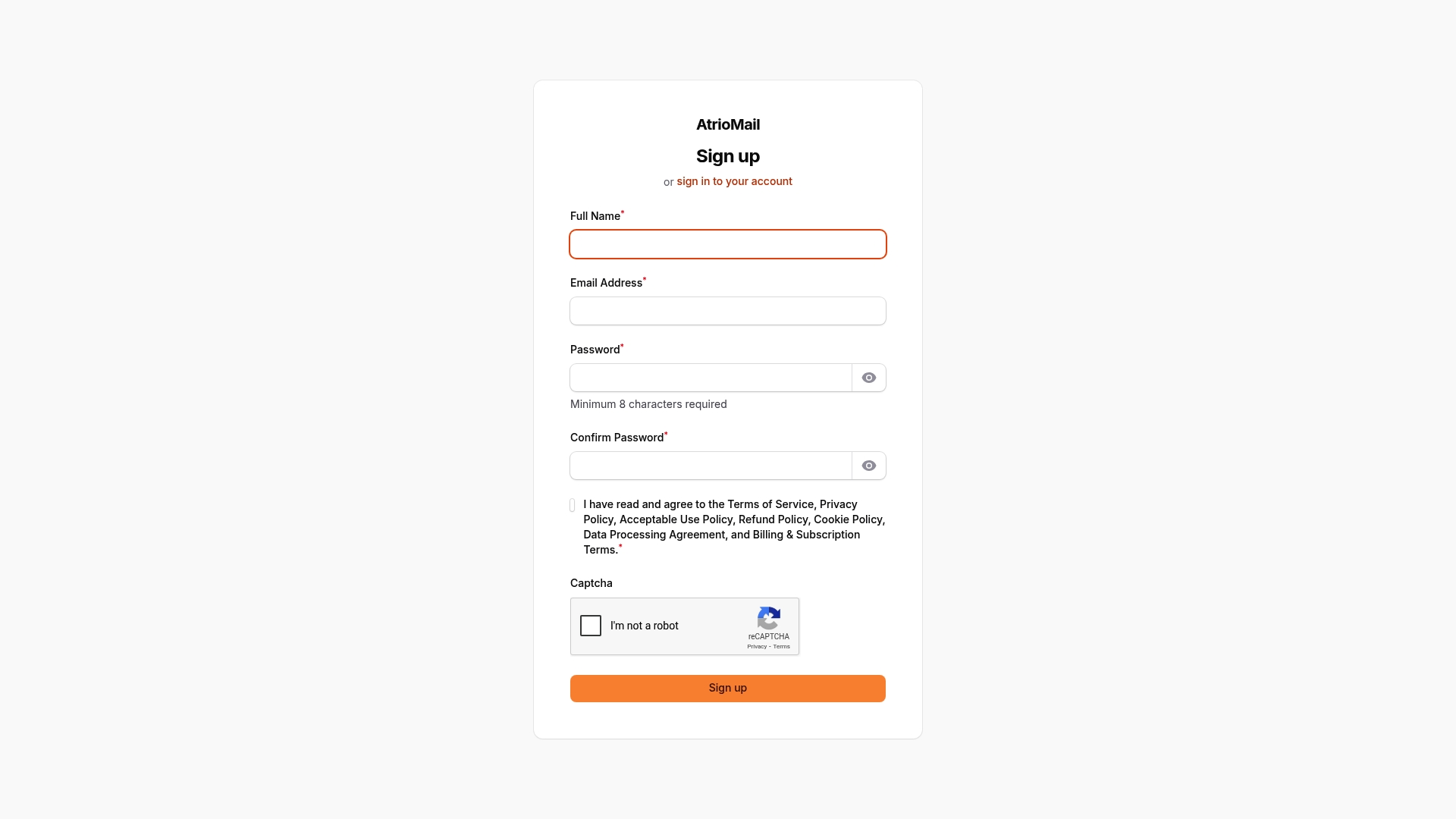
Sign up now at https://system.atriomail.com/admin/register to experience unparalleled control, privacy, and growth potential in your email hosting services.
Frequently Asked Questions
What are the key elements to include when defining branding and white-label requirements?
Defining branding and white-label requirements should include domain and URL customization, logo integration, a consistent color scheme, a fully branded email interface, and a custom login experience. Focus on creating an integrated branded experience that reflects your company’s identity.
How can I evaluate the reliability of managed infrastructure for an email service provider?
Evaluate the reliability of managed infrastructure by examining factors such as redundant server architectures, cloud-based failover capabilities, multiple geographic data center locations, and automatic disaster recovery mechanisms. Request detailed service level agreements to understand uptime guarantees and incident response timelines.
What are the benefits of automating domain and DNS validation setup?
Automating domain and DNS validation streamlines complex technical processes, ensuring seamless email delivery by including features like automatic MX record verification, DKIM signature validation, and real-time domain authentication. Prioritize email service providers that offer comprehensive validation reporting and proactive configuration suggestions.
How can I find an email service provider with scalable and usage-based pricing models?
Look for providers that offer granular consumption tracking, flexible infrastructure scaling, and transparent billing mechanisms. Request detailed usage reports to model projected costs and evaluate how easily you can upgrade or downgrade your service as your business grows.
What should I consider when reviewing API integration and automation options?
When reviewing API integration options, consider the quality of technical documentation, integration complexity, webhook support, and performance scalability. Schedule a technical consultation with potential providers to thoroughly understand their integration capabilities and any limitations they might have.
Why is data privacy important when choosing an email service provider?
Data privacy is crucial as it protects sensitive communications and builds customer trust. Assess potential providers for compliance with international privacy standards, transparent data handling policies, and robust encryption protocols to ensure that your organization’s data remains secure.