
Managing email privacy can feel like a constant balancing act for B2B resellers and IT agencies, especially when client trust and regulatory compliance are at stake. Secure email infrastructure is more than a technical requirement. It is a fundamental business commitment to protecting sensitive communication and maintaining professional integrity. Discover how privacy-centric white-label email hosting strengthens brand control and delivers trusted protection for your client data.
Table of Contents
- Email Hosting and Privacy Defined
- Types of Email Data Protection Methods
- Compliance Standards in Email Hosting
- Brand Control and Privacy for Resellers
- Risks of Privacy Breaches in B2B Email Hosting
- Comparing Privacy-Focused and Mainstream Solutions
Key Takeaways
| Point | Details |
|---|---|
| Email Hosting Privacy is Essential | Protecting digital communication and ensuring client trust are paramount for B2B resellers in today’s landscape. |
| Implement Comprehensive Protection Measures | Utilize encryption, multi-factor authentication, and access controls to safeguard sensitive information effectively. |
| Adhere to Compliance Standards | Understand and comply with regulations like GDPR, HIPAA, and CCPA to maintain legal and ethical practices. |
| Proactive Risk Management is Crucial | Regular audits and a zero-trust model help identify vulnerabilities and enhance email security strategies. |
Email Hosting and Privacy Defined
Email hosting privacy represents the comprehensive framework of protecting digital communication infrastructure, securing sensitive data transmission, and maintaining confidential information for businesses. At its core, privacy in email hosting ensures that electronic communications remain protected from unauthorized access, data breaches, and potential misuse.
Privacy in email hosting encompasses several critical dimensions for B2B resellers:
- Data Protection: Safeguarding client communication records
- Access Control: Managing user permissions and authentication
- Encryption: Securing email content during transmission and storage
- Compliance: Meeting regulatory standards like data privacy regulations
The fundamental goal of email hosting privacy is creating a secure digital environment where businesses can communicate without compromising sensitive information. This involves implementing robust security protocols, maintaining strict data handling procedures, and establishing transparent privacy policies that build client trust.
Privacy isn’t just a technical requirement – it’s a fundamental business commitment to protecting client interests and maintaining professional integrity.
For B2B resellers, understanding privacy means recognizing that each email transaction represents a potential vulnerability that requires strategic protection. Successful email hosting providers must develop comprehensive frameworks that anticipate potential security risks while delivering seamless communication experiences.
Pro tip: Regularly audit your email hosting privacy protocols to identify and address potential security gaps before they become critical vulnerabilities.
Types of Email Data Protection Methods
Email data protection methods form the critical defensive infrastructure that shields sensitive digital communications from unauthorized access, manipulation, and potential breaches. B2B resellers must implement comprehensive strategies that go beyond basic security measures to ensure robust protection of client information.
Key email data protection methods include:
- Encryption: Securing email content during transmission and at rest
- Access Control: Implementing role-based permissions
- Multi-Factor Authentication: Verifying user identities through multiple validation steps
- Data Masking: Obscuring sensitive information in email communications
- Audit Logging: Tracking and recording all email system interactions
Advanced email hosting providers recognize that protection is a multi-layered approach. Systematic email record management involves not just preventing unauthorized access, but also establishing clear protocols for data retention, transmission, and eventual secure deletion.
Effective email data protection is not a single solution, but a comprehensive ecosystem of interconnected security strategies.
Professional email hosting requires continuous monitoring and adaptation of protection mechanisms. This means regularly updating encryption protocols, refining access controls, and staying ahead of emerging cybersecurity threats that could compromise client communications.

Pro tip: Implement a quarterly security audit to identify and address potential vulnerabilities in your email protection infrastructure.
Compliance Standards in Email Hosting
Compliance standards in email hosting represent a critical framework of regulatory requirements that ensure secure, ethical, and legally sound digital communication practices for businesses. B2B resellers must navigate a complex landscape of regulations designed to protect sensitive information and maintain client trust.
Key compliance standards for email hosting include:
- GDPR: European data protection regulations
- HIPAA: Healthcare information privacy standards
- CCPA: California consumer privacy requirements
- SOX: Financial data protection protocols
- NIST Security Guidelines: Comprehensive email hosting recommendations
These compliance frameworks establish rigorous requirements for data handling, including encryption protocols, access controls, and secure transmission mechanisms. B2B resellers must implement robust systems that not only meet but anticipate evolving regulatory landscapes across different industries and jurisdictions.
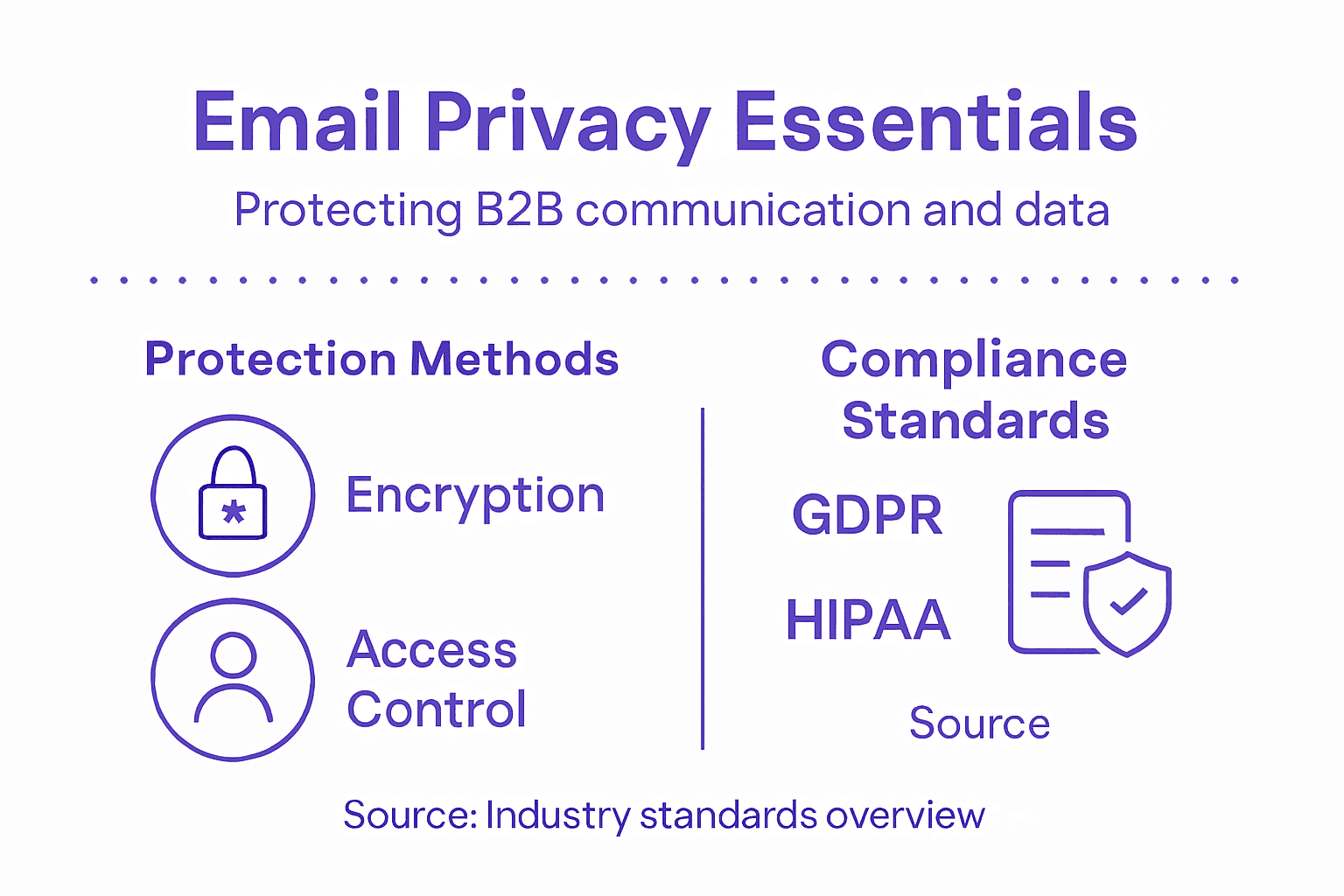
Below is a summary of key compliance standards and how they impact B2B email hosting providers:
| Compliance Standard | Main Focus | Impact on Providers |
|---|---|---|
| GDPR | Data protection for EU citizens | Requires strict data handling and reporting |
| HIPAA | Healthcare information privacy | Enforces confidentiality for medical data |
| CCPA | California consumer privacy | Mandates transparency for personal data use |
| SOX | Financial data integrity | Demands accurate recordkeeping and oversight |
| NIST Guidelines | Security best practices | Sets technical and procedural baselines |
Compliance is not a destination, but a continuous journey of adaptation and protection.
Effective compliance goes beyond simple checklist verification. It requires a holistic approach that integrates technical safeguards, organizational policies, and ongoing employee training to create a comprehensive security ecosystem.
Pro tip: Conduct annual third-party compliance audits to identify potential vulnerabilities and ensure ongoing regulatory alignment.
Brand Control and Privacy for Resellers
Brand control in email hosting represents a strategic approach that empowers resellers to maintain their unique identity while delivering secure, professional communication solutions. By implementing robust privacy frameworks, B2B resellers can differentiate themselves in a competitive marketplace.
Key aspects of brand control and privacy include:
- White-Label Customization: Complete visual and functional branding
- Domain Management: Exclusive control over email infrastructure
- Client Data Protection: Transparent privacy policy implementation
- Independent Platform Ownership: Reducing dependency on major email ecosystems
- Compliance Enforcement: Maintaining legal and ethical standards
Successful resellers understand that brand control extends beyond visual aesthetics, encompassing comprehensive privacy management and client trust-building strategies. This holistic approach ensures that every communication touchpoint reflects the reseller’s commitment to professionalism and data security.
Privacy is not just a technical requirement, but a fundamental brand promise.
Navigating the complex landscape of brand control requires continuous adaptation, proactive compliance monitoring, and a deep understanding of evolving digital privacy expectations. Resellers must view privacy not as a constraint, but as a competitive advantage that distinguishes their service offering.
Pro tip: Develop a comprehensive privacy framework that transforms data protection from a regulatory obligation into a unique selling proposition.
Risks of Privacy Breaches in B2B Email Hosting
Privacy breaches in email hosting represent catastrophic vulnerabilities that can devastate businesses, potentially destroying client trust and exposing organizations to significant financial and legal consequences. B2B resellers must understand the multifaceted risks associated with inadequate email security protocols.
Critical privacy breach risks include:
- Unauthorized Data Access: Potential compromise of sensitive client information
- Regulatory Non-Compliance: Substantial legal and financial penalties
- Reputation Damage: Loss of client confidence and market credibility
- Financial Liability: Potential litigation and compensatory damages
- Operational Disruption: Significant productivity and trust interruptions
The potential consequences extend far beyond immediate financial penalties. Comprehensive breach reporting and risk assessment become critical in managing the fallout from privacy incidents, requiring transparent communication and proactive mitigation strategies.
Privacy breaches are not just technical failures, but fundamental breakdowns in organizational trust and professional responsibility.
Effective risk management demands a holistic approach that integrates technological safeguards, employee training, and robust incident response protocols. Successful B2B email hosting providers must anticipate potential vulnerabilities and develop comprehensive defensive strategies.
Pro tip: Implement a zero-trust security model that continuously validates every email transaction and user interaction to minimize potential breach vectors.
Comparing Privacy-Focused and Mainstream Solutions
Email privacy solutions represent a critical spectrum of technological approaches that fundamentally differ in their core philosophies of data protection and user control. B2B resellers must carefully evaluate these contrasting models to select the most appropriate infrastructure for their specific client needs.
Key differences between privacy-focused and mainstream solutions include:
- Data Handling: Privacy-centric providers protect user information more aggressively
- Encryption Standards: End-to-end vs. limited encryption models
- Business Models: User privacy vs. data monetization
- Compliance Frameworks: Strict vs. flexible regulatory adherence
- User Control: Granular permissions vs. standardized settings
The fundamental distinction lies in architectural design. Secure email hosting platforms prioritize user privacy through zero-knowledge architectures, ensuring that no third party can access or monetize communication data, unlike mainstream providers that often treat user information as a potential revenue stream.
Here is how privacy-focused and mainstream email solutions compare across critical categories:
| Category | Privacy-Focused Solutions | Mainstream Solutions |
|---|---|---|
| Data Control | Full user ownership | Shared with provider |
| Encryption | End-to-end encryption | Often partial/transport-only |
| Advertising | Strictly no ads | User data may inform ads |
| Regulatory Response | Built for legal compliance | Compliance varies by product |
Privacy is not a feature, but a fundamental right that should be engineered into every communication platform.
Successful B2B resellers recognize that privacy is not a binary choice but a nuanced spectrum. The most effective solutions balance rigorous security protocols with practical usability, understanding that extreme privacy cannot come at the cost of operational efficiency.
Pro tip: Conduct thorough privacy audits that compare potential email hosting solutions across multiple dimensions, not just encryption standards.
Take Control of Email Privacy and Brand Identity with AtrioMail
The article highlights how crucial privacy is in email hosting for B2B resellers. Challenges like maintaining data protection, managing access control, and ensuring compliance while preserving brand control can overwhelm businesses. AtrioMail directly addresses these pain points by offering a fully managed, white-label email hosting platform that gives you total ownership over your domain and client data. With automated DNS validation and scalable usage-based pricing, you can secure communications without being tied to large ecosystems or complicated infrastructure.
AtrioMail empowers you to:
- Maintain complete brand control with custom white-label solutions
- Implement robust privacy and compliance frameworks effortlessly
- Automate critical security protocols such as MX, SPF, DKIM, and DMARC
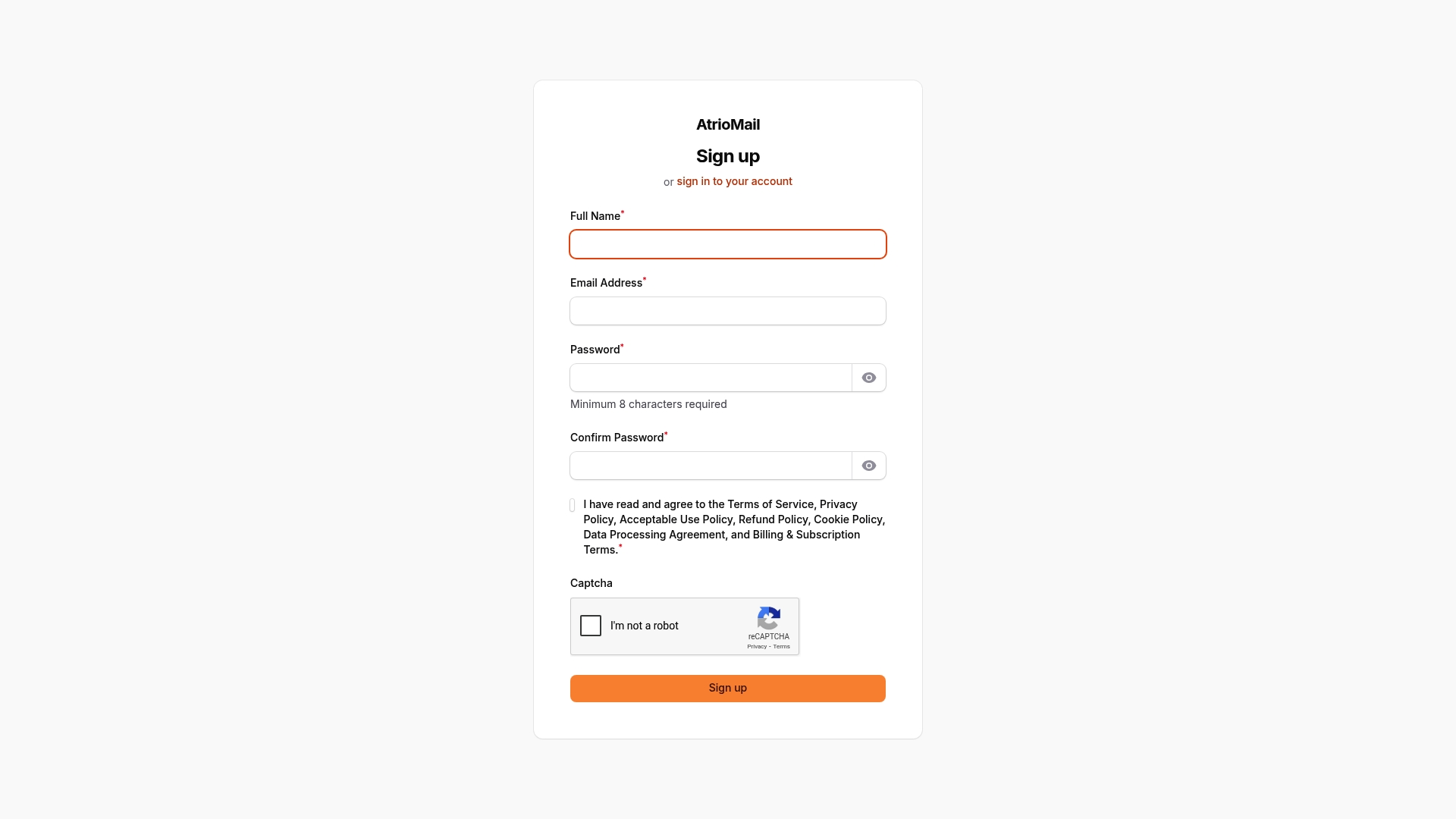
Ready to protect your clients’ data and elevate your brand reputation now An easy starting point is to register your AtrioMail account and experience enterprise-grade email hosting built specifically for resellers. Discover how you can create independent, privacy-focused email services that boost your revenue and credibility today. Join the growing community of IT agencies and hosting providers who rely on AtrioMail for secure and scalable email management.
Frequently Asked Questions
What is email hosting privacy for B2B resellers?
Email hosting privacy refers to the protective measures that ensure secure digital communication and safeguard sensitive data for businesses. It involves securing communications from unauthorized access and data breaches, implementing encryption, and adhering to compliance standards.
Why is data protection important in email hosting?
Data protection is crucial in email hosting as it safeguards client communication records, prevents unauthorized access, and ensures compliance with regulatory standards. Protecting sensitive information builds client trust and maintains the integrity of business communications.
What are the compliance standards B2B resellers need to consider for email hosting?
B2B resellers must consider several compliance standards such as GDPR for data protection, HIPAA for healthcare information privacy, CCPA for consumer privacy, SOX for financial data protection, and NIST Security Guidelines for best practices in security.
How can B2B resellers manage privacy breach risks in email hosting?
B2B resellers can manage privacy breach risks by implementing a zero-trust security model, conducting regular security audits, providing employee training, and establishing clear incident response protocols to mitigate potential vulnerabilities.