
Over 80 percent of american businesses say protecting client data through email is their top compliance priority. As global privacy laws tighten and clients demand stronger security, email service resellers and IT agencies face mounting pressure to deliver hosting solutions that truly safeguard sensitive communications. This guide outlines the privacy principles, risk management strategies, and essential features every provider needs to build trust and maintain compliance while supporting secure, white-label email hosting for their customers.
Table of Contents
- Defining Data Privacy in Email Hosting
- Types of Data Risks for Email Providers
- Core Privacy Features and Controls
- Compliance With Global Privacy Laws
- Reseller Responsibilities and Liabilities
- Best Practices and Common Mistakes
Key Takeaways
| Point | Details |
|---|---|
| Data Privacy Fundamentals | Implement robust practices and technologies to safeguard sensitive information in email communications. |
| Addressing Data Risks | Protect against external attacks, insider threats, and systemic vulnerabilities through comprehensive security measures. |
| Compliance with Regulations | Ensure adherence to global privacy laws by understanding diverse frameworks and maintaining user consent mechanisms. |
| Best Practices Implementation | Adopt a proactive strategy that combines technology with user education to effectively manage data privacy. |
Defining Data Privacy in Email Hosting
Data privacy in email hosting represents the comprehensive set of practices, technologies, and legal frameworks designed to protect sensitive digital communication and personal information. At its core, data privacy encompasses safeguarding individual identifiers and communication content from unauthorized access, disclosure, or misuse. Organizations must implement robust mechanisms to protect personal data across digital communication platforms.
The fundamental principles of data privacy in email hosting include maintaining strict confidentiality, ensuring secure data transmission, and implementing advanced protective measures. These practices involve multiple layers of security, such as encryption protocols, access control mechanisms, and comprehensive data handling policies. Regulatory frameworks like GDPR provide critical guidelines for processing personal data, mandating that email hosting providers adopt stringent protective strategies to prevent potential breaches.
Effective data privacy strategies in email hosting require a multidimensional approach that addresses technological, legal, and ethical considerations. This means developing comprehensive systems that not only protect data technically but also comply with international privacy regulations. Key components include implementing end-to-end encryption, maintaining strict user authentication processes, conducting regular security audits, and ensuring transparent data handling practices that respect individual privacy rights.
Pro Tip: Conduct quarterly privacy assessments to proactively identify and address potential vulnerabilities in your email hosting infrastructure.
Types of Data Risks for Email Providers
Email providers confront a complex landscape of data risks that threaten the security and integrity of digital communication systems. Sophisticated attack vectors pose significant challenges for email infrastructure, ranging from external cyber threats to internal vulnerabilities that can compromise entire communication networks. Cybersecurity threats have evolved rapidly, creating multifaceted risks that demand comprehensive and proactive management strategies.
The primary categories of data risks include external attacks, insider threats, and systemic vulnerabilities. Phishing attacks, business email compromise, and malware distribution represent the most prevalent threats facing email providers today. These risks are particularly dangerous because they exploit both technological weaknesses and human psychological vulnerabilities. Attackers frequently target individual users through sophisticated social engineering techniques, using seemingly legitimate communication to gain unauthorized access or inject malicious software into email systems.
Technical data risks encompass multiple dimensions, including unauthorized data access, potential data breaches, compliance failures, and infrastructure vulnerabilities. Email providers must develop multilayered defense mechanisms that integrate advanced technological solutions with robust policy frameworks. This approach involves implementing comprehensive encryption protocols, maintaining rigorous authentication processes, conducting regular security audits, and developing adaptive threat detection systems that can identify and neutralize emerging risks in real-time.
Pro Tip: Implement a continuous monitoring system that tracks unusual access patterns and automatically flags potential security anomalies before they escalate into significant breaches.
Here’s a comparison of common data risks affecting email providers:
| Risk Type | How It Occurs | Potential Impact |
|---|---|---|
| External Attacks | Phishing, malware, BEC | Data theft, service disruption |
| Insider Threats | Employee misuse, credential leaks | Unauthorized data exposure |
| Systemic Vulnerabilities | Outdated software, poor configuration | System breaches, compliance failures |
| Social Engineering | Manipulative emails, impersonation | Credential loss, privacy violation |
Core Privacy Features and Controls
Email hosting providers must implement comprehensive privacy features that create robust protective barriers for digital communication systems. Advanced authentication and encryption protocols form the foundation of secure email infrastructure, protecting sensitive information from unauthorized access and potential breaches. These core controls represent sophisticated technological strategies designed to maintain the confidentiality and integrity of digital communication.
Secure email hosting relies on multiple layers of technical controls that work synergistically to prevent unauthorized data exposure. Key privacy mechanisms include multi-factor authentication, end-to-end encryption, spam filtering, and authentication protocols like SPF, DKIM, and DMARC. These technologies create a comprehensive defense system that validates sender identities, prevents email spoofing, and ensures that only legitimate communications reach their intended recipients. Role-based access controls and granular permission settings further enhance security by limiting data exposure to authorized personnel only.

The most effective privacy controls integrate technological solutions with strategic policy frameworks. This holistic approach involves implementing data loss prevention mechanisms, conducting regular security audits, maintaining detailed access logs, and developing adaptive threat detection systems. Email providers must continuously evolve their privacy controls to address emerging cyber threats, ensuring that encryption standards, authentication protocols, and monitoring systems remain current and effective against sophisticated attack vectors.
Pro Tip: Conduct quarterly comprehensive privacy control audits to identify and address potential vulnerabilities in your email hosting infrastructure.
The table below summarizes essential privacy features for secure email hosting:
| Feature | Purpose | Business Benefit |
|---|---|---|
| End-to-End Encryption | Shields email content from interception | Mitigates data leakage risk |
| Multi-Factor Authentication | Verifies user identity | Prevents unauthorized account access |
| Spam Filtering | Blocks malicious communications | Reduces phishing and malware threats |
| Role-Based Access Control | Limits data access to authorized users | Protects sensitive information |
Compliance With Global Privacy Laws
Global privacy regulations represent a complex and dynamic landscape that email hosting providers must carefully navigate to protect user data and maintain legal integrity. Comprehensive compliance requires understanding diverse international privacy frameworks that impose stringent requirements on data collection, processing, and transmission. These legal mandates span multiple jurisdictions, creating a challenging environment for email service providers to ensure consistent and robust data protection.
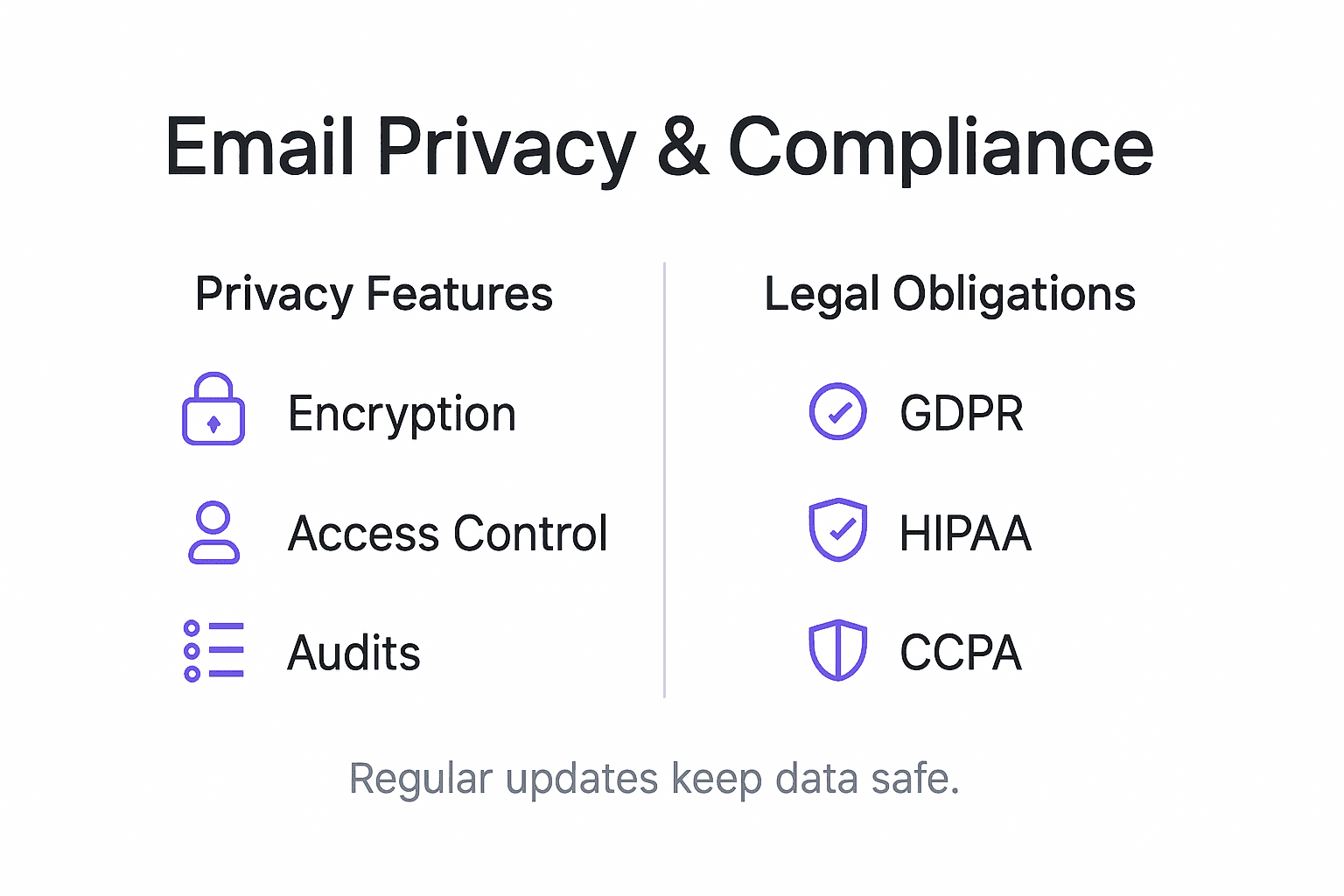
Effective global compliance demands a proactive and multifaceted approach that goes beyond mere technical implementations. Key regulatory frameworks like the General Data Protection Regulation (GDPR), California Consumer Privacy Act (CCPA), and Brazil’s General Data Protection Law (LGPD) establish critical standards for user consent, data transparency, and individual privacy rights. Email hosting providers must develop comprehensive strategies that include obtaining explicit user consent, implementing transparent data handling processes, enabling robust opt-out mechanisms, and ensuring users can access, modify, and delete their personal information.
Navigating the intricate landscape of global privacy laws requires continuous monitoring, adaptive governance, and sophisticated technological infrastructure. Organizations must conduct regular privacy impact assessments, maintain detailed documentation of data processing activities, and establish clear internal protocols for managing cross-border data transfers. This involves developing flexible systems that can quickly adapt to evolving regulatory requirements, training staff on privacy best practices, and creating transparent communication channels that empower users to understand and control their data.
Pro Tip: Develop a centralized compliance tracking system that automatically updates and alerts your team about emerging privacy regulation changes across different jurisdictions.
Reseller Responsibilities and Liabilities
Email hosting resellers operate within a complex legal landscape that demands comprehensive understanding of data protection responsibilities. Reseller hosting companies bear significant legal obligations under data protection regulations that extend far beyond traditional service provision. These responsibilities require proactive management of data privacy, security protocols, and legal compliance across multiple layers of service delivery, creating a multifaceted challenge for organizations operating in the digital communication ecosystem.
The legal framework surrounding reseller liabilities encompasses several critical dimensions, including direct accountability for data protection practices, transparency in customer communication, and implementation of robust security measures. Resellers must develop comprehensive strategies that not only protect their own operational infrastructure but also ensure their clients maintain stringent privacy standards. This involves creating detailed privacy policies, implementing advanced encryption technologies, conducting regular security audits, and establishing clear mechanisms for data breach notification and response.
Navigating the intricate landscape of reseller responsibilities requires a holistic approach that integrates legal compliance, technological safeguards, and operational transparency. Resellers must develop sophisticated risk management frameworks that address potential vulnerabilities across technical, legal, and operational domains. This includes maintaining comprehensive documentation of data processing activities, developing clear consent mechanisms, providing clients with granular control over their data, and establishing rapid response protocols for potential privacy incidents that could compromise user information.
Pro Tip: Develop a comprehensive compliance checklist that maps your operational practices against global data protection regulations to identify and mitigate potential legal risks proactively.
Best Practices and Common Mistakes
Email hosting providers must adopt a strategic approach to data privacy that balances technological sophistication with user-centric practices. Best practices start with obtaining explicit and informed consent from users while maintaining transparent communication about data collection and usage policies. Privacy protection requires a proactive mindset that anticipates potential vulnerabilities and implements comprehensive safeguards across multiple operational dimensions.
Securing email communications demands a multilayered approach to technology and user education that addresses both technical and human factors. Critical best practices include implementing robust encryption protocols, enforcing strong password policies, enabling multi-factor authentication, and conducting regular security awareness training. Common mistakes that organizations frequently encounter involve neglecting user education, maintaining weak authentication mechanisms, and failing to establish clear data handling protocols that protect sensitive information from unauthorized access.
Effective email privacy strategies require continuous monitoring, adaptive security frameworks, and a commitment to evolving technological and regulatory landscapes. Organizations must develop comprehensive risk management protocols that integrate technical controls, legal compliance mechanisms, and user empowerment strategies. This holistic approach involves creating granular access controls, maintaining detailed audit logs, conducting periodic security assessments, and establishing transparent mechanisms for users to understand and manage their data privacy preferences.
Pro Tip: Implement a quarterly comprehensive privacy review process that systematically evaluates your email hosting infrastructure against emerging security standards and regulatory requirements.
Take Control of Data Privacy in Your Email Hosting Services
The challenge of protecting client data while ensuring compliance with global privacy laws is more critical than ever for email providers and resellers. With complex risks like phishing, insider threats, and evolving regulations such as GDPR demanding robust privacy controls, you need a solution that simplifies security without sacrificing brand control or operational efficiency. AtrioMail offers a fully managed, white-label email hosting platform designed to empower businesses and IT agencies to deliver secure, compliant email services under their own brand.
With AtrioMail, you get:
- Automated DNS validation for MX, SPF, DKIM, and DMARC to strengthen email authentication
- Enterprise-grade encryption and multi-factor authentication to safeguard client communications
- Scalable usage-based pricing that grows with your business needs
- Seamless API integration that streamlines deployment and ongoing management
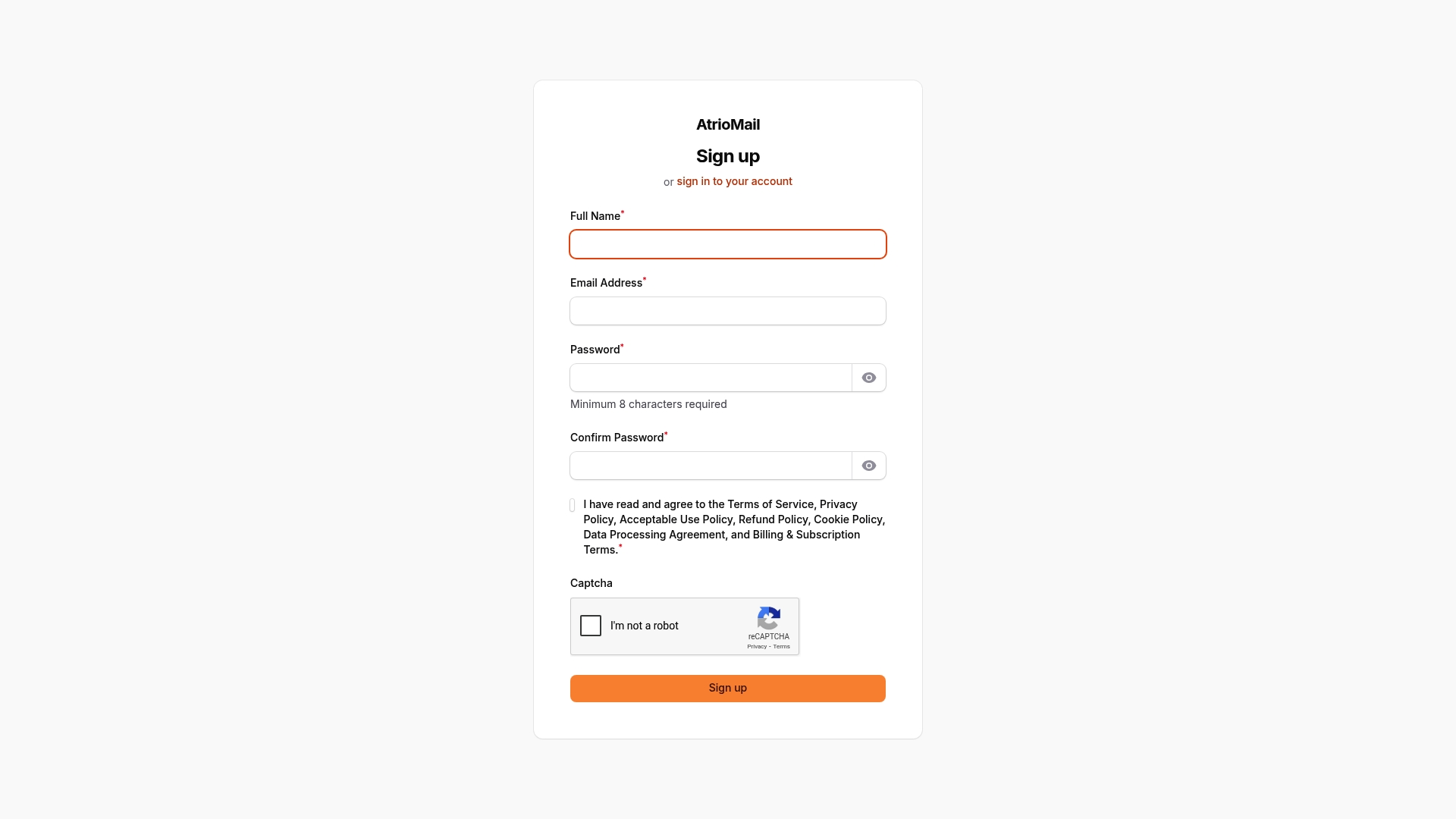
Ready to overcome data privacy challenges and enhance your email hosting offering with a trusted partner? Join the growing community of resellers and agencies who trust AtrioMail for privacy-first, fully branded email solutions. Start building your secure email platform today at AtrioMail Registration and discover how you can increase profit margins while delivering outstanding compliance and client privacy.
Frequently Asked Questions
What is data privacy in email hosting?
Data privacy in email hosting refers to the practices and technologies that protect sensitive digital communications and personal information from unauthorized access and misuse. It involves implementing security measures like encryption and access controls to safeguard client data.
Why is data privacy important for email providers?
Data privacy is crucial for email providers as it ensures the confidentiality and integrity of communications, protects user personal information, and helps comply with legal regulations such as GDPR. It builds trust with clients and mitigates risks of data breaches.
What are common data risks associated with email hosting?
Common data risks in email hosting include external attacks like phishing and malware, insider threats from employee misuse, and systemic vulnerabilities due to outdated software or misconfigurations. These risks can lead to data theft, service disruptions, and privacy violations.
How can email providers ensure compliance with global privacy laws?
Email providers can ensure compliance by understanding various international privacy regulations, implementing user consent processes, maintaining transparent data handling practices, and conducting regular privacy assessments to adapt to evolving legal requirements.