
Reselling branded email services can seem overwhelming when you face unpredictable growth and rising operational demands. If you struggle to scale efficiently while protecting your margins and maintaining client trust, the right strategies make all the difference. This guide reveals actionable methods to build a reliable, scalable email infrastructure designed for agencies and resellers who want real business independence and flexibility.
Discover how cloud-based resource allocation and white-label hosting empower you to grow without the typical technical headaches. You will learn practical techniques for automating DNS authentication, implementing smart pricing, and controlling your brand experience from start to finish. Get ready for a series of insights that address your biggest challenges and unlock new opportunities for profit and client loyalty.
Table of Contents
- 1. Understanding Scalable Email Infrastructure Options
- 2. Benefits of White-Label Email Hosting for Resellers
- 3. Automating DNS Integration for MX, SPF, DKIM, and DMARC
- 4. Implementing Usage-Based Pricing for Profit Growth
- 5. Enhancing Brand Control with Customizable Platforms
- 6. Streamlining Deployment Through Seamless API Integration
- 7. Ensuring Privacy and Independence from Major Ecosystems
Quick Summary
| Key Message | Explanation |
|---|---|
| 1. Build Scalable Email Infrastructure | Choose between building your own infrastructure, renting from cloud providers, or partnering with white-label solutions to maximize efficiency and profit. |
| 2. Leverage White-Label Hosting | White-label solutions increase brand loyalty and reduce operational costs by eliminating infrastructure management burdens and allowing focus on sales. |
| 3. Automate DNS Configuration | Automating DNS setup enhances accuracy and quickly configures client email settings, leading to improved deliverability and reduced support issues. |
| 4. Implement Usage-Based Pricing | Transitioning to usage-based pricing aligns your revenue with client growth, maximizing profit potential and creating a fair pricing model for clients. |
| 5. Ensure Independence from Major Platforms | Avoid dependency on giant email ecosystems to retain control over your services and provide privacy guarantees, which become significant competitive advantages. |
1. Understanding Scalable Email Infrastructure Options
Scalable email infrastructure forms the backbone of every successful email service provider and reseller operation. At its core, this infrastructure determines whether your email service grows smoothly with client demand or buckles under pressure. For resellers and IT agencies, understanding the different approaches to building or partnering with email infrastructure directly impacts your profit margins, operational complexity, and ability to serve clients effectively.
Cloud computing provides the foundational technology that makes scalable email infrastructure possible. Rather than managing physical servers yourself, cloud-based resource allocation allows your email service to expand or contract based on actual user demand. This flexibility works through Infrastructure-as-a-Service (IaaS), Platform-as-a-Service (PaaS), and Software-as-a-Service (SaaS) models that handle the heavy lifting automatically. When your client base grows from 100 users to 10,000 users, the infrastructure adjusts seamlessly without you needing to purchase new servers, hire infrastructure staff, or deal with downtime. This on-demand approach means you pay only for what you use, transforming email infrastructure from a capital expense into an operational one.
The practical reality for most resellers and agencies is that building your own email infrastructure from scratch rarely makes financial sense. You face three main paths forward. First, you could build everything yourself, managing data centers, security updates, and compliance requirements while competing against established players. Second, you could rent infrastructure from cloud providers and build your own branded interface around it. Third, and most efficient for scaling quickly, you could partner with a white-label email solution that handles all infrastructure management while you focus on selling and supporting your clients. Each approach has different cost structures, time investments, and scalability profiles. The best choice depends on whether you want to manage infrastructure complexity or whether you prefer to offer branded email services without the operational burden. Understanding which infrastructure model aligns with your business goals will determine your long-term success in the email reseller market.
Pro tip: Calculate your true cost of ownership before choosing an infrastructure approach, including not just server costs but also staff time, security certifications, compliance updates, and the opportunity cost of time spent managing infrastructure instead of selling to clients.
2. Benefits of White-Label Email Hosting for Resellers
White-label email hosting fundamentally changes how resellers operate in the marketplace. Instead of offering email as a commodity service bundled with other solutions, you can now position branded email infrastructure as a standalone revenue driver under your own company name. Your clients see your branding, your support team, and your interface at every touchpoint, building loyalty to your company rather than to some faceless third-party provider. This brand ownership translates directly into competitive advantage and pricing power in markets where email service differentiation matters.
The financial benefits extend beyond brand recognition alone. White-label email hosting lets resellers scale their service offerings while eliminating the massive capital investment required to build and maintain email infrastructure yourself. You avoid hiring infrastructure engineers, managing data centers, securing compliance certifications, and handling the constant operational overhead that email systems demand. This operational efficiency translates into significantly higher profit margins compared to reselling commodity email services. More importantly, you maintain complete control over the service experience. You decide the features, pricing tiers, uptime guarantees, and support response times. Your clients depend on you, not on your infrastructure provider, strengthening your customer relationships and reducing churn.
White-label email hosting also simplifies your path to scaling. When you own the client relationship and brand experience, you can easily adjust pricing, introduce new features, or adjust service levels without renegotiating third-party agreements. Your infrastructure partner handles the technical complexity of maintaining redundancy, managing security patches, monitoring uptime, and ensuring deliverability. You handle what you do best: selling email services and supporting your clients. This division of labor allows small to midsize agencies to compete effectively against much larger competitors by offering enterprise-grade email infrastructure under their own brand. The result is faster growth, better margins, and genuine business independence in your market.
Pro tip: Document your service level agreements and support processes clearly from the start, since your clients will associate email reliability and support quality directly with your brand, not your infrastructure partner.
3. Automating DNS Integration for MX, SPF, DKIM, and DMARC
DNS configuration represents one of the most technical and error-prone tasks in email service delivery. When you manually configure MX records, SPF policies, DKIM signatures, and DMARC protocols for each client domain, you introduce human error into a system where precision matters absolutely. A single typo in a DNS record can result in mail delivery failures, spam folder placement, or security vulnerabilities that expose your clients to spoofing attacks. For resellers managing dozens or hundreds of client domains, manual DNS configuration quickly becomes a bottleneck that wastes time and creates support headaches.
Automating DNS integration solves this problem by validating and deploying authentication records accurately and consistently. These four DNS components work together to prove email legitimacy and prevent impersonation. MX records direct email to the correct servers, SPF policies specify which servers can send mail from a domain, DKIM adds cryptographic signatures to verify message authenticity, and DMARC provides policies for handling authentication failures. When email authentication security depends on proper DNS configuration, automation ensures every client domain meets authentication standards from day one. The system validates your configurations before deployment, catches configuration errors before they cause problems, and deploys changes instantly across your entire client base. This transforms DNS setup from a manual, repetitive task into an automated workflow that happens reliably in the background.
The practical impact of DNS automation extends far beyond operational efficiency. Your support team spends less time troubleshooting delivery issues caused by misconfigured authentication records. Your clients experience faster onboarding since their domains authenticate correctly immediately after setup. Your security posture strengthens because automated validation prevents weak or incomplete authentication configurations. Most importantly, you scale effortlessly. Whether you acquire 10 new clients or 100, your DNS automation handles the setup without adding workload to your team. This capability differentiates you in competitive markets because clients recognize that proper email authentication means better deliverability, fewer security issues, and professional infrastructure. The time saved per client compounds dramatically as your business grows, turning DNS automation from a nice-to-have feature into a competitive necessity.
Pro tip: Set up regular audits of existing client DNS records to identify and fix any misconfigurations that might be degrading deliverability or security, then use those results to demonstrate value to your clients and justify service fees.
4. Implementing Usage-Based Pricing for Profit Growth
Usage-based pricing transforms your profit model from fixed, predictable revenue into a dynamic system that rewards growth. Instead of charging clients a flat monthly fee regardless of how much they use email, you charge based on actual consumption. This approach aligns your revenue directly with customer value. When clients add more users, send more messages, or use premium features, they pay more. When they scale back usage, their costs decrease accordingly. The result is a pricing model that feels fair to clients while maximizing your profit potential as their businesses grow.
The mechanics of usage-based pricing work in your favor as both a reseller and a growth driver. Your clients benefit from lower upfront costs since they only pay for what they actually use, reducing friction in the buying decision and encouraging faster adoption. This matters tremendously in competitive markets where prospects compare multiple email providers. You benefit from aligned incentives where your success depends on client success. When a client grows their email usage by 50 percent, you capture that 50 percent increase in revenue automatically. Usage-based pricing models align costs with customer consumption, promoting both profit growth and client satisfaction simultaneously. Your profit margins improve because you capture incremental value without incremental infrastructure costs. You already bought the capacity when you partnered with your white-label provider, so each additional user email adds nearly pure profit. This scalability advantage compounds as your client base expands.
Implementing usage-based pricing requires thoughtful planning around three key elements. First, define clear metrics that matter to your clients. Will you charge per user, per email sent, or per feature used? Second, establish pricing tiers that reflect genuine value differences. A basic plan serving small business owners should cost differently than an enterprise plan for large organizations. Third, ensure transparent, easy-to-understand billing so clients understand exactly what they are paying for. Many resellers worry that usage-based pricing creates accounting complexity, but modern billing systems handle this automatically. Your infrastructure partner likely offers built-in metering that tracks usage and generates invoices based on actual consumption. This automation means you capture revenue growth without adding billing overhead to your operations.
Pro tip: Start with transparent usage reporting that shows clients exactly how their consumption translates to costs, since this visibility builds trust and helps clients understand the value they are receiving rather than viewing billing as a surprise.
5. Enhancing Brand Control with Customizable Platforms
Your brand represents your most valuable business asset. Every customer interaction, support conversation, and email your agency sends reinforces or diminishes brand perception. Customizable email platforms give you direct control over how your brand appears to clients rather than forcing them to see a third-party provider’s branding. When clients log into their email portal, they see your logo, your colors, and your interface. When they interact with support, they engage with your team under your brand. This complete brand ownership builds trust and loyalty that translates directly into customer retention and pricing power.
Customization extends far beyond just slapping your logo on a standard interface. Customizable email platforms enable resellers to tailor user interfaces and delivery settings under their brand identity, fostering stronger client relationships through differentiation. You control the language, terminology, and feature names that appear in your clients’ interfaces. You decide which features appear prominently and which remain secondary. You customize email domain options, allowing clients to use their own branded domains for maximum professionalism. You adjust notification messages, help text, and support documentation to match your voice and expertise. This level of control means each client experiences email service through the lens of your brand rather than a generic commodity provider. The result is stronger client loyalty because clients identify email service quality with your agency, not with some distant infrastructure company they never interact with directly.
Practically speaking, customization drives business outcomes beyond emotional loyalty. When your brand appears consistently throughout the email experience, clients perceive higher quality and sophistication. This perception justifies premium pricing compared to generic email services. Customization also reduces support friction because clients see your branding in every touchpoint, eliminating confusion about which company they are actually paying or which company provides support. You capture word-of-mouth referrals more effectively because clients recommend email service under your brand to other businesses. Your competitive differentiation strengthens because competitors offering generic email services struggle to explain why clients should choose them. Meanwhile, you explain value through the lens of your customized, professional, branded email experience. This narrative strength makes sales conversations easier and closes deals faster. The customization features that seemed optional when you evaluated providers become the strategic advantages that define your market position.
Pro tip: Invest time in creating custom email templates, onboarding documentation, and help resources that reflect your brand voice and expertise, since these touchpoints create lasting impressions that amplify the value of your white-label customization.
6. Streamlining Deployment Through Seamless API Integration
API integration represents the difference between manual operational overhead and automated, scalable business processes. When your email platform offers robust API capabilities, you connect it directly to your existing business systems, billing platforms, and client management tools. This eliminates data silos and manual data entry that wastes time and introduces errors. Instead of manually creating email accounts, updating client information across multiple systems, and managing settings through separate interfaces, you automate these workflows entirely. Your systems talk to each other automatically, creating a unified operational experience that scales effortlessly as your client base grows.
The practical impact of seamless API integration extends across every aspect of your reseller operations. When a new client signs up through your website, the API automatically creates their email account, provisions their mailboxes, and sends their login credentials without any manual intervention. When a client changes their service plan, the API updates their account limits automatically. When you integrate billing data, the API pulls usage information and feeds it into your invoicing system for accurate, real time billing. This automation transforms email service delivery from a labor-intensive manual process into a background operation that requires minimal attention. Your team spends time growing the business and supporting clients rather than performing repetitive administrative tasks. For resellers managing dozens or hundreds of client accounts, this efficiency difference is transformative. What would take your support team hours of manual work each week happens instantly through API automation.
The strategic advantage of API integration compounds as you scale. Early in your business, you might manage email setup manually because your client base is small. But as you grow to 50, 100, or 500 clients, manual processes become impossible. You either hire more staff to handle the volume or you automate through APIs. Choosing API integration early gives you a scalability pathway that does not require proportional increases in headcount. Your infrastructure costs grow with usage, but your operational costs remain relatively flat because your team focuses on high value activities like sales, support, and strategic growth rather than routine administration. This operational leverage becomes your competitive advantage against larger, slower competitors who are stuck managing infrastructure manually. Build your operational processes around API integration from the start, and you create a scalable business model that accelerates as you grow.
Pro tip: Document your API integration points and workflows clearly from the beginning, since this documentation becomes invaluable when you need to onboard developers, troubleshoot integration issues, or scale your operations to support rapid growth.
7. Ensuring Privacy and Independence from Major Ecosystems
Dependency on major email ecosystems like Google and Microsoft creates real business risk. When you rely on these platforms for your email service, you accept their terms of service, their data policies, and their business decisions. They can change pricing without notice, modify features that your clients depend on, or restrict access to their services based on their corporate priorities. Your clients depend on you for email service, but you depend on these tech giants for your underlying infrastructure. This creates a fragile business relationship where you lack control over critical elements of your service delivery. Building independence through private, managed email solutions eliminates this vulnerability and positions your agency as a genuinely independent service provider.
Privacy represents another critical dimension of independence from major ecosystems. Privacy preserving protocols and decentralized authentication methods reduce reliance on dominant email providers, enhancing control over email data and minimizing exposure to third party ecosystems. When you operate your own email infrastructure through a white-label provider, your clients’ email data remains within your controlled environment rather than flowing through Google or Microsoft’s systems. This matters tremendously for clients in regulated industries like healthcare, finance, or law where data privacy requirements are strict and auditable. Your clients gain confidence knowing their confidential business communications are not scanned, indexed, or analyzed by advertising technology companies. You gain the ability to offer privacy guarantees that become powerful competitive advantages in markets where clients care about data sovereignty. The independence translates into trust that you can actually offer genuine privacy rather than privacy claims backed by tech giants’ advertising-driven business models.
The practical business advantages of independence compound over time. You control your feature roadmap rather than waiting for Google or Microsoft to implement features your clients request. You can adjust pricing based on your business strategy rather than following whatever pricing changes these platforms impose. You build genuine client loyalty because your clients recognize they are paying you for email service, not subsidizing an advertising company. You develop relationships with clients who specifically value independence and privacy, creating a defensible market segment where larger competitors struggle because they are entangled with major ecosystem providers. Most importantly, you create a sustainable business model based on genuine service value rather than on arbitraging pricing differences from platform ecosystems. This independence becomes your strongest competitive positioning as more organizations recognize that true email privacy and control require moving beyond centralized, advertising driven platforms.
Pro tip: Educate your prospective clients about data privacy risks associated with free or ecosystem-dependent email services, since this awareness converts them into champions of your independent solution and justifies premium pricing based on genuine privacy benefits.
Below is a comprehensive table summarizing the key concepts and takeaways discussed throughout the article.
| Aspect | Details | Advantages |
|---|---|---|
| Scalable Email Infrastructure | Describes strategies for email service resellers to build or adopt scalable solutions, exploring IaaS, PaaS, and SaaS models. | Scalability, cost-efficiency, and operational ease. |
| White-Label Email Hosting | Highlights the benefits of providing branded email services to clients via established infrastructure. | Increased branding, customer loyalty, and profitability. |
| DNS Automation | Automating the configuration of email authentication records. | Reduced errors, improved security, and efficient client onboarding. |
| Usage-Based Pricing | Implementing pricing strategies tied to client utilization of email services. | Aligned incentives, fairness in billing, and revenue growth. |
| Brand Control | Using customizable email platforms to reinforce agency branding. | Enhanced perceived quality, customer retention, and competitive edge. |
| API Integration | Leveraging APIs for seamless operational automation. | Streamlined processes, scalability, and operational efficiency. |
| System Independence | Avoiding reliance on major ecosystems like Google or Microsoft. | Increased control, enhanced privacy, and market differentiation. |
Discover Scalable Email Hosting Designed for Resellers and Agencies
If you are looking for a streamlined way to overcome the challenges of building and managing scalable email infrastructure, AtrioMail offers a powerful solution tailored to your needs. The article highlights key pain points such as the complexity of manual DNS configurations for MX SPF DKIM and DMARC automation usage-based pricing models and maintaining full brand control—all critical for resellers aiming to deliver professional and reliable email services without the overhead of managing infrastructure.
AtrioMail’s platform solves these exact challenges by providing a fully managed white-label email hosting solution that automates DNS validation ensures scalable usage-based billing and offers seamless API integration for effortless deployment and management. You gain independence from major ecosystems like Google and Microsoft while keeping complete customization over your branding and client experience. This means you can increase profit margins and scale confidently as your agency or reseller business grows.
Take the next step in transforming your email service offering into a scalable growth engine. Experience how AtrioMail empowers you to control your brand protect your clients’ privacy and simplify operations all on one platform. Visit AtrioMail registration to get started today and unlock the true potential of your email services.
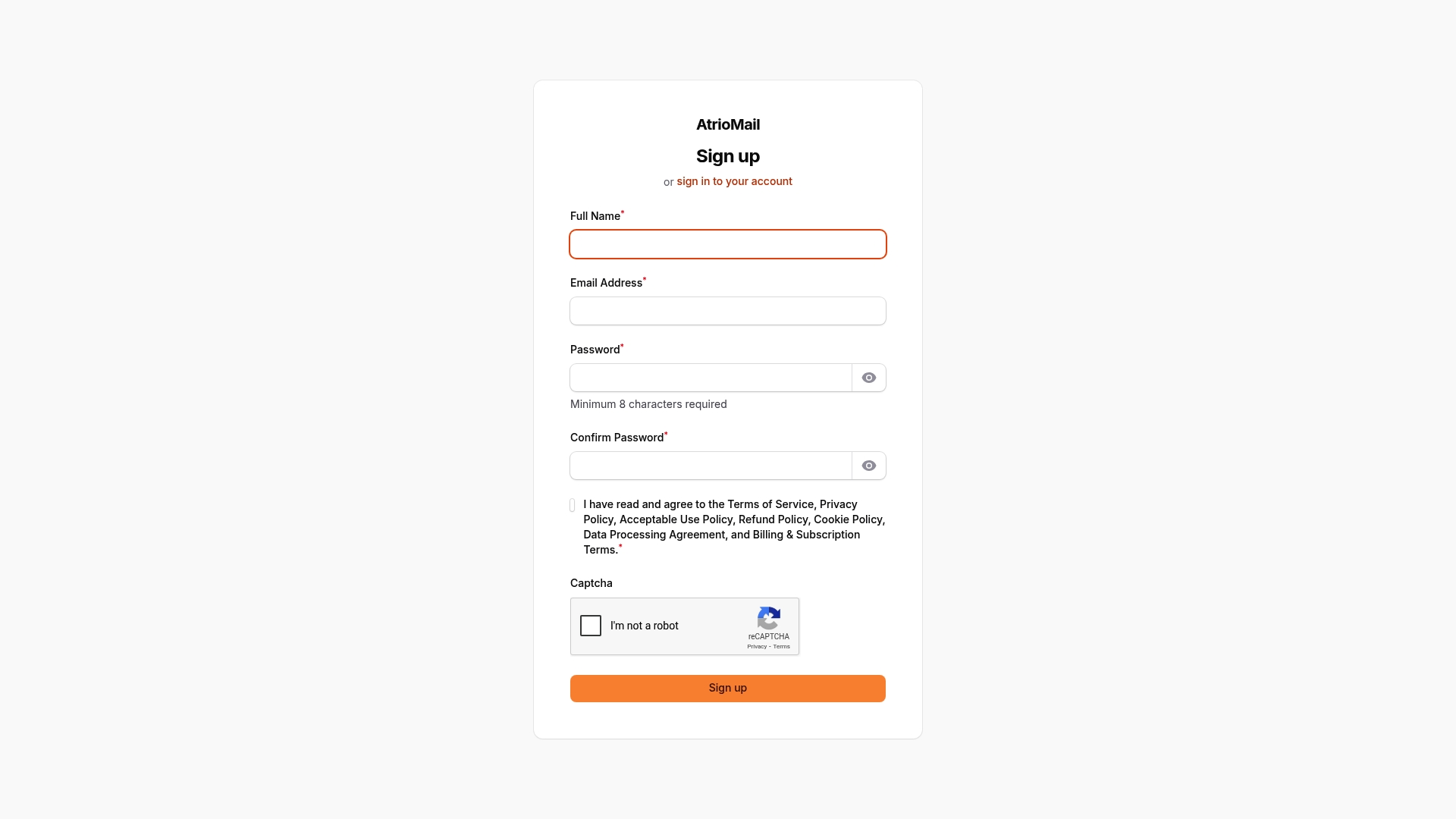
Don’t wait let AtrioMail handle the complex infrastructure while you focus on growing your business. Register now and deliver enterprise-grade email solutions that set you apart in the reseller market.
Frequently Asked Questions
What are scalable email solutions for resellers and agencies?
Scalable email solutions are services that allow resellers and agencies to manage their email infrastructure efficiently as their client base grows. To determine the right solution, evaluate options that automatically adjust capacity and resources based on actual usage.
How can I choose the best scalable email solution for my agency?
To choose the best scalable email solution, assess your business needs regarding client demand, operational capacity, and budget. Create a checklist of required features, such as automatic DNS setup and pricing models that align with your growth.
What features should I look for in white-label email hosting?
In white-label email hosting, key features to look for include branding options, customizable user interfaces, robust security measures, and reliable support. Define your brand identity and ensure these features align with your agency’s values and customer expectations.
How does usage-based pricing benefit my email service business?
Usage-based pricing aligns your revenue with customer consumption, allowing clients to pay according to their actual usage. Implement this model to encourage client growth, as their increased email usage will directly lead to higher income for your business.
Why is API integration important for scaling email services?
API integration is crucial for automating tasks like account creation and billing, which reduces manual overhead and minimizes errors. Start integrating APIs from the onset to simplify operations and ensure a seamless growth experience as you onboard new clients.
What should I consider regarding data privacy when selecting email solutions?
When selecting email solutions, prioritize providers that maintain independent, private email infrastructures to ensure data control and compliance. Educate your clients about the importance of privacy to strengthen their trust and loyalty towards your services.