
Most resellers and agencies face tough choices when balancing brand control with profit margins. Over 63 percent of American businesses now require professional email hosting to maintain credibility and reduce dependence on giant providers. This shift matters because white-label hosting empowers agencies to manage multiple client channels under their own identities, boosting client trust and operational flexibility. You will discover practical insights for choosing solutions that keep your business scalable, secure, and fully branded.
Table of Contents
- Defining Email Hosting for Agencies
- Types of Email Hosting Solutions Explained
- Core Features of Branded Email Platforms
- Security, Compliance, and Deliverability Requirements
- Financial Impact and Mistakes to Avoid
Key Takeaways
| Point | Details |
|---|---|
| Email Hosting Importance | Email hosting enhances professionalism by allowing organizations to use custom domain emails, improving brand identity and communication control. |
| Types of Email Hosting | Agencies should evaluate self-hosted, shared, and cloud-based solutions to match their technical skills and budget while meeting communication needs. |
| Branded Email Features | Incorporating visual branding and analytics into email communications strengthens client trust and engagement, essential for agency credibility. |
| Risks and Management | Addressing potential email communication errors through comprehensive protocols can protect agencies from financial losses and maintain professional standards. |
Defining Email Hosting for Agencies
Email hosting represents the critical infrastructure that enables businesses and agencies to establish professional, branded communication channels through custom domain email services. Unlike generic email platforms, email hosting provides organizations with complete control over their digital communication ecosystem, allowing them to create personalized email addresses that reflect their brand identity.
At its core, email hosting infrastructure enables businesses to send, receive, and manage emails using their own domain name, which means transitioning from generic addresses like gmail.com to professional formats like [email protected]. This approach offers significant advantages for agencies managing multiple client communications, including enhanced deliverability, robust spam protection, and centralized email management.
For resellers and agencies, email hosting goes beyond simple message transmission. It represents a strategic asset that supports brand credibility, enables scalable communication solutions, and provides granular control over email accounts, aliases, and access permissions. Professional email hosting platforms typically offer advanced features like multiple domain management, extensive storage capabilities, integrated security protocols, and seamless integration with existing business workflows.
Pro tip: When selecting an email hosting solution, prioritize providers offering white-label options that allow complete brand customization and support multiple email aliases for comprehensive client communication management.
Types of Email Hosting Solutions Explained
Email hosting solutions offer resellers and agencies diverse strategies for managing professional communication infrastructure, each with unique advantages and technical considerations. Understanding these email hosting approaches allows businesses to select the most appropriate solution for their operational requirements and growth objectives.
The primary email hosting categories include self-hosted servers, shared hosting, and cloud-based enterprise solutions. Self-hosted servers provide maximum customization and control, enabling agencies to configure intricate email environments tailored to specific technical specifications. However, this approach demands significant technical expertise, substantial upfront infrastructure investments, and ongoing maintenance responsibilities. Organizations choosing self-hosted solutions must possess robust IT capabilities to manage server security, software updates, and potential system vulnerabilities.
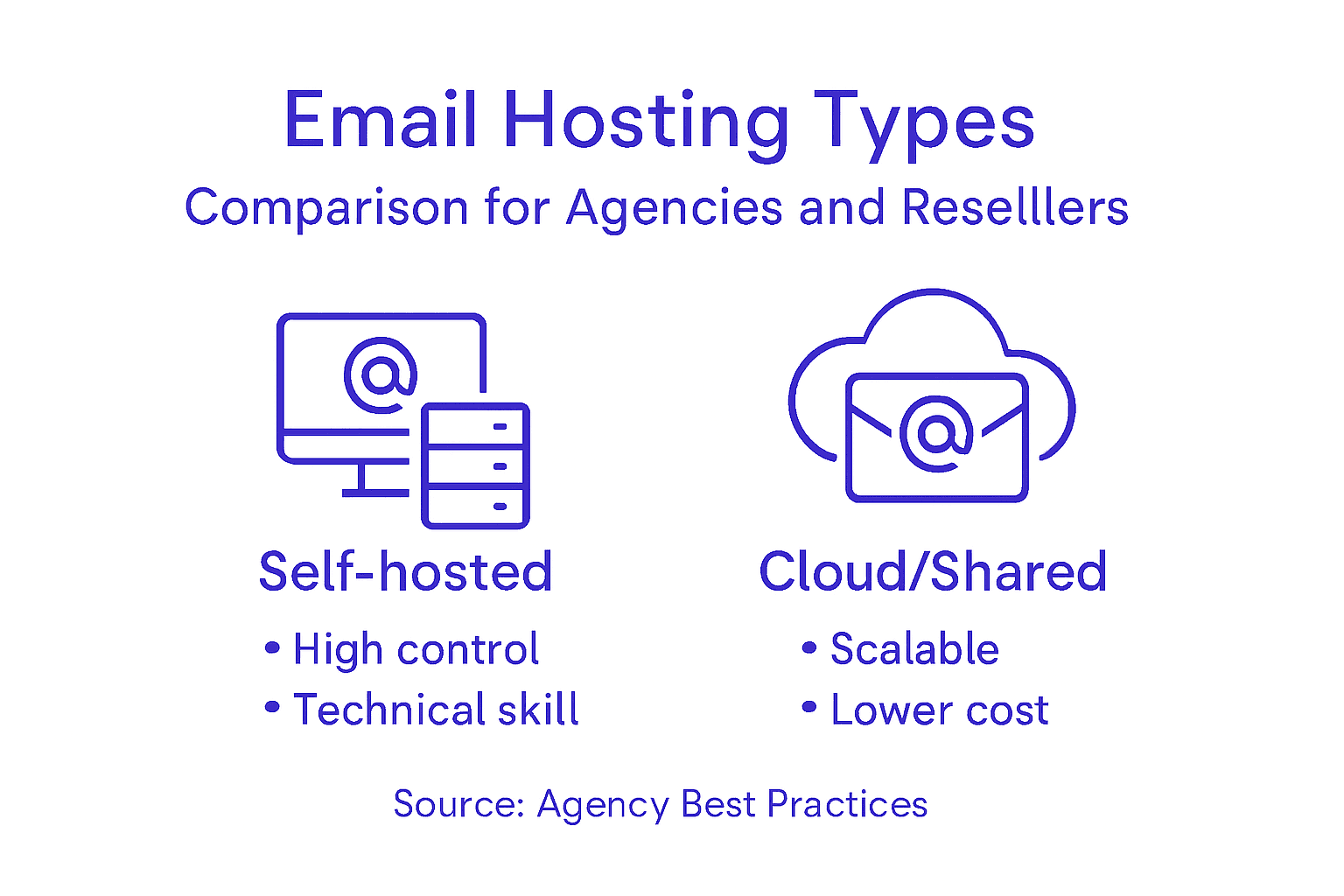
Shared and cloud-based hosting represent more streamlined alternatives for agencies seeking scalable, cost-effective email management. Shared hosting bundles email services with web hosting packages, offering basic functionality at lower price points. Enterprise cloud email hosting represents the most sophisticated option, combining advanced security protocols, extensive storage capabilities, integrated collaboration tools, and seamless scalability. These solutions eliminate complex infrastructure management while providing professional-grade communication platforms that adapt dynamically to changing business needs.
Here’s a comparison of major email hosting solution types and their typical suitability for agency needs:
| Hosting Type | Customization Level | Technical Skill Needed | Best For Agencies Seeking |
|---|---|---|---|
| Self-Hosted Server | Maximum | High | Full control over infrastructure |
| Shared Hosting | Limited | Low | Cost-effective basic email setup |
| Cloud-Based Hosting | Extensive (but managed) | Moderate | Security, scalability, collaboration |
Pro tip: Evaluate potential email hosting solutions by conducting a comprehensive assessment of your agency’s communication volume, security requirements, technical expertise, and long-term growth projections before making a final selection.
Core Features of Branded Email Platforms
Branded email platforms represent a sophisticated approach to professional communication, offering resellers and agencies powerful tools to establish a consistent and memorable digital identity. Effective email branding goes far beyond simple visual customization, creating a comprehensive communication strategy that reinforces organizational credibility and professional presence.

The core features of branded email platforms typically encompass several critical components. Visual branding elements include customizable email templates featuring consistent color schemes, typography, and logo placement that reflect an organization’s unique visual identity. These platforms enable agencies to create responsive designs that maintain brand integrity across desktop and mobile devices, ensuring a seamless visual experience for recipients. Advanced platforms also support dynamic content personalization, allowing businesses to craft emails that feel individually tailored while maintaining overall brand consistency.
Beyond aesthetic customization, branded email platforms offer robust functional capabilities that transform communication into a strategic asset. These include professional email address generation (such as [email protected]), integrated analytics for tracking engagement, advanced security protocols, and compliance tools that help agencies maintain professional communication standards. Sophisticated platforms provide collaboration features, enabling multiple team members to manage email communications while preserving brand voice and maintaining strict access controls. This comprehensive approach allows resellers and agencies to present a unified, professional image across all digital communication channels.
The following table summarizes key features of branded email platforms and their business impact for agencies:
| Feature | Purpose | Agency Benefit |
|---|---|---|
| Custom Email Domain | Represents brand identity | Increases client trust |
| Visual Template Control | Consistent branding across emails | Reinforces recognition |
| Analytics Integration | Tracks engagement and delivery rates | Guides communication improvement |
| Access Controls | Manages user permissions and roles | Ensures professionalism and security |
Pro tip: Conduct a quarterly brand consistency audit of your email communications to ensure visual elements, messaging tone, and design standards remain aligned with your evolving brand guidelines.
Security, Compliance, and Deliverability Requirements
Resellers and agencies must navigate a complex landscape of email security and compliance to ensure reliable, professional communication channels. Email sender compliance has become increasingly sophisticated, with major mailbox providers implementing stringent authentication requirements that directly impact an organization’s ability to reach client inboxes effectively.
The cornerstone of modern email security revolves around three critical authentication protocols: Sender Policy Framework (SPF), DomainKeys Identified Mail (DKIM), and Domain-based Message Authentication, Reporting, and Conformance (DMARC). These technical standards work together to verify sender identity, prevent email spoofing, and protect against potential phishing attempts. SPF allows domain owners to specify which mail servers can send emails on their behalf, while DKIM provides a digital signature that validates the email’s origin. DMARC builds upon these protocols by creating a comprehensive policy that instructs receiving servers on handling emails that fail authentication checks.
Beyond technical authentication, email deliverability demands ongoing management of sender reputation and compliance with best practices. This includes maintaining clean email lists, implementing robust unsubscribe mechanisms, monitoring spam complaint rates, and ensuring consistent engagement metrics. Agencies must develop proactive strategies that balance technical compliance with effective communication, recognizing that each rejected or marked email can significantly impact overall sender credibility. Advanced email hosting platforms now offer integrated tools that provide real-time insights into authentication status, delivery performance, and potential compliance issues, empowering resellers to maintain high-quality communication infrastructures.
Pro tip: Implement automated monthly audits of your email authentication protocols and maintain a comprehensive log of delivery metrics to quickly identify and resolve potential compliance or deliverability challenges.
Financial Impact and Mistakes to Avoid
Email communication represents a critical financial asset for resellers and agencies, where seemingly minor errors can translate into substantial economic consequences. Common email mistakes can erode professional credibility, compromise client relationships, and directly impact revenue streams, making strategic communication management a fundamental business imperative.
The financial risks associated with email communication extend far beyond simple messaging errors. Miscommunication costs can manifest through multiple channels: lost business opportunities, damaged reputation, increased customer churn, and reduced operational efficiency. Specific high-risk areas include inappropriate tone, unclear messaging, technical communication errors, and unprofessional presentation. These mistakes can lead to misunderstandings that potentially result in contract terminations, reduced client trust, and significant revenue losses. Agencies must recognize that each email represents a direct reflection of their professional standards and potential economic value.
Mitigating financial risks requires a comprehensive approach to email management that combines technological solutions, rigorous training, and systematic communication protocols. This involves implementing robust email authentication systems, developing clear communication guidelines, conducting regular team training on professional writing standards, and leveraging advanced email hosting platforms with built-in quality control mechanisms. Successful agencies treat email communication as a strategic asset, investing in tools and processes that minimize errors, enhance professionalism, and protect their economic interests through consistent, high-quality interactions.
Pro tip: Develop a standardized email communication checklist that includes technical validation, tone assessment, and professional review to systematically reduce communication-related financial risks.
Elevate Your Agency’s Email Hosting with AtrioMail
Managing branded email platforms while ensuring security, compliance, and scalability can be a complex challenge for resellers and agencies. The article highlights that controlling SPF, DKIM, and DMARC authentication, maintaining deliverability, and preserving brand consistency are critical yet time-consuming tasks. AtrioMail addresses these pain points by offering fully managed, white-label email hosting solutions that empower your agency to focus on growth without the technical overhead. Enjoy complete brand control, seamless domain management, and automated DNS validation that remove common obstacles in professional email service delivery.
Take advantage of AtrioMail’s scalable platform designed specifically for agencies that want to increase profit margins, improve operational efficiency, and free themselves from major ecosystems. With features like API integration and usage-based pricing, you can deploy tailored email solutions for your clients while maintaining full flexibility and security.
Ready to transform your email hosting strategy and avoid costly mistakes? Discover how easy it is to simplify your operations with AtrioMail’s managed email hosting today.
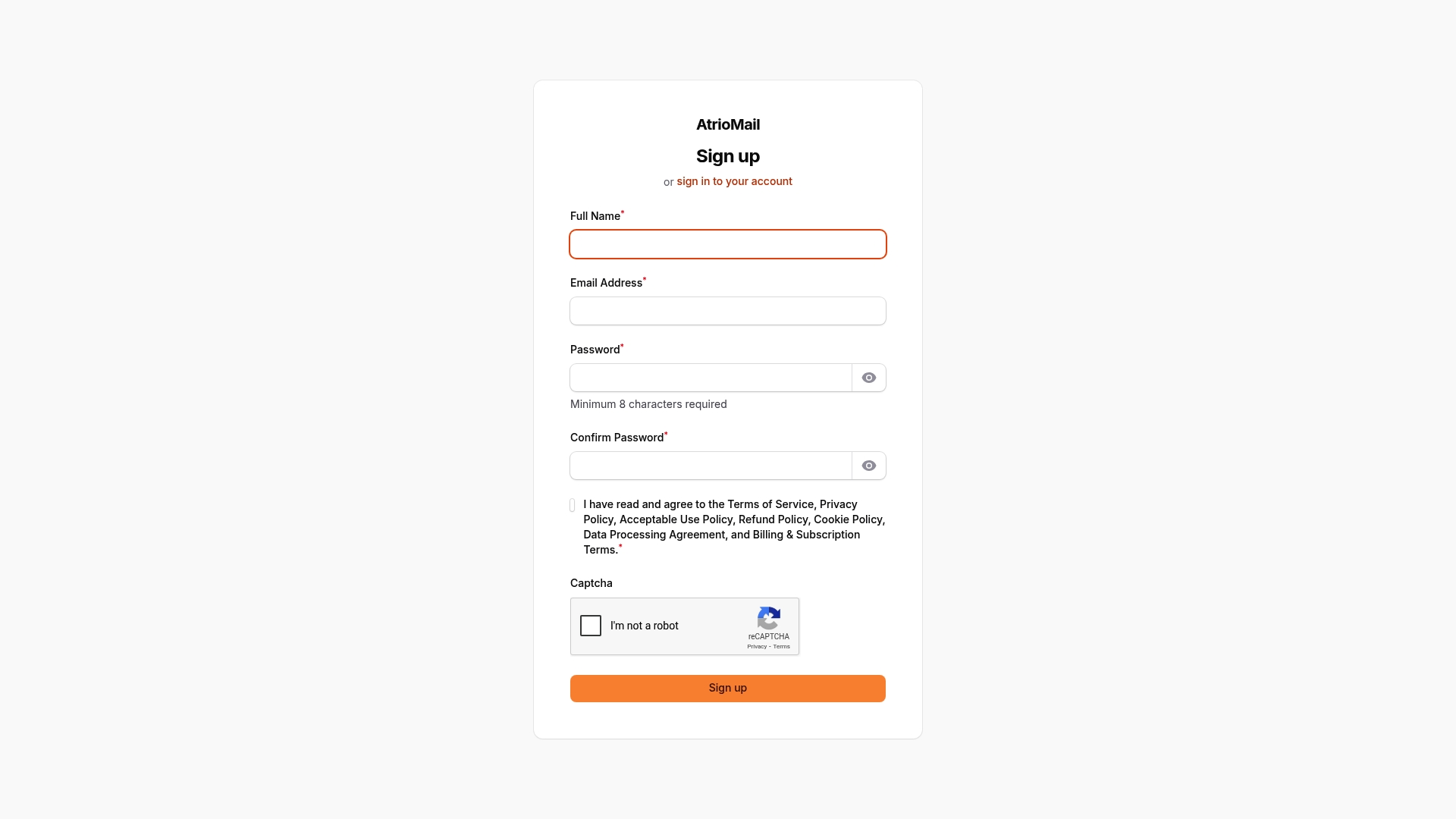
Unlock your agency’s potential by signing up now at AtrioMail Registration and start delivering professional, scalable, and secure email services your clients will trust. Don’t wait to build a branded email platform that grows with your business and protects your financial interests.
Frequently Asked Questions
What is email hosting, and why is it important for agencies?
Email hosting provides businesses with professional email services using their own domain names, enabling branded communication and enhancing client trust. It offers greater control, security, and management capabilities compared to generic email providers.
What are the different types of email hosting solutions available for resellers?
The main types of email hosting solutions include self-hosted servers, shared hosting, and cloud-based hosting. Each has its own benefits and technical requirements, with self-hosted providing maximum control, shared hosting being cost-effective, and cloud-based offering scalability and advanced features.
What core features should agencies look for in a branded email platform?
Agencies should seek platforms that provide customizable email domains, consistent visual branding elements, integrated analytics for tracking engagement, and robust security measures, ensuring a professional and secure communication strategy.
How can agencies ensure email deliverability and comply with security standards?
Agencies should implement essential authentication protocols like SPF, DKIM, and DMARC, maintain clean email lists, and monitor compliance regularly to improve deliverability rates and avoid having their emails marked as spam.