
Growing businesses often find themselves frustrated by strict limitations imposed by mainstream providers like Google and Microsoft. When control over branding, client relationships, and pricing is essential, relying on generic platforms can restrict your growth and compromise profitability. Independent email platforms put organizations in charge, offering complete user autonomy and customizable features that traditional hosts simply cannot match. This exploration reveals how choosing the right platform empowers resellers and agencies to command privacy, optimize revenue, and build trusted communication channels.
Table of Contents
- Defining Independent Email Platforms And Misconceptions
- Types Of Email Platforms: Hosted Vs. White-label
- Key Features For Resellers And Agencies
- Branding, Privacy, And Data Ownership Impact
- Cost, Profitability, And Common Pitfalls
- Comparing Major Providers To Independent Solutions
Key Takeaways
| Point | Details |
|---|---|
| Independent Email Platforms | Offer full control over data and branding, transforming email into a strategic business asset. |
| White-label Solutions | Provide flexibility for resellers to rebrand and manage client relationships effectively. |
| Data Ownership and Privacy | Essential for building trust; advanced platforms allow for customizable data handling that aligns with privacy regulations. |
| Evaluating Platforms | Focus on flexibility, customization, and scalability to ensure alignment with evolving business needs. |
Defining Independent Email Platforms and Misconceptions
Independent email platforms represent digital infrastructures that enable businesses to maintain complete control over their communication channels without relying on major tech ecosystems. These platforms fundamentally differ from traditional email services by offering complete user autonomy and customizable digital infrastructure, allowing organizations to manage their communication strategies independently.
At their core, independent email platforms provide several distinctive characteristics that set them apart from mainstream email solutions:
- Full control over data privacy and storage
- Customizable branding and domain management
- Enhanced security protocols
- Scalable infrastructure without vendor lock-in
- Direct API integrations for seamless operations
Many businesses mistakenly believe that independent email platforms are complex or difficult to implement. However, modern solutions have simplified deployment, making them accessible for organizations of all sizes. The misconception stems from outdated perceptions about email hosting complexity and perceived technical barriers.
Independent email platforms transform communication infrastructure from a standardized service into a strategic business asset.
Understanding these platforms requires recognizing that they are more than simple communication tools. They represent strategic technological ecosystems that empower businesses to maintain brand identity, ensure data privacy, and create tailored communication experiences.
Pro tip: Evaluate independent email platforms not just on technical capabilities, but on their potential to enhance your organization’s communication strategy and brand control.
Types of Email Platforms: Hosted vs. White-label
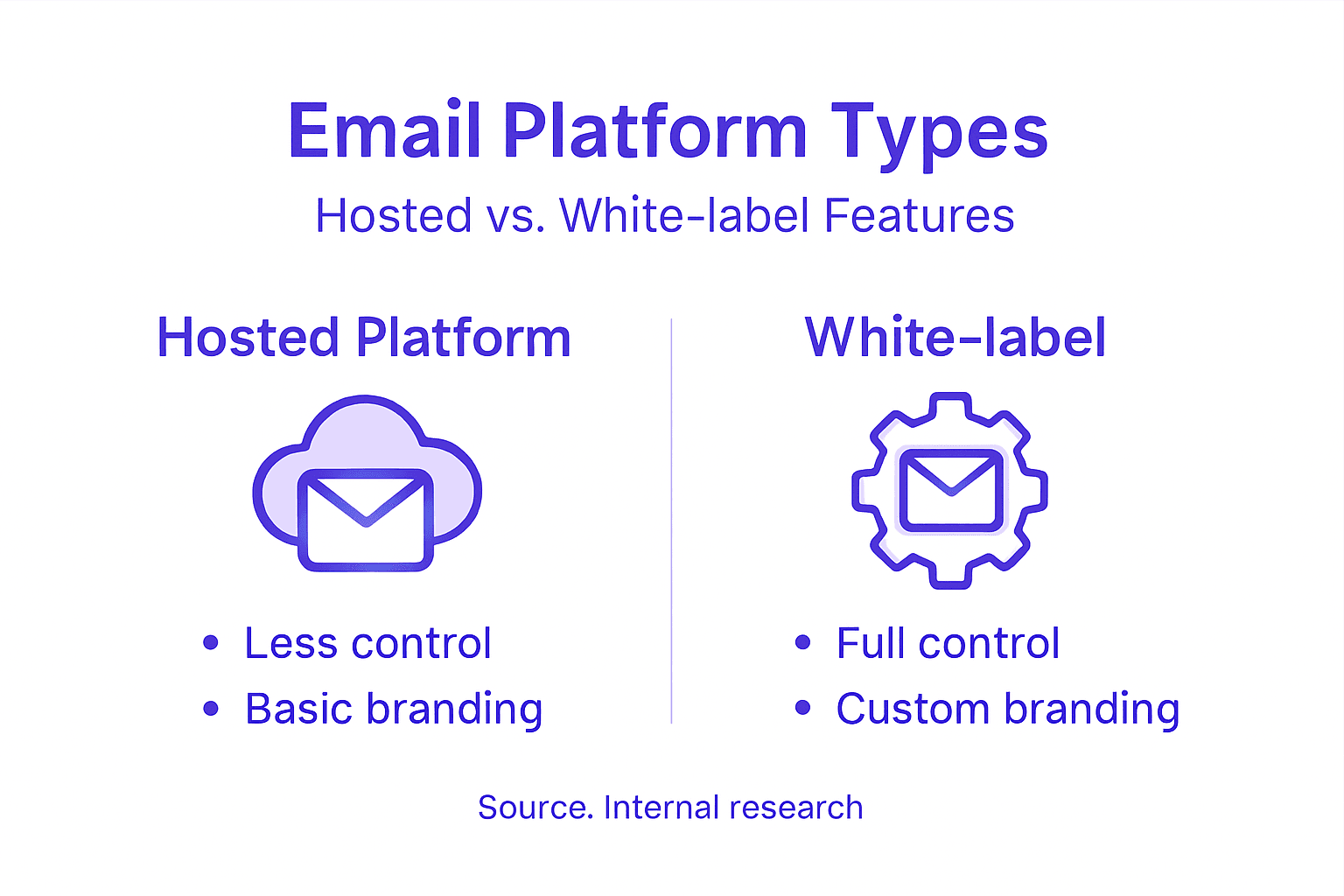
Email platforms have evolved significantly, presenting businesses with two primary models: traditional hosted services and white-label email hosting solutions. Traditional hosted platforms like Google Workspace and Microsoft 365 offer standardized email services where businesses rent infrastructure and receive pre-configured environments. In contrast, white-label platforms provide a more flexible approach to email management.
Key differences between hosted and white-label email platforms include:
- Infrastructure ownership
- Branding capabilities
- Customization levels
- Client relationship management
- Pricing and revenue models
- Scalability options
White-label email hosting represents a sophisticated approach for resellers and agencies. Unlike standard hosted platforms, white-label solutions allow businesses to:
- Rebrand email services entirely under their own domain
- Create custom pricing structures
- Maintain direct client relationships
- Integrate seamless billing and administrative tools
- Generate additional revenue streams
White-label platforms transform email from a commodity service into a strategic business asset.
The technical infrastructure behind white-label platforms enables businesses to offer enterprise-grade email hosting solutions without massive upfront investments. Resellers can leverage existing infrastructure while presenting a fully customized service that appears entirely proprietary to their clients.
Pro tip: Evaluate white-label email platforms based on their API flexibility, branding capabilities, and potential for creating unique service offerings.
Here’s a comparison of hosted and white-label email platform models:
| Aspect | Hosted Platform | White-label Platform |
|---|---|---|
| Branding Control | Provider’s branding enforced | Full control, own branding |
| Client Ownership | Provider manages clients | Agency or reseller manages clients |
| Customization | Limited settings | Extensive interface and features |
| Revenue Potential | Subscription margins only | Direct profit from custom plans |
| Integration Options | Standard integrations | Full API and custom workflows |
| Scalability | Fixed by provider | Flexible, agency-driven growth |
Key Features for Resellers and Agencies
Email hosting solutions for resellers and agencies require sophisticated features that go beyond standard email platforms. Multi-client management dashboards have become essential for businesses seeking to streamline operations and maintain complex client ecosystems. These advanced platforms enable comprehensive control, allowing agencies to manage multiple client accounts from a single, intuitive interface.
Critical features for resellers and agencies include:
- Comprehensive multi-client account management
- Granular user permission controls
- Secure client data segregation
- White-label branding capabilities
- Automated billing and provisioning
- Detailed performance reporting
- Scalable infrastructure
The most effective email hosting platforms provide robust tools that transform technical complexity into operational simplicity. Secure workflow management becomes paramount, ensuring that each client’s data remains completely isolated and protected. Agencies can create custom environments that appear entirely proprietary, maintaining their unique brand identity while leveraging sophisticated backend infrastructure.
Successful resellers transform email hosting from a technical service into a strategic business asset.
Advanced platforms offer nuanced capabilities that distinguish professional resellers from amateur providers. These include API integrations, custom domain management, and flexible pricing structures that allow agencies to create unique service packages tailored to specific client needs.
Pro tip: Select email hosting platforms that offer maximum flexibility in branding, pricing, and client management to differentiate your agency’s service offering.
Branding, Privacy, and Data Ownership Impact
In the complex landscape of digital communication, email privacy frameworks have become critical for maintaining customer trust and regulatory compliance. Modern businesses must navigate intricate challenges surrounding data ownership, user consent, and transparent branding practices that protect individual privacy while enabling effective communication.
Key considerations for maintaining robust data ownership and privacy include:
- Comprehensive user consent mechanisms
- Transparent data handling policies
- Granular privacy control settings
- Clear opt-out and data deletion processes
- Compliance with international privacy regulations
- Minimal data collection principles
- Secure data storage and transmission protocols
Independent email platforms offer unprecedented control over brand identity and data management. Unlike traditional email services, these platforms enable businesses to create custom environments where every aspect of communication reflects their unique brand personality while maintaining strict privacy standards. This approach transforms email from a simple communication tool into a strategic brand asset.
Effective data ownership is about creating trust, not just managing information.
Advanced email platforms now recognize that privacy is not merely a technical requirement but a fundamental aspect of building long-term customer relationships. By providing transparent, configurable privacy settings and robust data protection mechanisms, organizations can differentiate themselves in an increasingly privacy-conscious market.

Pro tip: Implement multi-layered privacy controls that give users granular control over their data while maintaining clear, straightforward communication about your data handling practices.
Cost, Profitability, and Common Pitfalls
Navigating the complex landscape of email platform profitability requires understanding hidden costs in email platforms. Resellers and agencies must carefully evaluate pricing models, operational efficiency, and potential revenue leakage to maintain sustainable business margins. The most successful businesses recognize that cost management extends far beyond simple per-seat pricing strategies.
Common profitability pitfalls for email platform resellers include:
- Escalating per-user licensing fees
- Reduced email deliverability rates
- Complex, disconnected operational tools
- Inefficient billing and contract management
- Lack of transparent pricing structures
- Limited scalability options
- High infrastructure maintenance costs
Strategic pricing models become critical for maintaining competitive advantage. Unlike traditional email services that charge incrementally, advanced platforms offer flexible structures that enable agencies to control costs while delivering high-value services. This approach transforms pricing from a potential barrier into a strategic opportunity for growth.
Profitability in email platforms is about creating value, not just reducing expenses.
Successful resellers understand that cost optimization requires a holistic approach. This means investing in platforms with integrated lead management, transparent billing systems, and robust deliverability networks that minimize operational friction and maximize potential revenue streams.
Pro tip: Conduct a comprehensive cost-benefit analysis that goes beyond surface-level pricing, examining long-term scalability, operational efficiency, and potential revenue generation capabilities.
Comparing Major Providers to Independent Solutions
The landscape of email platforms reveals stark differences between mainstream providers and independent solutions, with critical variations in privacy and customization emerging as key distinguishing factors. Traditional giants like Gmail and Outlook offer standardized services, while independent platforms provide nuanced, business-specific capabilities that transform email from a utility to a strategic communication tool.
Key comparative aspects between major and independent email providers include:
- Data ownership and privacy controls
- Branding customization options
- Pricing flexibility
- Security and encryption standards
- Integration capabilities
- Client relationship management
- Scalability potential
Enterprise-grade independent platforms provide capabilities that transcend conventional email services. Unlike mainstream providers that offer one-size-fits-all solutions, these platforms enable businesses to create fully customized communication ecosystems tailored to specific organizational needs. This approach allows resellers and agencies to maintain complete control over their communication infrastructure.
Independent email solutions transform communication from a commodity into a competitive advantage.
The most sophisticated independent platforms differentiate themselves by offering granular control over every aspect of email management. They provide advanced features such as comprehensive API integrations, white-label branding capabilities, and multi-tenant architectures that traditional providers cannot match. These solutions effectively empower businesses to treat email as a strategic asset rather than a basic utility.
Pro tip: Evaluate email platforms not just on current features, but on their potential to adapt and scale with your evolving business requirements.
Below is a summary of how major email providers compare to independent solutions:
| Feature Area | Major Providers | Independent Platforms |
|---|---|---|
| Data Management | Provider controls storage | Business controls storage |
| Customization | Minimal branding options | Full domain and branding |
| Pricing Model | Rigid, per-user pricing | Custom, flexible pricing |
| API Access | Limited or generic APIs | Advanced, tailored APIs |
| Regulatory Compliance | Standardized policies | Business-defined compliance |
| Long-term Adaptability | One-size-fits-all features | Evolves with business needs |
Experience True Independence with AtrioMail’s White-Label Email Solutions
The article highlights the critical challenges B2B resellers and agencies face such as limited brand control, complex infrastructure management, and costly pricing models when relying on mainstream email platforms. AtrioMail directly addresses these pain points by offering a fully managed, white-label email hosting platform that empowers businesses to regain control over data privacy, branding, and client relationships. With AtrioMail, you can break free from big ecosystems like Google and Microsoft while boosting profitability and scalability.
Enjoy unparalleled benefits including automated DNS validation (MX, SPF, DKIM, DMARC), seamless API integration, and usage-based pricing designed to streamline operations and save time. AtrioMail’s enterprise-grade platform transforms complex email hosting into an opportunity for revenue growth and operational efficiency.
Ready to enhance your business with independent email hosting that puts you in the driver’s seat Take a look at AtrioMail today and discover how easy it is to create customized, branded email solutions for your clients.
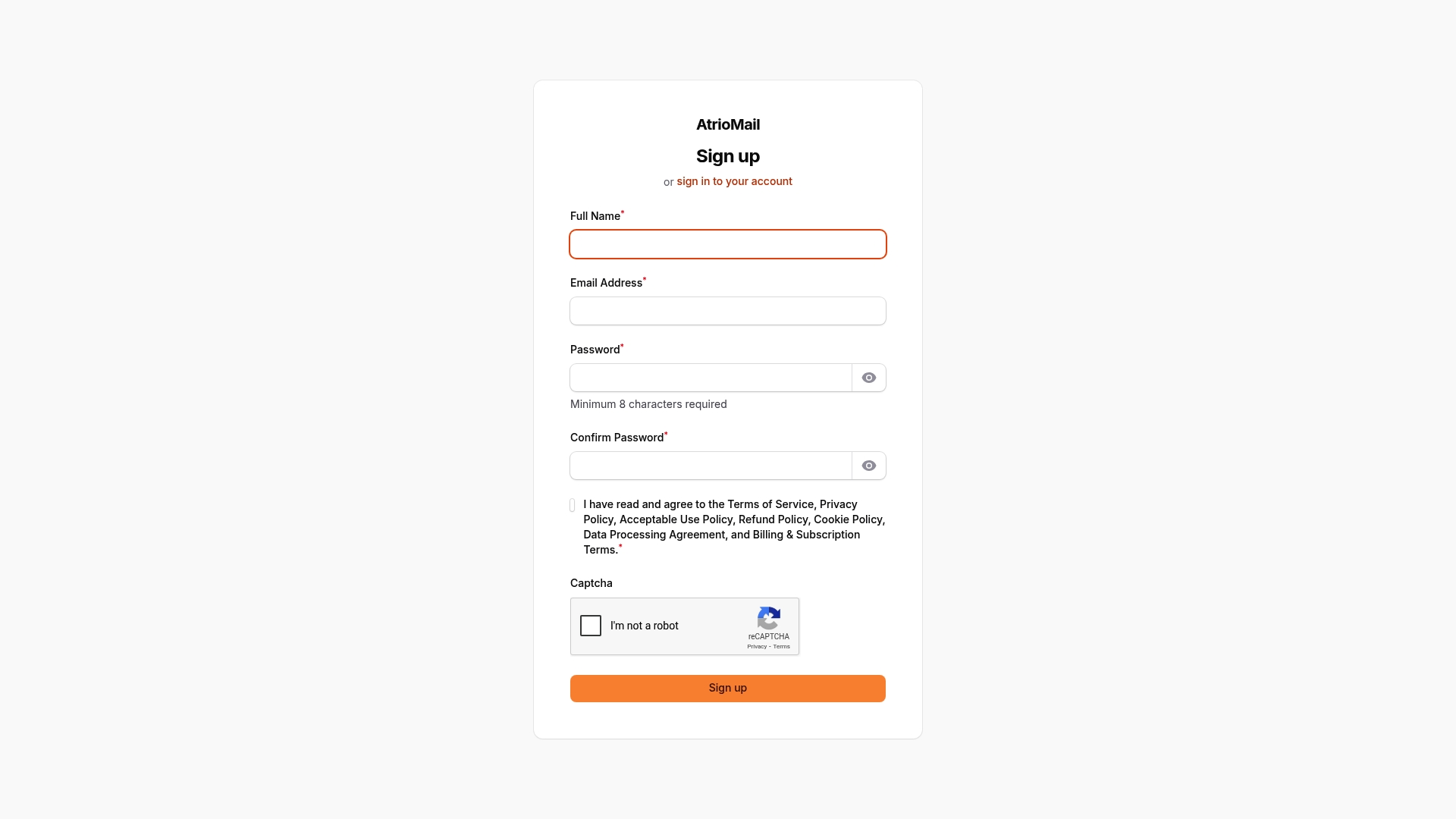
Don’t settle for generic email providers. Claim your advantage now and join the growing community of resellers and agencies selecting AtrioMail for complete control and superior profitability. Get started by signing up at AtrioMail Registration and unlock the power of true independent email platforms.
Frequently Asked Questions
What are independent email platforms?
Independent email platforms are digital communication infrastructures that allow businesses to manage their communications without relying on major tech ecosystems, providing full user autonomy and customizable features.
How do independent email platforms enhance data privacy and security for businesses?
Independent email platforms offer full control over data storage and privacy, with enhanced security protocols and compliance with international privacy regulations, ensuring that organizations can manage their sensitive information effectively.
What are the benefits of white-label email hosting compared to traditional hosted services?
White-label email hosting allows businesses to rebrand email services, create custom pricing structures, and maintain direct client relationships, offering more flexibility and control than traditional hosted services.
How can agencies benefit from using advanced email hosting platforms?
Agencies can utilize advanced email hosting platforms for efficient multi-client management, customizable branding, automated billing, and detailed performance reporting, which streamline operations and enhance service offerings.
Recommended
- Why Independent Email Platforms Matter for Resellers – Atriomail
- B2B Email Solutions Explained: Branding Power for Resellers – Atriomail
- Email Hosting in B2B: Empowering Brand Control – Atriomail
- 7 Key Benefits of White-Label Email for IT Providers – Atriomail
- blog | siift | Understanding the Difference Between B2B and B2C