
Launching a white-label email reseller business can be a real growth driver, but getting started is often overwhelming. From choosing the right branding options to handling security and pricing, every decision shapes your reputation and your bottom line. The challenge is finding an approach that not only wins new customers but also scales with your business and builds brand trust.
This guide walks you through practical, field-tested strategies to make your reseller venture both sustainable and efficient. You’ll discover how to control your branding, automate key processes, and avoid common pitfalls that slow many businesses down. Get ready to learn actionable insights that will help you offer professional, secure, and fully branded email services your clients will trust.
Table of Contents
- Evaluate White-Label Branding Options
- Check DNS Automation and Security Tools
- Assess Scalable Pricing and Usage Models
- Ensure API Integration for Seamless Deployment
- Review Client Support Features and Tools
- Verify Independence from Major Ecosystems
Quick Summary
| Takeaway | Explanation |
|---|---|
| 1. Prioritize Deep Branding Customization | Choose a white-label email platform that allows extensive customization to enhance brand perception and client trust. |
| 2. Implement Automated DNS Management | Utilizing automated DNS tools streamlines onboarding, reduces errors, and enhances security for email services. |
| 3. Select a Scalable Pricing Model | Opt for flexible pricing models that grow with your clients to prevent revenue constraints as they scale. |
| 4. Ensure Robust API Integration | A strong API supports automated processes for account creation, billing, and integration, improving operational efficiency. |
| 5. Maintain Independence from Major Providers | Select independent email hosting to avoid dependency on large providers, ensuring control over service offerings and customer data. |
1. Evaluate White-Label Branding Options
White-label email solutions let you offer professional, branded email services under your own company name instead of reselling someone else’s product. Your clients see your logo, colors, and domain—not a third-party brand—which strengthens their trust in your service.
When you choose a white-label email platform, you’re not just picking infrastructure. You’re selecting a branding partner that will shape how your clients perceive your business. White-label email solutions provide complete control over every customer touchpoint, from login pages to support portals.
Consider these key branding customization elements:
- Logo and color placement on client portals, email signatures, and admin dashboards
- Custom domain support so clients see your company name in email addresses and web interfaces
- Branded support portals that reflect your company identity
- Customizable email templates clients can personalize with their own branding
- White-label documentation that uses your terminology and visual style
The depth of customization matters significantly for your profit margins and brand loyalty. A platform allowing deep branding at every layer creates a seamless experience where clients forget they’re using a reseller’s infrastructure.
Deep branding customization transforms clients from seeing you as a middleman to viewing you as their trusted email service provider.
Evaluate whether the platform offers admin and client panel customization, migration tools for existing email users, and integration capabilities that align with your current systems. These features reduce operational overhead while letting you maintain complete brand control.
Different platforms provide varying levels of customization. Some offer basic logo placement only, while enterprise solutions allow custom CSS, domain-level branding, and even API-driven customization for your own white-label offerings. Match the depth of customization to your target market and revenue goals.
Pro tip: Request a live demo of the branding customization features and ask the vendor to show you exactly how your company logo, colors, and domain would appear across all client-facing interfaces before committing to a platform.
2. Check DNS Automation and Security Tools
DNS automation is what separates a manual, error-prone operation from a streamlined, secure email hosting business. When you rely on manual DNS configuration, your clients face delays, mistakes happen, and security vulnerabilities creep in.
Your white-label email platform should automatically handle DNS record creation and validation for your clients. This means MX, SPF, DKIM, and DMARC records get configured with minimal human intervention, reducing setup time from days to minutes.
Here’s what automated DNS tools accomplish for your reseller business:
- Faster client onboarding by eliminating manual DNS entry and verification steps
- Reduced support tickets when clients no longer struggle with confusing DNS instructions
- Fewer authentication failures through automated validation of email security protocols
- Better deliverability rates when security records are correctly implemented from day one
- Client confidence in your service when everything works smoothly on setup
DNS automation eliminates the friction that typically frustrates both you and your clients. Instead of troubleshooting why an SPF record didn’t propagate correctly, your platform validates everything automatically.
Think about the security side too. Sender Policy Framework standards protect domains from spoofing and phishing, but only when SPF records are configured correctly. DKIM provides cryptographic signature verification, and DMARC ties everything together with authentication policies. Automated tools ensure these security layers are properly implemented, not skipped or misconfigured.
Automation transforms DNS configuration from a technical barrier into a competitive advantage that sets your service apart.
When evaluating platforms, ask whether DNS automation handles initial setup, renewal cycles, and record updates. Does it provide clear status indicators showing clients their security posture? Can you customize DNS settings for specific client needs?
Pro tip: Choose a platform that allows you to white-label DNS validation status pages so clients see your branding while you maintain backend control over their security infrastructure.
3. Assess Scalable Pricing and Usage Models
Your pricing model determines whether your email reseller business scales gracefully or hits a ceiling. Fixed-fee structures sound simple until your customers grow beyond what you’ve priced them for, eating into your margins or forcing difficult conversations.
Scalable pricing models align costs with actual usage, so you don’t over-charge small clients or under-charge power users. Usage-based billing grows your revenue naturally as your clients expand their email needs.
Consider these common pricing approaches:
- Per-mailbox pricing charges a fixed fee per email account, scaling with customer growth
- Usage-based billing charges based on storage consumed, messages sent, or active accounts
- Tiered plans offer different feature levels at set price points, appealing to varied customer segments
- Volume discounts reward larger customers while protecting your margins on smaller accounts
- Bundle options package email with domains or SSL certificates to increase average transaction value
The right model depends on your target customers and market position. Hosting providers worldwide increasingly favor usage-based models because they reward customer success while keeping your operational costs proportional to revenue.
Flexible pricing that grows with your customers turns each renewal into a revenue expansion opportunity instead of a static contract.
Automation matters here too. Manual billing for hundreds of clients becomes unsustainable quickly. Your platform should support renewal automation, handle partial-month adjustments, and generate invoices without human intervention.
Think about cost control from your customer’s perspective. Caps-free mailbox quotas and transparent usage tracking build trust. When clients can see exactly what they’re paying for, they’re more likely to stay long-term.
Test different models with segments of your customer base before committing platform-wide. Some hosting providers find success with simple per-mailbox pricing, while others generate higher margins through usage-based approaches that reward heavy users.
Pro tip: Offer customers the option to choose between fixed-tier and usage-based pricing so they can select the model matching their business type, increasing adoption and reducing churn across your customer base.
4. Ensure API Integration for Seamless Deployment
Without API integration, you’re stuck manually provisioning accounts, syncing billing data, and managing customer changes one by one. That approach doesn’t scale when you have dozens or hundreds of clients relying on your service.
A robust API lets you automate the entire customer lifecycle. When a new client signs up through your billing system, the API automatically creates their email accounts, configures their branded interface, and begins charging for usage. When they upgrade, the API handles that too.
Here’s what strong API capabilities enable for your reseller business:
- Automated user provisioning eliminates manual account creation and reduces deployment time to minutes
- Billing system synchronization ensures your invoicing stays in sync with actual email account usage
- Migration automation lets customers transfer existing email without manual intervention or data loss
- CRM and marketing tool integration connects email hosting to your client’s other business systems
- Real-time reporting gives you visibility into customer usage, security status, and account health
Email API integration should provide comprehensive documentation and examples so your development team can integrate quickly. Look for APIs supporting REST standards, webhook support for event notifications, and clear rate limiting policies.
Consider whether the API handles domain validation, DNS record management, and security configuration automatically. These capabilities eliminate manual troubleshooting and reduce support burden significantly.
A well-designed API transforms your operation from labor-intensive service delivery to scalable, automated provisioning that grows without proportional cost increases.
Before committing to a platform, test the API thoroughly. Can you provision a test account in under 10 minutes? Does documentation match actual API behavior? Are there code examples in your preferred programming language?
Your development team will spend weeks integrating an API, so investing time upfront to verify its quality pays dividends later.
Pro tip: Request sandbox access to the API before signing any contract, then have your technical team build a complete integration test with account provisioning, billing sync, and DNS validation to confirm it meets your actual operational needs.
5. Review Client Support Features and Tools
Your clients will have issues. Email won’t deliver, passwords get forgotten, or migrations hit snags. How quickly and easily you resolve these problems determines whether they stay or switch to a competitor.
Built-in support features within your white-label platform reduce the burden on your support team while keeping clients satisfied. Rather than fielding every question directly, clients can often solve problems through self-service portals or automated systems.
Essential support features to evaluate include:
- Ticketing systems that organize customer issues and prevent problems from slipping through cracks
- Role-based access controls allowing clients to manage their own accounts without touching sensitive settings
- Multi-channel help options including live chat, email support, and knowledge bases
- Migration assistance tools that guide customers through transferring existing email safely
- Detailed reporting dashboards giving clients visibility into their account usage and security status
- Automated notifications alerting clients to quota warnings, security issues, or configuration problems
Client support processes built directly into your platform scale your team’s capacity. When clients can reset their own passwords or check their account status, you avoid routine tickets that consume support hours.
Consider the admin portal’s usability too. Can you easily view all customer accounts in one place? Can you drill down into individual customer issues without logging into their account? Strong administrative tools make troubleshooting faster and more secure.
Strong support infrastructure transforms your team from firefighters constantly responding to crises into strategic partners helping clients succeed with email.
Look for platforms offering migration tools that reduce switching friction. Many potential customers hesitate to change providers because moving hundreds of mailboxes sounds risky. Built-in migration capabilities with validation checks give clients confidence in the transition.
Test the support tools yourself before launch. Try resetting a password, checking email quotas, and reviewing account activity from both client and admin perspectives. Clunky interfaces create support tickets instead of preventing them.
Pro tip: Set up a knowledge base or help documentation that’s fully branded with your logo and colors, then encourage clients to search it before submitting support tickets, reducing your workload while improving client independence and satisfaction.
6. Verify Independence from Major Ecosystems
Relying on Google Workspace or Microsoft 365 for your white-label email service creates a dangerous dependency. If those platforms change pricing, policies, or shut down your account, your entire reseller business suffers immediate consequences.
Independent email hosting infrastructure gives you complete control over your service, pricing, and customer data. You’re not subject to policy changes from tech giants or vulnerable to their outages affecting your customers.
Consider the risks of ecosystem dependency:
- Pricing changes imposed by major providers can force you to restructure your entire business model overnight
- Policy shifts may restrict how you can resell or brand their services
- Service outages from large platforms impact all resellers simultaneously, harming your reputation
- Data ownership concerns create compliance and privacy complications for your customers
- Limited customization prevents you from differentiating your offering in competitive markets
- Vendor lock-in makes switching providers expensive and operationally disruptive
Independent infrastructure providers allow you to maintain full backend control without reliance on major cloud ecosystems. You manage your own infrastructure, support your own customers, and set your own rules.
White-label email hosting independence means avoiding constraints imposed by public cloud services. Your business stays flexible and responsive to customer needs rather than locked into someone else’s ecosystem decisions.
Verify that your chosen provider owns or controls its infrastructure rather than simply reselling Google or Microsoft services. Ask pointed questions about data centers, infrastructure ownership, and service continuity during vendor disputes.
Independence transforms you from a reseller bound by others’ decisions into a genuine service provider with autonomy over your business destiny.
This independence extends to compliance and privacy. With your own infrastructure, you control how customer data flows, where it’s stored, and who can access it. That control matters increasingly as privacy regulations tighten globally.
Pro tip: Before signing any contract, request documentation showing that the provider owns or controls its infrastructure independently, then verify they’re not simply reselling Google Workspace or Microsoft 365 under a white-label wrapper.
Below is a comprehensive table summarizing the key topics, benefits, and considerations for selecting and implementing white-label email solutions from the article.
| Topic | Key Points | Benefits |
|---|---|---|
| White-Label Branding | Customizable options like logos, colors, domains, emails, templates, and support interfaces | Strengthens client trust; provides a seamless branded experience |
| DNS Automation | Automated DNS configurations such as MX, SPF, DKIM, and DMARC records | Reduces setup time; improves security and email deliverability; minimizes manual errors |
| Scalable Pricing Policies | Flexible models including per-mailbox pricing, usage-based billing, and tiered plans | Aligns cost with usage; provides opportunities for increasing revenue; accommodates customer growth |
| API Integration | Seamless automation for account provisioning, billing sync, migrations, and integration features | Streamlines operations; reduces manual tasks; ensures scalability |
| Customer Support Tools | Comprehensive systems with ticket support, self-service options, and migration assistance | Enhances client satisfaction; reduces support workload; enables faster and more effective client issue resolution |
| Independence from Ecosystems | Ownership of independent infrastructure for email hosting beyond large ecosystems like Google | Ensures autonomy over services, pricing, and data privacy; avoids dependency and potential risks from large providers |
Elevate Your Email Reseller Business with AtrioMail
The “6 Steps to a Successful Email Reseller Checklist” highlights critical challenges such as maintaining complete brand control, automating DNS configurations like MX, SPF, DKIM, and DMARC for security, and scaling pricing models effortlessly. At AtrioMail, we recognize these pain points and tailor our platform to provide fully white-label managed email hosting that eliminates manual DNS errors and dependency on major ecosystems. We empower resellers by offering deep branding customization, automated DNS validation, and seamless API integration so your clients see your trusted identity with every email interaction.
Ready to transform your email reseller operations into a scalable, secure, and autonomous business? Discover how AtrioMail’s enterprise-grade solutions can increase your profit margins and operational efficiency while keeping you in full control. Start your journey today by registering your account and experience true independence from Google or Microsoft services.
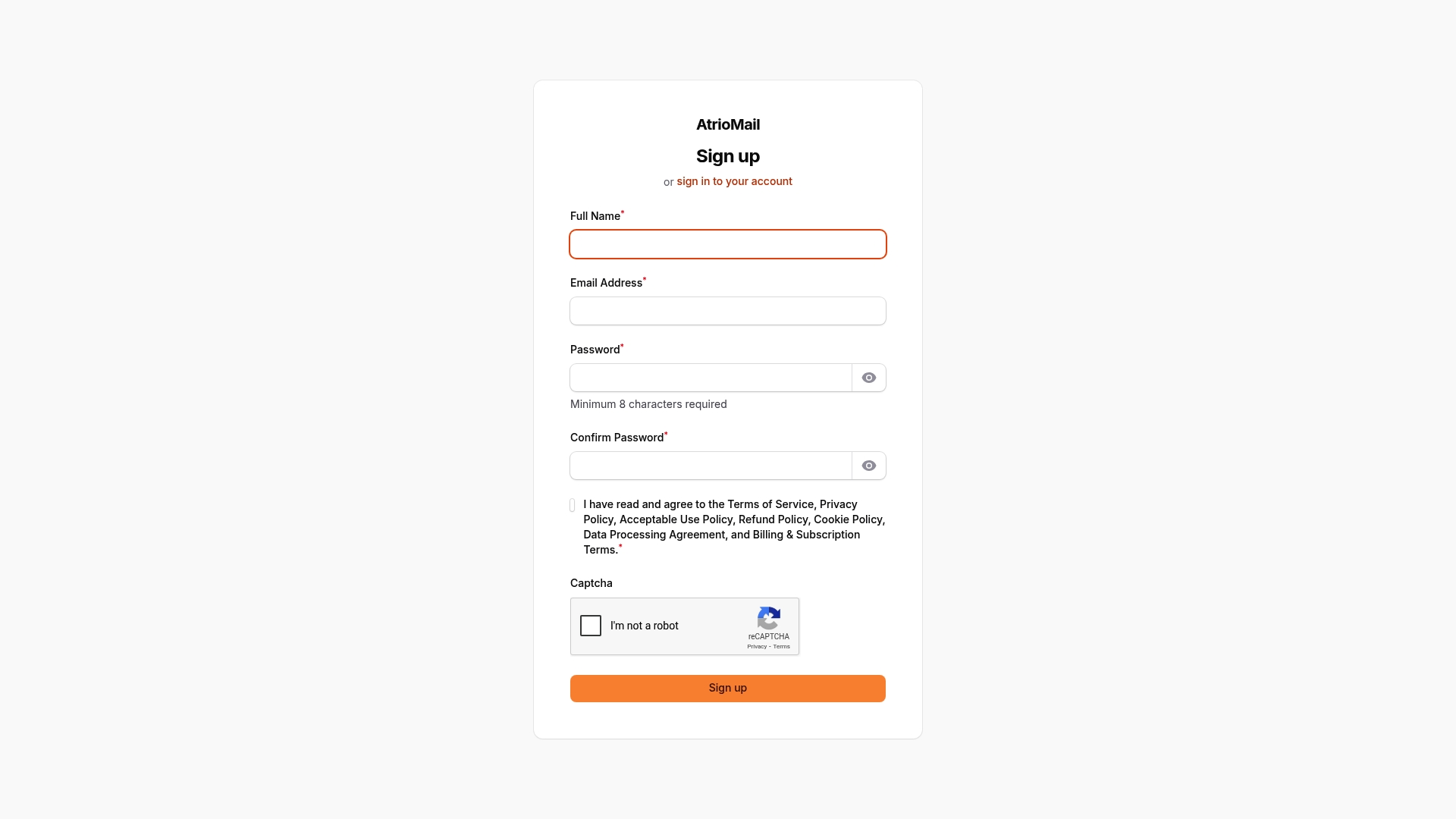
Join hundreds of resellers who trust AtrioMail to power their branded email services. Take the first step to simplified deployment, fully customizable branding, and smart pricing models by signing up at AtrioMail Registration. Unlock your email reseller potential now and build the future of your business with confidence.
Frequently Asked Questions
What are the key components of a successful email reseller checklist?
A successful email reseller checklist includes evaluating white-label branding options, checking for DNS automation and security tools, assessing scalable pricing models, ensuring API integration, reviewing client support features, and verifying independence from major ecosystems. Follow this framework to create a strong foundation for your email reseller business.
How can I ensure my chosen white-label email platform offers sufficient branding customization?
Verify that the platform allows you to customize logos, colors, domains, and support portals. Request a live demo to see how your branding appears across customer-facing interfaces before making a decision.
What are the benefits of using automated DNS tools for my email reseller service?
Automated DNS tools streamline client onboarding, minimize support tickets, and enhance email deliverability rates. Implement these tools to reduce setup time from days to minutes and increase client confidence in your service.
How do I select the right pricing model for my email reseller service?
Choose a pricing model that aligns costs with actual usage, such as per-mailbox pricing or usage-based billing. Test various models with segments of your customer base to find what works best for your specific clientele and revenue goals.
Why is API integration important for my email reseller operation?
API integration automates user provisioning, billing synchronization, and account management, significantly reducing manual work. Aim to implement a robust API that enables seamless automation, enhancing your business scalability and efficiency.
What support features should I look for in a white-label email platform?
Look for built-in support features like ticketing systems, role-based access controls, and multi-channel help options. These can improve client satisfaction and reduce your support team’s workload, allowing for more efficient problem resolution.