
Managing client communications across multiple projects can quickly become chaotic for IT agency leaders. When every email platform looks generic, maintaining consistent branding and secure client data feels impossible. A branded email platform offers clear advantages, empowering agencies to deliver white-label email solutions that reinforce their professionalism, simplify operations, and create new revenue streams. Discover how these platforms can transform your agency’s digital offerings while preserving complete control over your brand.
Table of Contents
- Branded Email Platform Defined For Agencies
- Types: White-Label, Reseller, And Managed Models
- Core Features And How Branding Works
- Use Cases For It Agencies And Resellers
- Risks, Costs, And Platform Alternatives
Key Takeaways
| Point | Details |
|---|---|
| Branded Email Platforms Enhance Efficiency | These platforms enable agencies to manage multiple clients seamlessly while maintaining brand control and operational efficiency. |
| Three Key Models Available | Agencies can choose from White-Label, Reseller, and Managed models, each providing unique benefits for branding and technical involvement. |
| Core Features Drive Branding Success | Essential features like visual customization, domain authentication, and consistent messaging elevate email communications into strategic marketing tools. |
| Evaluate Risks and Costs Carefully | Agencies must assess security risks, total cost of ownership, and potential alternatives when selecting a branded email platform. |
Branded Email Platform Defined for Agencies
A branded email platform represents a sophisticated technological solution designed specifically for agencies seeking comprehensive client email management capabilities. These platforms enable professional service providers to deliver white-label email services while maintaining complete brand control and operational efficiency.
Agencies utilizing branded email platforms gain access to powerful features that transform their operational infrastructure:
- Multi-client workspace management
- Secure data segregation between client accounts
- White-label branding capabilities
- Advanced user role and permission controls
- Streamlined client billing and approval workflows
Professional email marketing platforms are engineered to address the complex workflow requirements of modern agencies. Professional email platforms provide multi-client management tools that enable seamless collaboration, reporting, and brand reinforcement across diverse client portfolios.
The core purpose of these platforms transcends basic email functionality. They serve as strategic infrastructure that allows agencies to expand service offerings, maintain professional standards, and create additional revenue streams through white-label email solutions. By centralizing client email management, agencies can reduce operational complexity while presenting a unified, branded experience.
Key Differentiators:
- Comprehensive client data isolation
- Customizable branding interfaces
- Scalable infrastructure
- Granular access control mechanisms
Pro tip: Carefully evaluate branded email platforms based on their ability to seamlessly integrate with your existing agency workflows and provide robust white-label customization options.
Types: White-Label, Reseller, and Managed Models
Email hosting models for agencies have evolved to provide flexible solutions that cater to diverse business needs. White-label email hosting allows agencies to offer branded services without managing complex backend infrastructure, enabling professional service providers to expand their digital offerings strategically.
Three primary models dominate the branded email platform landscape:
-
White-Label Model
- Complete brand customization
- No visible third-party infrastructure
- Full client-facing control
-
Reseller Model
- Wholesale email service purchasing
- Independent pricing structures
- Client account management capabilities
-
Managed Model
- Comprehensive infrastructure support
- Technical maintenance included
- Scalable service provisions
Each model offers unique advantages for agencies seeking to establish professional email ecosystems. Reseller hosting provides an opportunity for web service providers and agencies to bundle professional email services, creating additional revenue streams while maintaining operational simplicity.
The technical sophistication of these models varies significantly. White-label providers offer the most extensive customization, allowing agencies to present email services as entirely proprietary solutions. Managed models reduce technical complexity by handling infrastructure maintenance, while reseller models provide a balance between control and operational efficiency.

Here’s a quick comparison of the main email hosting models agencies can choose:
| Model Type | Branding Control | Technical Involvement | Revenue Opportunity |
|---|---|---|---|
| White-Label | Complete agency | Minimal backend management | High margin, full service |
| Reseller | Limited agency | Moderate setup and account management | Moderate, bundled services |
| Managed | Shared with provider | Minimal, provider managed infrastructure | Stable, less technical labor |
Professional email platforms transform basic communication tools into strategic business assets, enabling agencies to differentiate their service offerings.
Key Selection Criteria:
- Infrastructure control requirements
- Branding customization needs
- Technical management capabilities
- Scalability potential
- Integration complexity
Pro tip: Carefully assess your agency’s technical capabilities and long-term growth strategy when selecting a branded email platform model to ensure optimal alignment with organizational objectives.
Core Features and How Branding Works
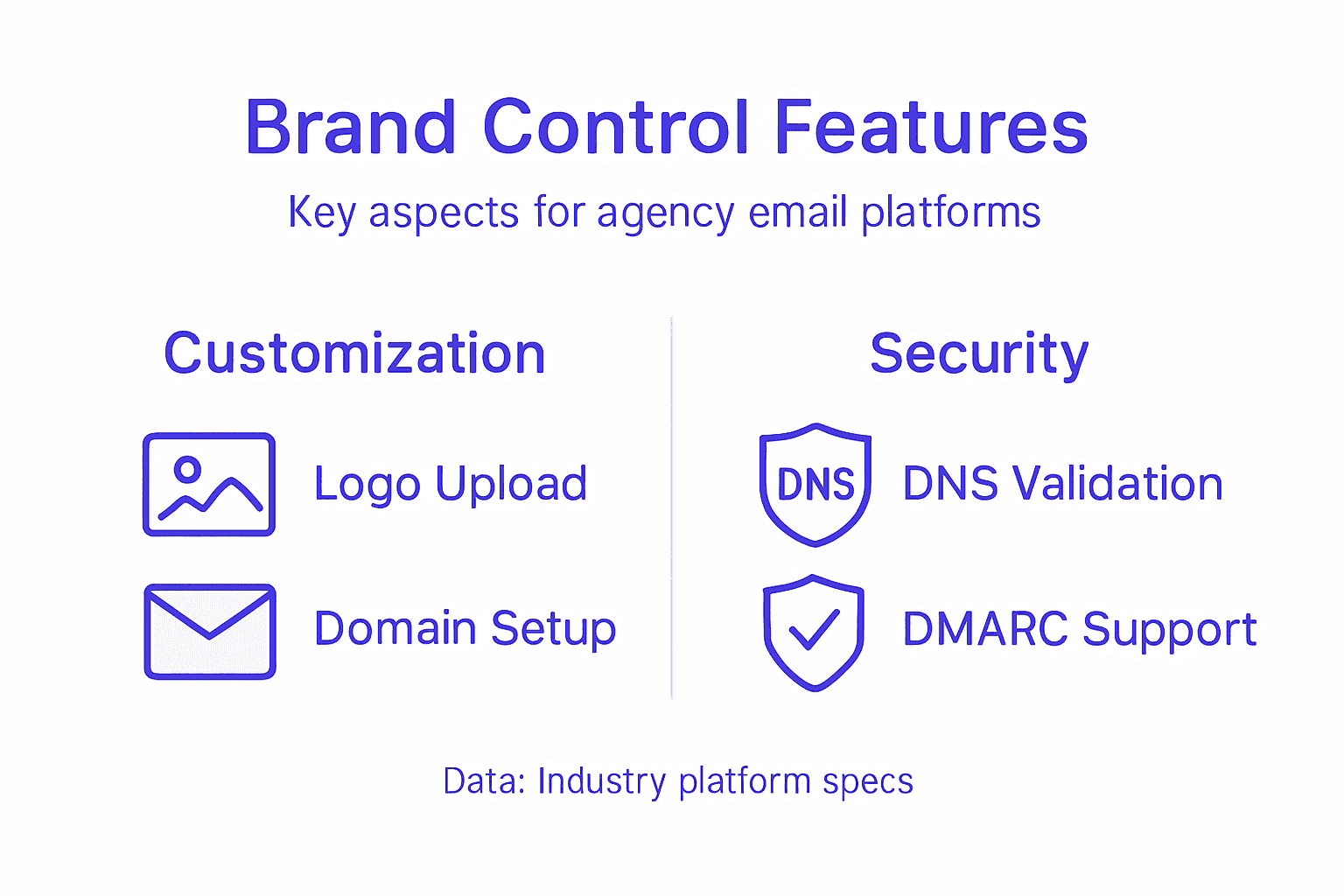
Email branding transforms standard communication into a powerful marketing instrument, enabling agencies to create a cohesive and professional digital identity. Email branding facilitates consistent visual messaging through strategic design elements that reinforce brand recognition across all digital communications.
Core features of branded email platforms typically include:
-
Visual Customization
- Logo integration
- Custom color schemes
- Typography matching brand guidelines
- Signature block design
-
Technical Branding Elements
- Domain authentication
- Dedicated sending IP addresses
- Custom email domain configuration
- Consistent email template design
-
Functional Branding Components
- Uniform messaging tone
- Automated brand compliance checks
- Centralized brand asset management
- Scalable design templates
The mechanics of email branding extend far beyond visual aesthetics. Comprehensive branding involves creating a seamless experience that communicates professionalism and builds client trust through every interaction. This means ensuring that every email sent reflects the agency’s unique identity, from the sender’s address to the email’s visual design and tone of communication.
Effective email branding transforms routine communications into strategic brand touchpoints that reinforce organizational identity and credibility.
Branding Implementation Strategies:
- Develop consistent visual guidelines
- Create reusable email templates
- Implement strict brand compliance protocols
- Train team members on brand representation
- Regularly audit email communications
Pro tip: Invest time in developing comprehensive email branding guidelines that go beyond visual design and encompass tone, messaging, and overall communication strategy.
Use Cases for IT Agencies and Resellers
Branded email platforms offer strategic solutions for IT agencies and resellers seeking to expand their digital service portfolios. IT agencies leverage email platforms for multiple clients through comprehensive management interfaces that streamline complex operational workflows.
Key use cases for these platforms include:
-
Lead Generation Services
- Customized email campaign management
- Advanced segmentation tools
- Performance tracking dashboards
- Automated lead nurturing workflows
-
Client Engagement Solutions
- Multi-client account management
- White-label branding capabilities
- Scalable communication infrastructure
- Compliance and deliverability monitoring
-
Revenue Expansion Strategies
- Bundled email hosting packages
- Recurring service subscription models
- Integrated IT service offerings
- Automated billing and reporting systems
The sophisticated infrastructure of branded email platforms enables agencies to transform routine communication into strategic business opportunities. Transactional email services represent a critical revenue stream, allowing agencies to offer professional, branded communication solutions that extend far beyond traditional email hosting.
Professional email platforms convert communication infrastructure into a powerful revenue-generating business asset for forward-thinking IT agencies.
Strategic Implementation Approaches:
- Develop comprehensive service packages
- Create tiered pricing structures
- Integrate email solutions with existing IT services
- Establish clear client onboarding processes
- Implement robust reporting mechanisms
Pro tip: Design service packages that combine email hosting with complementary IT solutions to create compelling, high-value offerings for potential clients.
Risks, Costs, and Platform Alternatives
Navigating the complex landscape of branded email platforms requires a strategic understanding of potential risks, associated costs, and available alternatives. Email platform risks include potential security vulnerabilities that can compromise sensitive client communication infrastructure and expose businesses to operational challenges.
Key risks and cost considerations encompass:
-
Security Risks
- Domain authentication vulnerabilities
- Potential data breach scenarios
- Compliance and regulatory challenges
- Third-party infrastructure dependencies
-
Cost Structures
- Subscription-based pricing models
- Per-contact billing mechanisms
- Additional feature surcharges
- Support and maintenance expenses
-
Platform Alternatives
- Generic email marketing services
- In-house development solutions
- Specialized third-party providers
- Traditional business email platforms
Pricing Complexity varies significantly across different branded email platforms. Agencies must carefully evaluate total cost of ownership, which extends beyond monthly subscription fees to include implementation costs, potential customization expenses, and long-term scalability investments.
Selecting the right email platform requires balancing technical capabilities, brand control, security requirements, and budgetary constraints.
Comparative Evaluation Criteria:
This table highlights factors to consider when evaluating branded email platforms:
| Evaluation Factor | Potential Impact | Typical Consideration |
|---|---|---|
| Scalability | Supports agency growth | Platform can handle client expansion |
| Security Infrastructure | Protects sensitive data | Advanced encryption and compliance |
| Customization Flexibility | Enables unique branding | Custom domains, design control |
| Total Cost of Ownership | Affects long-term budgeting | Subscription and maintenance fees |
- Total cost of ownership
- Scalability potential
- Security infrastructure
- Customization flexibility
- Technical support quality
Pro tip: Conduct a comprehensive cost-benefit analysis that considers not just immediate pricing, but potential long-term operational efficiencies and revenue generation capabilities.
Take Full Brand Control with a Trusted Branded Email Platform Solution
If you are struggling with maintaining consistent brand identity while managing multiple client email accounts you are not alone. The article highlights key challenges agencies face such as securing domain authentication implementing white-label branding and scaling infrastructure without deep technical overhead. AtrioMail directly addresses these pain points by offering a fully managed SaaS platform designed to empower IT agencies resellers and hosting providers with complete brand control and operational efficiency.
Experience automated DNS validation with MX SPF DKIM and DMARC support that minimizes deployment headaches. Enjoy scalable usage-based pricing that grows with your business and seamless API integration to effortlessly fit your existing workflows. AtrioMail lets you break free from big ecosystems like Google and Microsoft while increasing profit margins and preserving your agency’s unique brand presence.
Take the next step toward simplifying your branded email services and elevating client trust with a comprehensive platform built for your needs. Discover how to transform your email offering by registering now at AtrioMail registration.
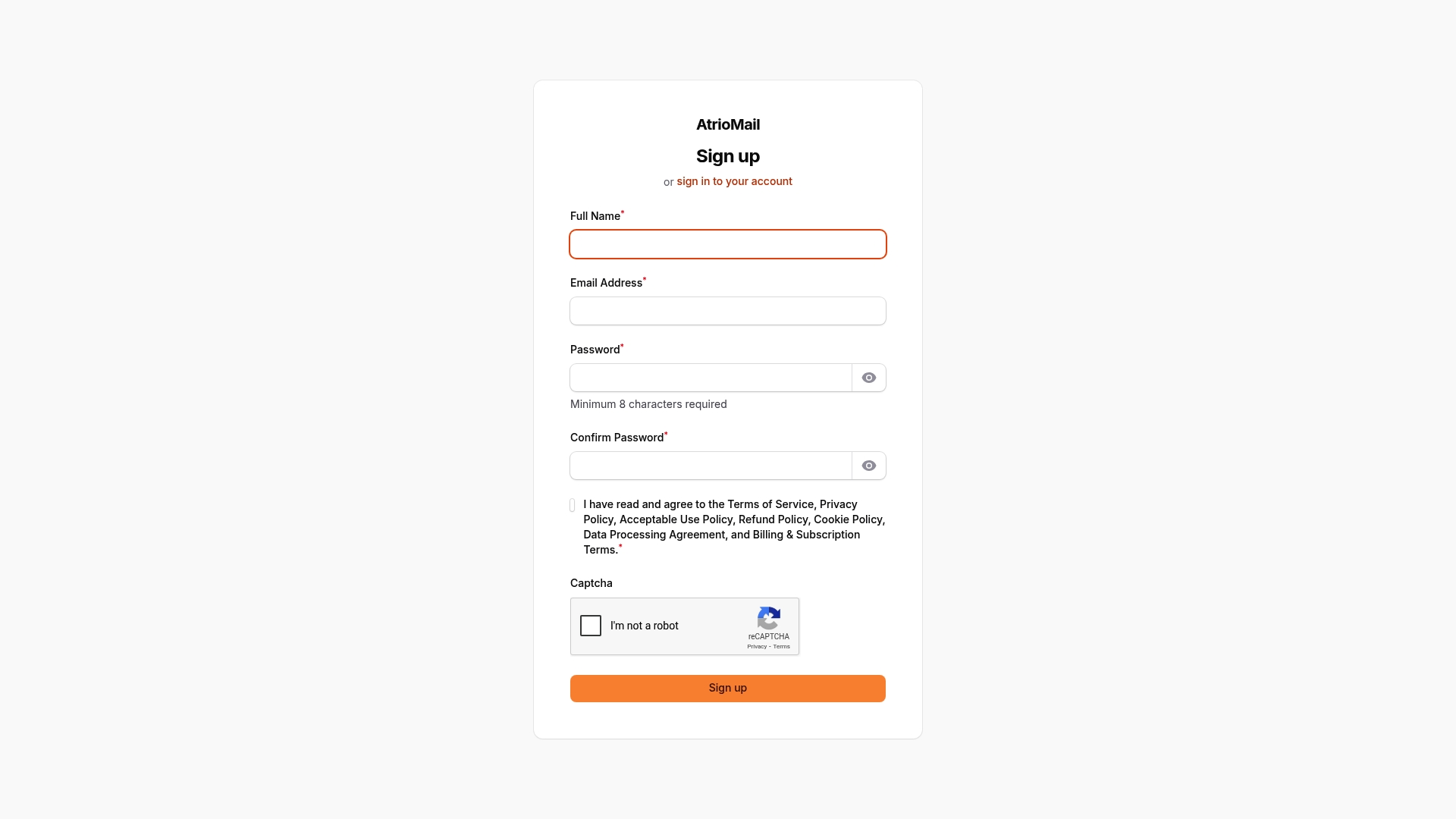
Ready to unlock the full potential of professional email platforms that deliver security scalability and seamless branding? Start your journey with AtrioMail’s white-label, managed solutions and empower your business with enterprise-grade email infrastructure under your own brand today.
Frequently Asked Questions
What is a branded email platform?
A branded email platform is a technological solution that allows agencies to manage client email communications while maintaining brand control and operational efficiency. It offers features like multi-client workspace management, secure data segregation, and white-label branding capabilities.
How does branding impact email communications?
Branding ensures consistent visual messaging across all email communications, reinforcing the agency’s identity. It involves elements such as logo integration, custom color schemes, and domain authentication, which help build client trust and professionalism.
What are the different models of branded email platforms available for agencies?
The three primary models are the white-label model, which offers complete branding control; the reseller model, which provides limited branding with independent pricing; and the managed model, which includes technical maintenance but less branding customization.
What are the key features to consider when selecting a branded email platform?
Key features to consider include infrastructure control, customization options, scalability potential, integration capabilities with existing workflows, and the associated costs of ownership.