
Offering managed email hosting can quickly become complex and time-consuming, especially when you need to balance branding, security, integrations, and support across multiple clients. The wrong choices often lead to costly mistakes, frustrated customers, and hours lost handling technical issues your platform should solve for you. You deserve tools and strategies that make email reselling simpler, more profitable, and less stressful.
This list uncovers the most important features and capabilities you need for modern managed email hosting. You will discover practical solutions that help you create a branded experience, improve deliverability, automate tedious tasks, and keep your business flexible. Get ready to spot the critical tools and smart tips that will protect your margins, delight your clients, and give your service a competitive advantage.
Table of Contents
- 1. White-Label Branded Email Platforms
- 2. Automated DNS Validation and Security
- 3. API-Driven Email Service Integration
- 4. Scalable, Usage-Based Email Hosting
- 5. Domain Management Tools for Resellers
- 6. Integrated Client Support Features
- 7. Freedom from Major Ecosystem Lock-In
Quick Summary
| Key Insight | Explanation |
|---|---|
| 1. Use White-Label Email Platforms | These platforms allow you to brand email services as your own without building technology, enhancing customer perception. |
| 2. Automate DNS Validation | Automation minimizes errors and drastically reduces setup time for DNS records, saving valuable support resources. |
| 3. Embrace API-Driven Integration | Integrating email functionality into your clients’ systems fosters stickier relationships and opens up new revenue streams. |
| 4. Implement Usage-Based Pricing | Aligning costs with actual usage improves customer satisfaction and allows for more straightforward scaling of services. |
| 5. Centralized Domain Management is Essential | Managing all client domains from a single dashboard minimizes risks while providing transparency and oversight for clients. |
1. White-Label Branded Email Platforms
White-label branded email platforms let you offer fully customized email solutions under your own brand without building the technology yourself. These platforms handle all the infrastructure, security, and maintenance while you maintain complete control over the customer experience and branding.
When you resell email services, your clients don’t want to see Microsoft, Google, or any third-party branding in their email interface. They want to see your logo, your colors, and your company name. A white-label email platform eliminates that problem entirely. Instead of pointing customers to generic interfaces, you deliver an experience that feels completely native to your brand.
These solutions provide customization options such as custom logos, domains, and interfaces that eliminate the need for heavy software development. You get a scalable, cost-effective solution without investing months or thousands of dollars in development. The platform handles DNS validation, security protocols, and infrastructure scaling automatically. Your job becomes focused on customer relationships and support, not backend engineering.
Consider what this means for your margins and growth. A typical managed hosting provider might charge you $3 to $8 per user for email services. You can resell those same services to your clients for $15 to $25 per user, depending on your market and service tier. That’s not just margin improvement—it’s recurring revenue that compounds monthly. Over a year with just 50 clients at 10 users each, you’re looking at substantial profit growth.
Beyond pricing, these platforms shine because they offer integrated marketing and analytics capabilities. Your clients gain extensive API documentation facilitating seamless integration with their existing systems and workflows. Many white-label solutions include automation features, custom templates, and drag-and-drop builders that empower your customers to manage campaigns themselves, reducing your support burden.
Brand consistency matters more than most resellers realize. When every touchpoint your customers experience carries your branding, you build stronger client relationships and increase perceived value. The platform becomes an extension of your agency’s capabilities, not a borrowed tool you’re pointing them toward.
Pro tip: Start with a single white-label email platform and master its feature set before adding multiple solutions. Deep knowledge of one platform’s capabilities lets you provide better customer support and identify upselling opportunities faster.
2. Automated DNS Validation and Security
Automated DNS validation takes the friction out of setting up email authentication protocols. Instead of manually configuring SPF, DKIM, and DMARC records for each client domain, your system handles the heavy lifting automatically, reducing errors and saving countless hours of support time.
Here’s why this matters for your business. Every email authentication protocol requires precise DNS record configuration. A single typo in an SPF record, a missing DKIM key rotation, or an incomplete DMARC policy can tank deliverability for your client’s entire email system. When you’re managing dozens of client domains, manual setup becomes a nightmare. Someone has to carefully document each record, make sure clients enter them correctly in their DNS provider, verify they’re working, and monitor them for changes. That’s not scalable.
Automation removes human error from the equation. Your system generates the exact DNS records each client needs, validates them in real time, and alerts you if something goes wrong. Real-time configuration and error prevention protect domains against phishing, spoofing, and brand impersonation. When a client’s domain authentication fails, you know about it immediately rather than discovering it weeks later when their email deliverability tanks.
Think about the practical impact. Without automation, setting up authentication for a single domain takes 30 to 45 minutes of technical work. With automated DNS validation, that time drops to 5 minutes or less. Scale that across 100 client domains and you’ve recovered 80 to 90 hours of billable time per year. Your team can focus on higher-value work like optimizing deliverability or implementing security policies rather than manually entering DNS records.
Automated DNS solutions also handle the monitoring piece that most resellers ignore. Security threats evolve constantly. A streamlined SPF, DKIM, and DMARC configuration ensures proper email authentication and compliance across all sending domains. Your system continuously validates that these records remain correctly configured. If a client accidentally deletes a DKIM record or modifies their SPF policy incorrectly, the system detects it and flags it for immediate correction.
Scalability becomes your competitive advantage here. A managed email provider with automated DNS validation can onboard 500 clients without adding significant support overhead. A provider relying on manual setup would need to double their support team at that scale. The economics simply don’t work. That’s why automated DNS validation separates profitable resellers from those drowning in support tickets.
Pro tip: Choose a provider that surfaces DNS validation status in your client dashboard so customers can see their own authentication health without contacting support, reducing your ticket volume while improving their transparency.
3. API-Driven Email Service Integration
API-driven email integration connects your email platform directly into your clients’ applications and workflows. Instead of treating email as a separate tool, your customers can send, receive, and manage messages programmatically through clean, developer-friendly APIs that integrate seamlessly with their existing systems.
Why does this matter for resellers? Your clients don’t want to log into a separate email dashboard to send messages. They want email functionality embedded in their CRM, their project management tool, their customer support platform, or whatever application powers their business. An API-driven approach makes this possible. Your developers can pull real-time email capabilities into any application using RESTful APIs for sending messages and tracking delivery, without your clients ever seeing your branded interface.
Think about the competitive advantage this creates. A reseller offering only basic email hosting becomes commoditized quickly. A reseller offering email with robust API integration becomes embedded in their clients’ operations. That’s a much stickier relationship. Your customers depend on your email API to function. They can’t easily switch providers without rewriting their application code, which means significantly longer customer lifetime value.
API-driven integration also powers automation that would be impossible through traditional email interfaces. Your clients can trigger automated emails based on user actions, synchronize email data with their databases in real time, handle bounces and undeliverable messages automatically, and build complex workflows that would require manual intervention otherwise. Email APIs provide unified access through RESTful interfaces for sending and receiving emails across multiple applications, supporting webhook notifications and message synchronization that streamline operations.
For your support team, API integration actually reduces complexity. When email problems occur, they’re usually configuration issues in the client’s application, not issues with your email service itself. Your API documentation becomes your support tool. Well-documented APIs with example code in popular languages mean fewer support tickets because developers can solve most problems themselves.
Consider the business model implications. You can offer tiered API access based on usage. A small client making 1,000 API calls per month pays one price. An enterprise client making 1 million API calls per month pays significantly more. This usage-based pricing model creates natural expansion revenue without adding much operational overhead. As your clients grow and send more email through their applications, they pay more, and your margins actually improve because your infrastructure costs scale linearly while pricing scales with value delivered.
The technical implementation is straightforward if you choose the right platform. Look for providers that give you comprehensive API documentation, code libraries in major programming languages like Python, Node.js, and PHP, webhook support for real-time event notifications, and robust error handling and rate limiting built in. Your developers should be able to integrate your email service into a test application in under an hour.
Pro tip: Invest time in creating API integration guides tailored to your clients’ most popular platforms and languages. A quick-start guide for integrating email into a Node.js application or a PHP CMS can significantly reduce implementation time for your development-focused customers, making your email service more attractive than competitors.
4. Scalable, Usage-Based Email Hosting
Usage-based email hosting aligns your costs directly with your clients’ actual email needs. Rather than forcing customers into fixed plans with predetermined mailbox limits or storage caps, you offer flexible pricing that grows with their business, eliminating waste and improving customer satisfaction.
Traditional email hosting operates on a simple premise. You pay for a mailbox regardless of whether your client uses 1 gigabyte of storage or 10 gigabytes. You buy a plan with 50 mailboxes even if you only need 30. This creates two problems for resellers. First, your costs don’t align with customer value, making it hard to price competitively. Second, your customers feel like they’re paying for unused capacity, creating friction in your relationship.
Usage-based pricing flips this model. Your customers only pay for what they actually use. If a client’s email volume jumps from 50 users to 75 users because of seasonal hiring, their cost increases automatically without requiring them to upgrade a plan. During slower months when they scale back, costs decrease. This flexibility creates trust because your pricing feels fair and transparent.
For your business model, usage-based hosting creates significant advantages. Small customers who might be hesitant to commit to a fixed monthly email plan become much more willing to start. That $20 per month fixed cost feels like a barrier. A usage-based model with a minimal starting cost and transparent per-user billing feels like trying rather than committing. Once they’re in, expansion happens naturally as their business grows.
Scalability also means you don’t need to manage complicated tier structures. Instead of maintaining separate plans for 25 users, 50 users, 100 users, and 250 users, you offer one simple service. Customers start small, usage grows, billing adjusts automatically. Your support team handles fewer upgrade requests because there are no discrete plan boundaries to cross. Everything scales smoothly.
Flexible plans tailored for growth and changing needs ensure cost efficiency without large upfront investments. This scalability supports your expansion revenue model. A $50 per month customer today might become a $500 per month customer in three years as their business grows. That growth happens passively if your pricing scales with their usage. You don’t need to convince them to upgrade plans. You don’t need to risk losing them during an upgrade conversation. The transition happens invisibly.
From an operational perspective, usage-based hosting actually simplifies your infrastructure. Modern cloud email services charge you based on usage, not based on fixed capacity. You can pass those economics directly to your customers through usage-based pricing. Your cost structure and your revenue structure align, making profitability straightforward and predictable.
One critical consideration for resellers involves transparency. Make sure your usage-based pricing model is crystal clear. Customers should understand exactly how you measure usage (per mailbox per month, per gigabyte of storage, API calls, or some combination), what the rate is, and how to monitor their own usage to avoid surprises. Tools that show customers their current usage and projected monthly costs reduce billing disputes and improve retention.
Usage-based pricing works best when paired with clear visibility into consumption. Customers who understand their usage patterns become more comfortable with variable billing.
The competitive advantage here is significant. Competitors stuck with fixed tier pricing look expensive when you can offer the same service at a lower starting price with transparent scaling. Customers see you as the flexible, customer-friendly option. That positioning drives acquisition and retention.
Pro tip: Offer a monthly usage report to each customer showing mailbox count, storage consumption, and API calls. This transparency builds trust and gives customers a natural moment each month to see exactly what they’re paying for, reducing billing friction and churn.
5. Domain Management Tools for Resellers
Domain management tools give you centralized control over your entire client domain portfolio from a single dashboard. Instead of logging into multiple registrars and manually tracking expiration dates, DNS settings, and security options, you manage everything efficiently through one interface.
When you’re reselling email services to dozens or hundreds of clients, domain management becomes critical infrastructure. Each client owns their domain, but you need visibility into DNS records, expiration dates, and security settings to provide reliable email service. Without proper tooling, this becomes a nightmare of spreadsheets, scattered logins, and missed renewal notices. One forgotten domain renewal means your client’s email stops working, and suddenly you’re the person responsible for their business disruption.
Centralized domain management tools solve this by aggregating all your client domains into one view. You see which domains expire in 30 days, which ones have DNS configuration issues, which ones need security updates. Bulk updates and expiration alerts help optimize portfolio oversight while reducing operational risk significantly. Instead of manually checking dozens of registrar accounts, you get alerts delivered directly to your dashboard.
For resellers, this operational efficiency translates directly to profit. A domain management tool typically costs $50 to $200 per month depending on features and domain count. That investment pays for itself within weeks by eliminating the time you’d otherwise spend on manual domain administration. More importantly, it prevents expensive mistakes. A missed renewal that takes down client email for eight hours might result in a service credit or lost client relationship. A $50 tool that prevents that mistake is the best investment you can make.
Domain management tools also provide security benefits that strengthen your value proposition. Features like WHOIS privacy protection, two-factor authentication, domain locking, and unauthorized transfer prevention protect your clients’ assets. When you can demonstrate that you’re actively securing their domains against takeover threats, you differentiate yourself from competitors who simply point customers to a registrar interface.
The automation angle matters too. Many domain management platforms offer API access that lets you build custom workflows. You can automatically synchronize DNS records across multiple providers, trigger renewal notifications at custom intervals, or synchronize domain data with your billing system. This automation reduces manual work and keeps your systems synchronized without constant oversight.
From a client communication perspective, domain management tools improve your service delivery story. You can provide clients with regular domain health reports showing DNS configuration status, security settings, and upcoming expiration dates. This transparency builds trust and positions you as someone actively managing their infrastructure, not just passively hosting email.
Think about the support implications. When a client asks about their domain expiration date or DNS configuration, you can answer immediately from your dashboard rather than asking them to check their registrar account. When you need to update DNS records for email authentication, you make changes directly instead of providing clients with technical instructions that might result in configuration errors.
Centralized visibility into your domain portfolio is not a nice to have feature for resellers. It is essential operational infrastructure that prevents mistakes and improves client satisfaction.
The best domain management tools for resellers offer bulk operations capabilities. Need to update DNS records across 50 domains? You do it once instead of 50 times. Need to enable WHOIS privacy for all your client domains? One action instead of dozens. These bulk operations save hours of administrative time monthly.
Pro tip: Set up automated expiration alerts 90 days before domain renewal dates and create a monthly review process where you audit DNS records for compliance with your email authentication standards. This proactive approach prevents surprises and gives you recurring opportunities to discuss domain services with clients.
6. Integrated Client Support Features
Integrated client support features transform your email platform from a simple hosting solution into a comprehensive communication hub. When your platform includes shared inboxes, collaboration tools, and ticket management built in, you reduce support overhead while improving response times and client satisfaction simultaneously.
Here is what typically happens without integrated support features. A client sends an email question to your support address. That email lands in someone’s personal inbox. They forward it to a colleague for input. The colleague responds via reply-all. Now three people are managing one client conversation across multiple email threads, and nobody has a clear view of what has already been addressed. Responses slow down. Important details get missed. Clients get frustrated because they keep repeating themselves.
Integrated client support features eliminate this chaos by centralizing all communication. Every incoming client email appears in a shared inbox that your entire support team can see. Team members can assign specific inquiries to specific people, add internal notes and comments without cluttering the client’s view, and track the status of each request. When a support person takes a ticket, other team members know it is being handled. When the client replies, everyone sees the updated conversation immediately.
The efficiency gains compound quickly. Shared inboxes and team collaboration reduce response times significantly while eliminating duplicate responses. A client question gets answered once, accurately, with full context, rather than being handled piecemeal across multiple email threads. Your average first response time drops from hours to minutes. Client satisfaction improves because they receive faster, more coherent support.
Automation features within integrated support systems handle the repetitive work that buries support teams. Incoming emails get routed automatically to the right team member based on keywords or sender information. Standard responses to frequently asked questions get triggered without manual intervention. Follow up reminders get set automatically if a client doesn’t respond within a certain timeframe. Your team focuses on the complex issues that require actual thinking rather than managing email logistics.
Consider the business impact. A support team that manually manages 200 customer emails per day using generic email might handle 12 to 15 substantive support conversations. The same team using integrated support features with automation might handle 25 to 30. You have not added staff, but you have doubled capacity. That translates directly to improved margins and the ability to serve more clients without scaling your support team linearly.
Analytics and reporting features built into integrated support systems give you visibility into performance. You see response times, ticket resolution rates, and which team members are handling which types of issues. You identify bottlenecks and training needs. You measure customer satisfaction. Without this data, support remains a black box. With it, you can continuously improve processes and outcomes.
Integration with your CRM or ticketing system makes everything more powerful. When a support email arrives, the system automatically pulls up the client’s full history, including previous support tickets, product usage data, and billing information. Your support person has full context without asking the client to repeat information. That context enables faster resolution and more personalized responses that make clients feel valued.
For resellers managing multiple clients, integrated support features solve a critical problem. You can provide white-labeled support tools to your clients so they can manage their own internal support teams using your platform. This creates recurring value and deeper customer integration. Your clients become dependent on your email system not just for hosting, but for their entire support operation. That stickiness drives retention and lifetime value.
Integrated support features are no longer a nice-to-have bonus in email platforms. They are table stakes for resellers who want to compete effectively and manage their operations at scale.
The practical implementation is straightforward. Look for platforms that offer shared inboxes with permission controls, assignment workflows, internal collaboration comments, automated routing rules, and basic reporting. You do not need every feature available. You need the core capabilities that address your specific support pain points.
Pro tip: Establish clear assignment workflows where incoming support emails are automatically routed to specific team members based on client or topic, and set up internal comment standards so your team documents decisions that come up repeatedly. This creates institutional knowledge that gets faster and better with each similar issue handled.
7. Freedom from Major Ecosystem Lock-In
Freedom from major ecosystem lock-in means your email platform does not trap you or your clients into a single vendor’s ecosystem. You retain the ability to migrate your data, switch providers if needed, and maintain control over your infrastructure without facing prohibitive technical or financial barriers.
Let’s be direct about why this matters. When you build your entire business on Microsoft’s or Google’s email infrastructure, you become dependent on their pricing decisions, their product roadmap, and their business priorities. If Microsoft decides to increase Microsoft 365 pricing by 25 percent next year, you either pay more or spend months migrating thousands of clients off the platform. If Google changes their API policies in ways that break your integration, you adapt to their changes or lose functionality. You have no leverage. You have no choice. That is lock-in, and it erodes your margins and your autonomy.
With a platform that emphasizes freedom from lock-in, the power dynamic flips. You can evaluate your provider based on service quality, pricing, and features rather than switching costs. If a provider raises prices unreasonably, you can migrate to a competitor without catastrophic disruption. If a new provider offers better features, you can move to them. This competition forces providers to earn your business continuously rather than assuming they own you permanently.
Data portability is the foundation of this freedom. Solutions promoting open standards and simple data migration empower users to switch providers as needed, reducing risk and increasing control. You should be able to export all your email data in standard formats like IMAP, get a complete list of all your client accounts and their configurations, and migrate to another provider without leaving behind inaccessible information. If a provider makes this difficult or impossible, they are betting on lock-in rather than service quality.
Avoid proprietary technologies that create hidden switching costs. Some email providers build custom authentication methods, proprietary database formats, or closed API designs that make migration technically complex. A good provider uses industry standard protocols like IMAP, SMTP, and DKIM. Standard protocols mean your data is never trapped in a proprietary silo. You can move it anywhere because every email provider in the world understands these standards.
The financial implications are significant. Lock-in allows providers to raise prices aggressively because they know customers face high switching costs. A provider that competes on service quality rather than lock-in must keep prices competitive or lose customers. Over time, this creates better economics for you. You avoid the experience of being gradually squeezed as switching costs accumulate and become insurmountable.
For resellers specifically, lock-in creates a secondary problem. If your email provider locks you in, you inherit those constraints for your clients. Your clients want the flexibility to change email providers if your service quality declines or a competitor offers better features. If you have locked them into a proprietary system, they cannot leave without significant disruption. That constraint reduces their loyalty. They stay with you out of switching costs, not because you are delivering better service. That is a weak position.
Managed services that reduce barriers to switching vendors offer flexibility and adaptability while minimizing risk. This approach challenges traditional vendor lock-in models by focusing on open ecosystems and user-centric service provision. When you choose a provider committed to this philosophy, you align yourself with a partner who understands that retention comes from being better, not from being inescapable.
Practically, what does this look like? It means choosing providers who offer standardized protocols, transparent pricing with no hidden fees, contract terms without automatic renewal penalties, and documented data export procedures. It means avoiding providers who charge high fees for moving your data, who use proprietary formats, or who require custom development to integrate with your systems.
The business case for freedom from lock-in extends beyond just risk mitigation. It actually improves your competitive positioning. You can pitch your email service confidently because you are not betting on switching costs. You compete on the quality of your service, your support, your features, and your pricing. That forces continuous improvement. Your clients stay with you because you are genuinely better, not because leaving is too expensive. That foundation creates happier customers and more stable, predictable revenue.
Vendor lock-in feels like a business advantage until you are on the losing end of it. Build your business on freedom instead.
Pro tip: When evaluating managed email providers, specifically ask about data export procedures, contract terms, and any proprietary technologies they use. Request a test export of sample data to confirm the process works as advertised. This due diligence prevents painful surprises later if you ever need to migrate.
Below is a summary table highlighting the key topics and insights addressed throughout the article regarding white-label branded email platforms and associated services.
| Topic | Description | Benefits |
|---|---|---|
| White-label Platforms | Platforms allowing customized email service branded under your company’s name. | Improved brand visibility, enhanced customer retention, and simplified technical management. |
| Automated DNS Validation | Automated systems for setting up and managing SPF, DKIM, and DMARC protocols for improved email authentication. | Time efficiency, reduced manual errors, and enhanced email deliverability and domain security. |
| Email Service API Integration | Integration of email capabilities into existing client applications through APIs. | Enhanced flexibility, streamlined client workflows, and strong client dependency through system embedding. |
| Usage-based Hosting | Hosting solutions with pricing models based on actual customer email usage. | Cost-effective scaling, transparent billing, and alignment of expenses with service usage. |
| Domain Management Tools | Centralized control for managing client domains, including DNS settings and renewals. | Simplified operations, reduced setup errors, and enhanced security oversight. |
| Integrated Support Features | Built-in support tools within email platforms offering shared inboxes and ticket management. | More efficient client service, minimized response times, and better support team collaboration. |
| Freedom from Lock-in | Ensuring flexibility and control by avoiding vendor-exclusive ecosystems. | Ability to switch providers smoothly, ensuring competitive service and avoiding disruptive dependencies. |
Unlock Scalable, Branded Email Solutions That Drive Your Reseller Business Forward
The article highlights common challenges faced by email resellers such as managing complex DNS validation, maintaining brand consistency, avoiding vendor lock-in, and scaling usage-based pricing without operational headaches. These are exactly the pain points AtrioMail was built to solve. With fully white-label email hosting, automated DNS authentication, scalable usage-based billing, and powerful API integrations, you can focus on growing your client base and boosting margins instead of wrestling with infrastructure.
AtrioMail empowers resellers, hosting providers, and IT agencies to deliver enterprise-grade, customizable email solutions backed by managed infrastructure and domain management tools. Gain complete control over your brand and client experience while freeing yourself from reliance on major ecosystems like Microsoft or Google. Join others who have increased revenue, reduced support load, and built competitive, scalable offerings with AtrioMail.
Ready to start offering your own branded email platform with operational ease and increased profitability?
Discover how our platform transforms reselling opportunities
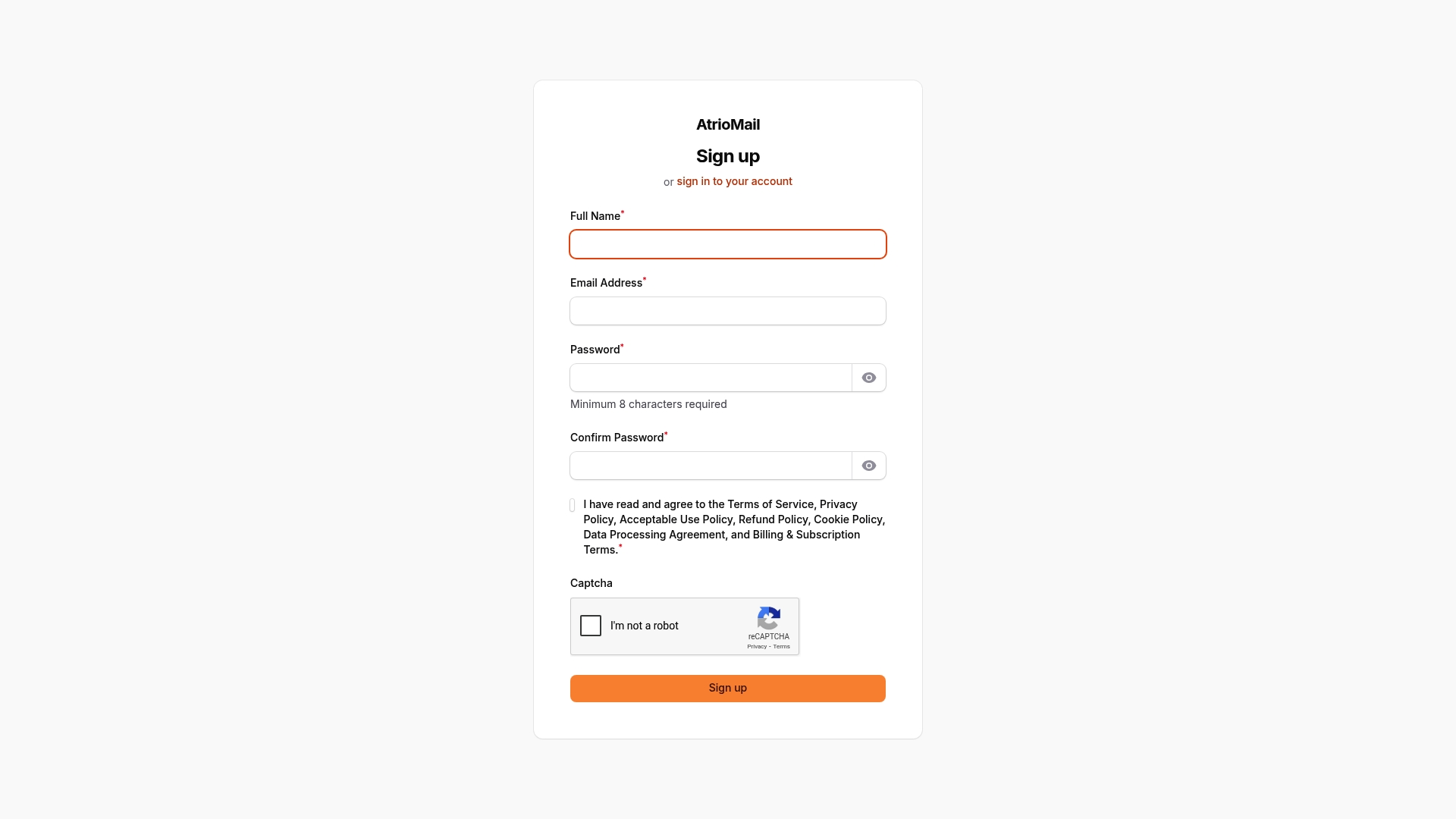
Take the next step today by registering for AtrioMail and experience how simple managed email hosting can empower your business with freedom, flexibility, and growth potential. Visit AtrioMail Registration now to get started.
Frequently Asked Questions
What are white-label branded email platforms?
White-label branded email platforms allow resellers to provide customized email solutions under their own brand without needing to develop the technology themselves. These platforms manage all technical aspects, so you can focus on building customer relationships and enhancing your brand experience.
How does automated DNS validation benefit resellers?
Automated DNS validation simplifies the process of setting up email authentication protocols, reducing manual errors and saving time. By implementing this solution, resellers can cut setup times for each domain from around 30-45 minutes to under 5 minutes, greatly enhancing operational efficiency.
What is the importance of API-driven email service integration for clients?
API-driven email service integration allows clients to embed email functionalities directly into their existing applications, streamlining their workflows. This integration helps reduce the need for separate email dashboards and creates a more seamless user experience across their systems.
How does usage-based email hosting work for resellers?
Usage-based email hosting enables customers to pay only for the services they use, rather than being locked into fixed plans. This flexibility increases customer satisfaction and allows for smoother scaling as businesses grow, fostering long-term relationships.
What features do domain management tools provide for resellers?
Domain management tools offer centralized control over multiple client domains, streamlining processes such as DNS management and renewal tracking. Incorporating these tools allows resellers to prevent missed renewals and improve operational efficiency by managing all domains from one dashboard.
How can integrated client support features enhance customer satisfaction?
Integrated client support features centralize communication, making it easier for your support team to manage client inquiries efficiently. By implementing a shared inbox system, response times can be significantly reduced, leading to faster resolutions and improved client satisfaction.