
Most American businesses now treat reliable email communication as a critical trust signal, with more than 90 percent of B2B organizations saying branded email impacts client confidence. IT agency owners and decision-makers know the risks of relying on outdated systems or generic platforms that fail to meet demanding scalability and white-label needs. This article reveals how scalable, professionally managed email hosting empowers global teams to deliver seamless, secure service under their own brand from New York to Berlin.
Table of Contents
- What Is Managed Email Hosting? Core Concepts
- White-Label Email Hosting for Resellers
- Automation, Integration, and Branding Features
- Scalability, Pricing Models, and Profit Margins
- Comparing Managed Email Hosting Alternatives
Key Takeaways
| Point | Details |
|---|---|
| Managed Email Hosting Benefits | It simplifies server management, allowing businesses to focus on strategic objectives instead. |
| White-Label Solutions for Resellers | Resellers can offer custom-branded email services without the cost of building infrastructure. |
| Automation and Integration Impact | Advanced automation and integration capabilities enhance operational efficiency and customer engagement. |
| Evaluating Hosting Alternatives | Businesses should compare customization, scalability, and required IT skills when choosing solutions. |
What Is Managed Email Hosting? Core Concepts
Managed email hosting represents a sophisticated service where professional providers handle the complete technical infrastructure for email delivery and storage under a custom domain. Unlike traditional email services, this approach offers businesses a comprehensive solution that removes the complex burden of server management and technical maintenance. Managed hosting services encompass critical backend operations including server configuration, security protocols, data backups, and guaranteed uptime performance.
At its core, managed email hosting provides businesses with professional branded email addresses while outsourcing the intricate operational details to specialized technology experts. The service typically includes advanced features such as robust spam filtering, comprehensive malware scanning, automatic backup systems, and round-the-clock technical support. By transferring server management responsibilities to dedicated professionals, organizations can focus their internal resources on strategic business objectives rather than technical infrastructure maintenance.
The key differentiator of managed email hosting lies in its holistic approach to email ecosystem management. Providers handle critical tasks like software updates, security patch implementations, SSL certificate management, and proactive system monitoring. Unmanaged hosting alternatives require significant internal technical expertise and ongoing maintenance, whereas managed solutions provide a turnkey, secure, and reliable email communication platform.
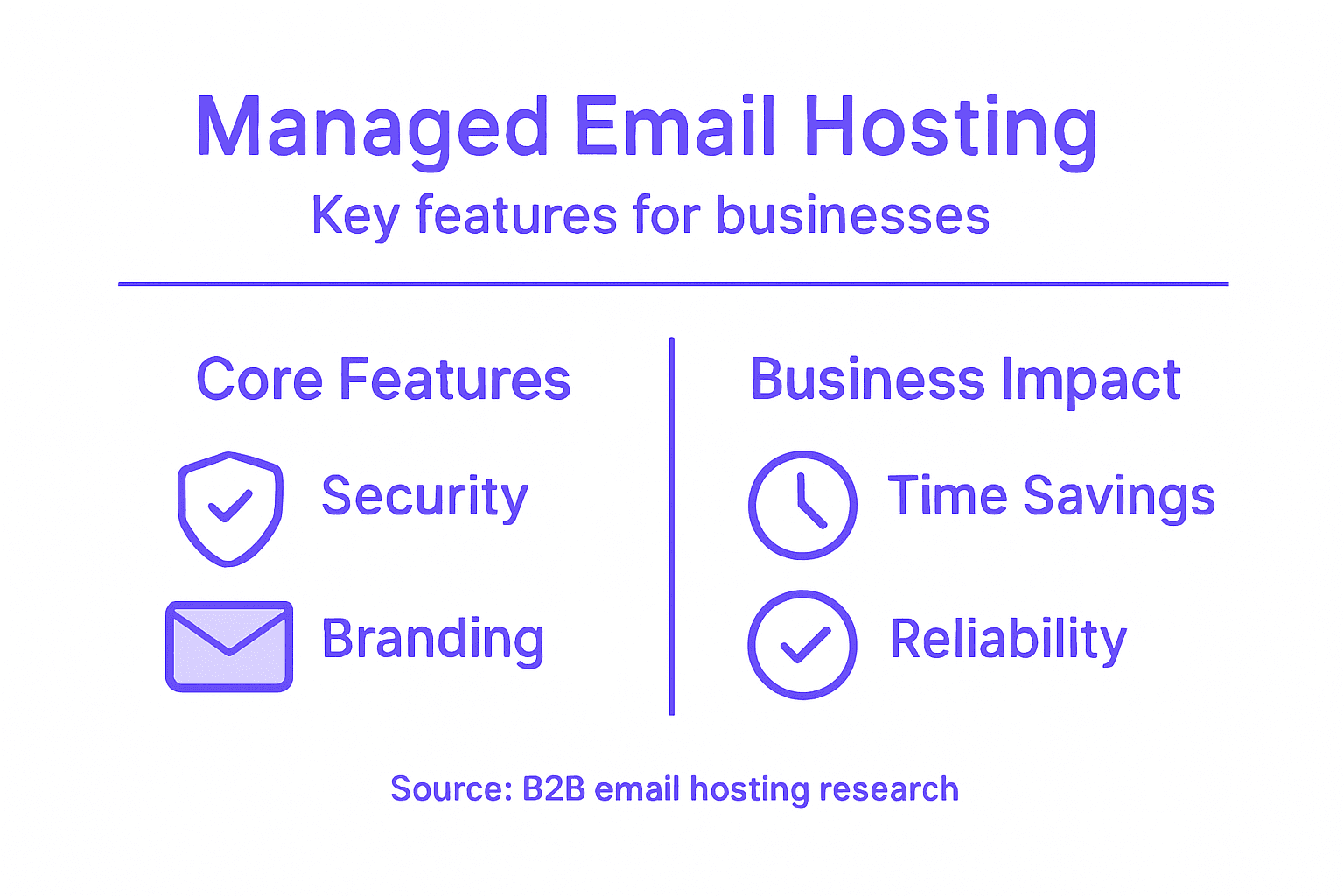
Here is a summary of key managed email hosting features and their business impacts:
| Feature | Description | Business Impact |
|---|---|---|
| Server Management | Provider handles all server operations | Reduces IT workload |
| Advanced Security | Malware scanning & spam filtering | Protects sensitive data |
| Automatic Backups | Regular data backups managed externally | Ensures business continuity |
| 24/7 Support | Dedicated technical help | Minimizes downtime risk |
| Uptime Guarantees | SLA-backed system availability | Reliable communication channels |
Pro Tip: When evaluating managed email hosting providers, prioritize services that offer transparent service level agreements (SLAs) and demonstrate a proven track record of high availability and robust security infrastructure.
White-Label Email Hosting for Resellers
White-label email hosting represents a powerful strategic opportunity for IT service providers, managed service providers (MSPs), and agencies to expand their service offerings without significant infrastructure investment. White-label email solutions enable resellers to offer professional email services completely under their own brand, providing a seamless and customized experience for their clients while outsourcing the complex technical backend to specialized providers.
The core advantage of white-label email hosting lies in its comprehensive customization capabilities. Resellers can control critical aspects of the email service, including login interfaces, webmail design, pricing structures, and customer support channels. This model allows businesses to create a fully branded email solution that appears entirely developed and managed in-house, without the substantial technical overhead typically associated with email infrastructure management. By leveraging these platforms, organizations can transform email services from a basic utility into a strategic revenue-generating product line.

Technically, white-label hosting services provide a turn-key solution where the underlying infrastructure, server management, security updates, and compliance requirements are handled entirely by the backend provider. This approach enables resellers to focus on customer acquisition, branding, and service differentiation rather than getting bogged down in complex technical maintenance. The model supports scalable growth, allowing businesses to rapidly expand their email service offerings without significant capital investments in hardware, software licenses, or specialized technical personnel.
Pro Tip: When selecting a white-label email hosting provider, carefully evaluate their API integration capabilities, ensuring seamless connection with your existing customer management and billing systems to minimize operational friction.
Automation, Integration, and Branding Features
Email automation has transformed how businesses manage their communication infrastructure, offering sophisticated solutions that streamline complex operational workflows. AI and automation technologies now enable managed email hosting platforms to provide predictive maintenance, automated provisioning, and proactive threat detection, dramatically reducing manual administrative tasks and enhancing overall system reliability.
Integration capabilities represent another critical dimension of modern email hosting services. These platforms now offer seamless synchronization with customer relationship management (CRM) systems, marketing automation tools, and analytics platforms. By enabling real-time data exchange, businesses can create personalized communication workflows that adapt dynamically to customer interactions. The ability to automatically segment email lists, trigger personalized campaigns, and track engagement metrics provides unprecedented insights and operational efficiency.
Branding features have evolved from simple logo placement to comprehensive customization options that allow resellers to create fully branded email experiences. Custom client portals, personalized webmail interfaces, and domain-specific email services enable organizations to maintain consistent brand identity across all communication channels. Email automation software now supports advanced features like A/B testing, workflow automation, and comprehensive personalization tools that help businesses scale their communication strategies without sacrificing individual customer experience.
Pro Tip: When evaluating email hosting platforms, prioritize solutions that offer robust API documentation and flexible integration capabilities to ensure smooth implementation with your existing technology stack.
Scalability, Pricing Models, and Profit Margins
Managed email hosting represents a dynamic business model with extraordinary growth potential, driven by innovative pricing strategies and remarkable scalability. Managed hosting market trends indicate a projected compound annual growth rate exceeding 20% through 2030, highlighting the immense opportunity for businesses entering this lucrative sector. This growth is fundamentally powered by flexible infrastructure that allows service providers to accommodate expanding client needs without proportional increases in operational costs.
Pricing models in managed email hosting have evolved to provide unprecedented flexibility for both providers and customers. Typical structures range from per-mailbox monthly fees, usually between $1 to $10 per user, depending on feature complexity and storage requirements. The most successful providers design tiered pricing strategies that allow clients to scale seamlessly, with incremental costs that remain predictable and manageable. This approach enables businesses to add users or increase service levels without experiencing dramatic cost escalations or requiring significant infrastructure reinvestment.
Email hosting profitability presents an attractive business proposition, with potential gross margins around 80% for well-implemented services. The key to achieving these margins lies in maintaining a robust, scalable infrastructure that can support numerous clients with minimal incremental management expenses. Successful providers leverage automation, standardized processes, and efficient technological platforms to minimize operational overhead while delivering high-quality, customizable email solutions that meet diverse business requirements.
Pro Tip: Develop a pricing strategy that offers clear value progression across tiers, allowing customers to understand exactly what additional features and benefits they receive as they upgrade their service level.
Comparing Managed Email Hosting Alternatives
Email hosting solutions represent a diverse landscape of technological approaches, each with unique advantages and limitations for businesses seeking reliable communication infrastructure. Managed versus unmanaged email hosting presents a fundamental decision point where organizations must weigh operational complexity against control and cost considerations. The primary alternatives range from fully managed cloud platforms to self-hosted solutions, each offering distinct trade-offs in terms of technical requirements, scalability, and strategic flexibility.
Cloud-based enterprise solutions like Microsoft 365, Google Workspace, and Zoho Mail dominate the market by providing integrated productivity ecosystems. These platforms offer seamless collaboration tools, robust security features, and predictable monthly pricing structures. However, they often come with limitations in customization and brand control. Alternatively, white-label managed email hosting solutions emerge as a compelling middle ground, enabling businesses to maintain brand identity while leveraging professional infrastructure without extensive technical overhead.
Enterprise email hosting platforms differ significantly in their approach to security, compliance, and scalability. On-premises solutions provide maximum control but require substantial internal IT resources, while cloud-based managed services offer rapid deployment and reduced maintenance complexity. Businesses must carefully evaluate their specific requirements, considering factors such as user count, regulatory compliance needs, budget constraints, and desired level of customization when selecting an email hosting strategy.
Here is a comparison of major email hosting alternatives:
| Hosting Type | Customization Level | IT Skills Needed | Scalability Potential |
|---|---|---|---|
| Managed Cloud Platform | Limited (preset options) | Minimal | High (easy user growth) |
| Unmanaged Self-Hosted | Full (system-wide) | Extensive | Moderate (resource bound) |
| White-Label Managed | Extensive (branding) | Low | High (rapid expansion) |
Pro Tip: Create a comprehensive comparison matrix that objectively scores potential email hosting solutions across key criteria like cost, scalability, security features, and brand customization to make an informed decision.
Elevate Your Email Hosting with AtrioMail’s White-Label Managed Solutions
Managed email hosting requires expert handling of complex infrastructure, security, and scalability to deliver reliable branded email services. If you are an IT agency, reseller, or hosting provider looking to free your team from technical overhead while gaining full brand control and enhanced profit margins, AtrioMail offers the ideal platform. With automated DNS validation (MX, SPF, DKIM, DMARC), scalable usage-based pricing, and seamless API integration, AtrioMail empowers you to launch and grow your own white-label email business effortlessly.
Entrust your backend management and focus on delivering value and branding that resonates with your clients. Experience enterprise-grade security and 24/7 support tailored to resellers who want to maximize operational efficiency and customer satisfaction. Discover the freedom to scale without dependence on big ecosystems like Google or Microsoft and build a competitive advantage in the managed email hosting market.
Unlock your potential today with AtrioMail and transform your email services into a strategic revenue stream.
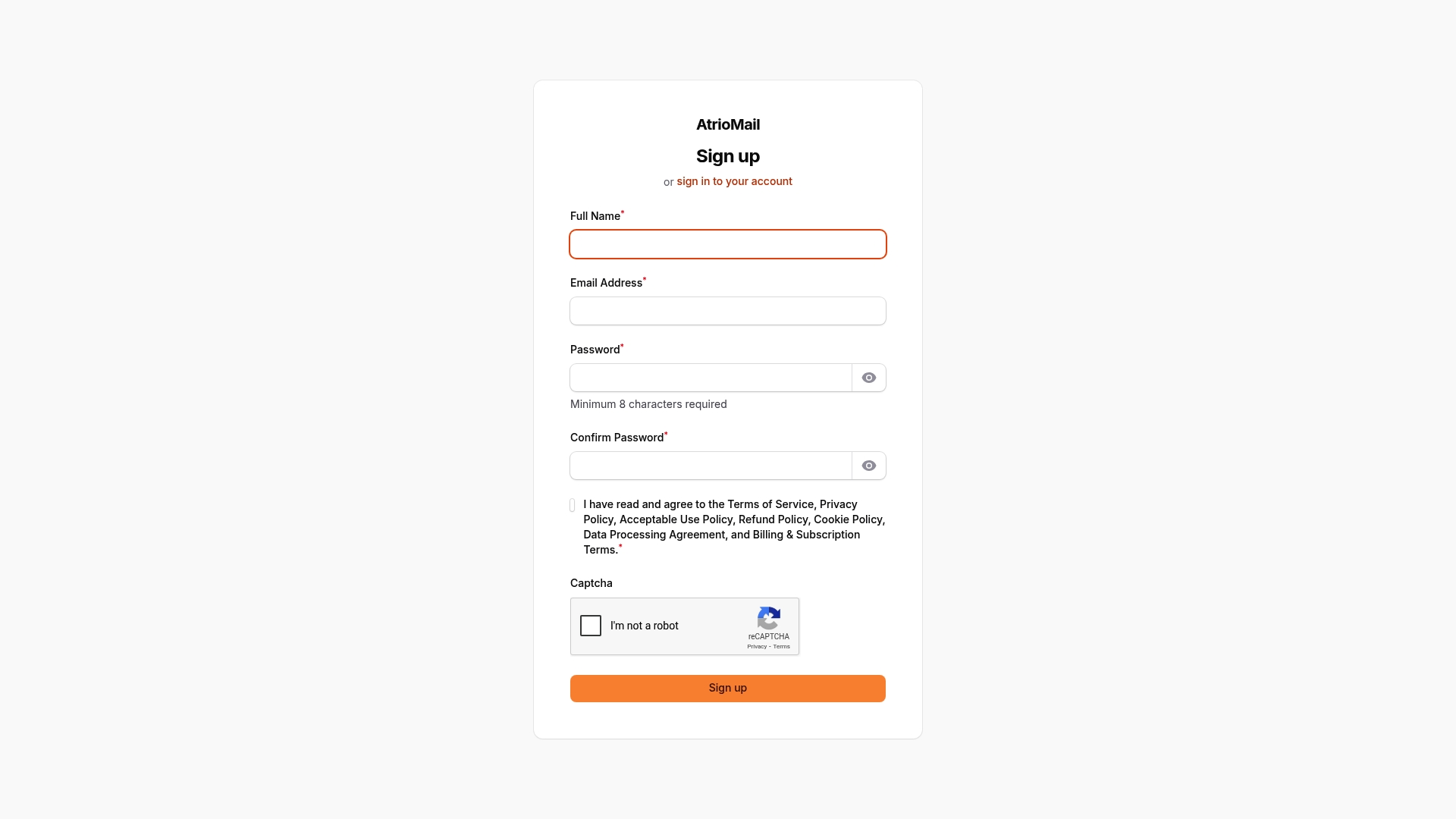
Ready to start your journey to scalable, secure, and fully branded email hosting Visit AtrioMail Registration now to create your account and access white-label hosted email solutions customize your client portal and start growing your business faster than ever.
Frequently Asked Questions
What is managed email hosting?
Managed email hosting is a service where providers handle all technical aspects of email delivery and storage under a custom domain, allowing businesses to focus on their core operations instead of technical maintenance.
What are the benefits of managed email hosting for businesses?
The benefits include reduced IT workload, advanced security features like spam filtering and malware scanning, automatic backups, 24/7 support, and guaranteed uptime, which collectively enhance reliability and streamline communication.
How does white-label email hosting differ from standard managed email hosting?
White-label email hosting allows resellers to offer email services under their own brand without managing the technical backend, while standard managed email hosting typically provides direct services to end-users without the customization for branding.
What pricing models are available for managed email hosting services?
Pricing models often include per-mailbox monthly fees and tiered pricing strategies that allow businesses to scale services easily without incurring significant costs, facilitating predictable budgeting as user numbers increase.