
Most american hosting companies struggle to keep up as client email volumes spike and global compliance demands intensify. For IT directors at mid-sized firms, this challenge means balancing reliable infrastructure and profitability in a crowded market. Discover how scalable solutions powered by advanced cloud technologies enable hosting providers to adapt efficiently, minimize technical risk, and unlock new revenue streams—all while maintaining consistent service quality for clients from Canada to Germany.
Table of Contents
- Defining Scalable Email Infrastructure
- Types and Deployment Models Explained
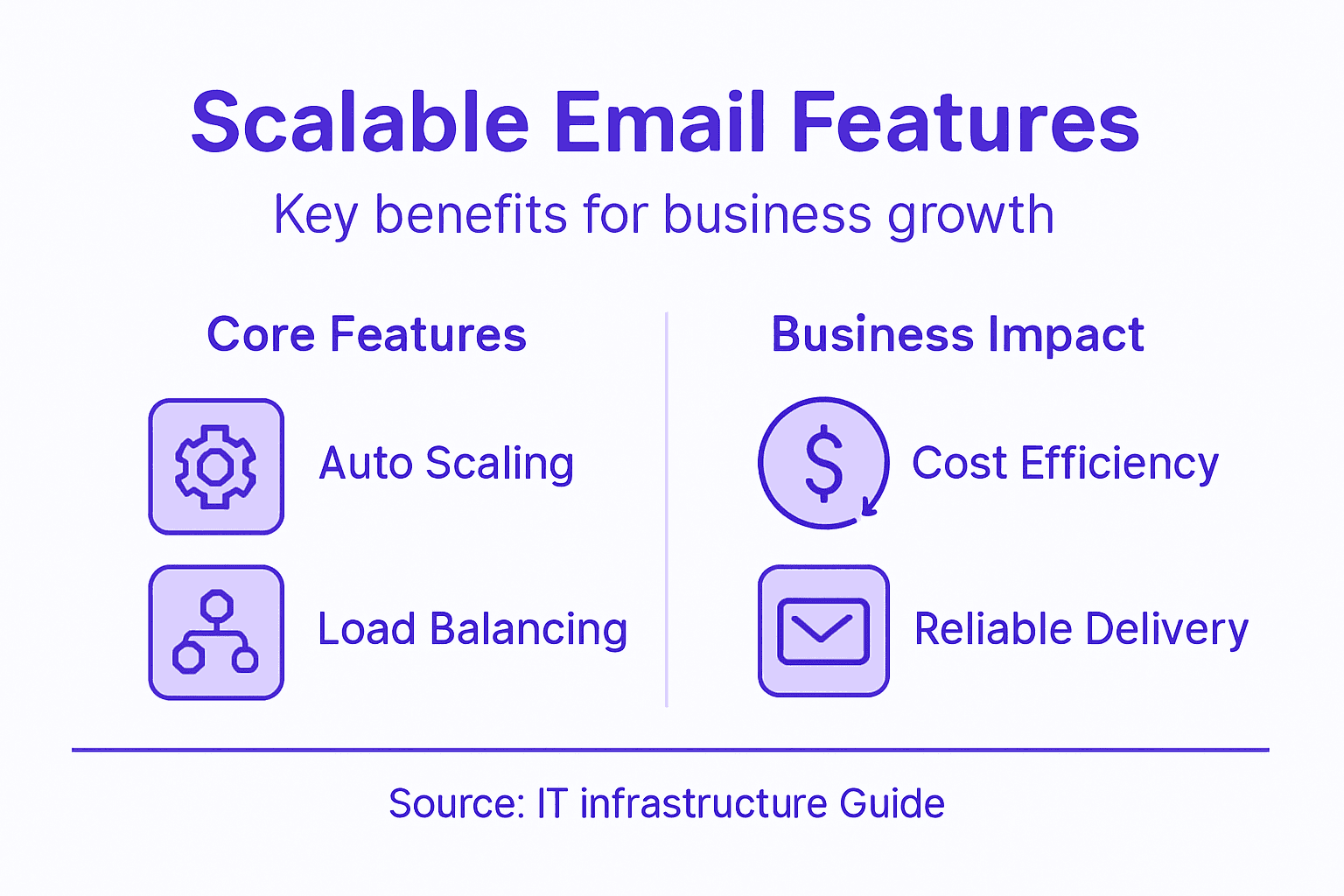
- Core Features Powering Scalability
- Security, Compliance, and Legal Essentials
- Risks, Costs, and What to Avoid
- Comparing Alternatives and Making Choices
Key Takeaways
| Point | Details |
|---|---|
| Scalable Email Infrastructure | A well-designed scalable email system adapts to increasing workloads while ensuring optimal performance and reliability. |
| Deployment Models | Organizations can choose from various email infrastructure models, such as Public Cloud, Private Cloud, Hybrid Cloud, and Multi-Cloud, each with distinct benefits and challenges. |
| Core Features for Scalability | Key features like intelligent load balancing and automated failover are essential for maintaining system efficiency as email volume increases. |
| Security and Compliance | Organizations must integrate robust security protocols and comply with data protection regulations to safeguard communications and mitigate risks. |
Defining Scalable Email Infrastructure
Scalable email infrastructure represents a strategic technological framework designed to accommodate growing communication demands while maintaining optimal performance and reliability. At its core, scalability goes beyond simple expansion capabilities, focusing instead on an intelligent system’s ability to adapt seamlessly to increasing workloads without compromising operational efficiency.
In technical terms, scalable email infrastructure means constructing a robust architecture that can dynamically handle escalating email volumes, user interactions, and computational requirements. Sophisticated cloud technologies enable organizations to build flexible email systems that can rapidly scale horizontally or vertically based on current operational needs. This approach ensures that businesses can manage email communications efficiently, regardless of sudden traffic surges or gradual growth patterns.
Key characteristics of a truly scalable email infrastructure include:
- Elastic resource allocation
- Automated load balancing
- Seamless performance under variable computational demands
- Independent scaling of storage, processing, and transmission capabilities
- Minimal latency during expansion
- Cost-effective infrastructure management
Designing scalable email systems requires a strategic approach that anticipates future growth and technological evolution. Administrators must think beyond current requirements and implement architectures that can dynamically adjust to changing business landscapes.
Pro tip: Implement modular design principles that allow individual components of your email infrastructure to scale independently, enabling more granular and efficient resource management.
Types and Deployment Models Explained
Email infrastructure deployment models offer organizations multiple strategic approaches to managing their communication systems, each with unique advantages and architectural considerations. Understanding these models allows technical decision makers to select the most appropriate infrastructure that aligns with their specific operational requirements and growth objectives.
Cloud computing models provide fundamental frameworks for email infrastructure deployment, typically categorized into three primary approaches: Infrastructure as a Service (IaaS), Platform as a Service (PaaS), and Software as a Service (SaaS). Each model represents a different level of management complexity and resource control, enabling organizations to choose solutions that best match their technical capabilities and business needs.
Key deployment models include:
- Public Cloud: Shared infrastructure managed by third-party providers
- Private Cloud: Dedicated infrastructure exclusively controlled by a single organization
- Hybrid Cloud: Combination of public and private cloud resources
- Multi-Cloud: Utilizing services from multiple cloud providers
The selection of a deployment model depends on several critical factors, including security requirements, compliance regulations, budget constraints, and scalability needs. Organizations must carefully evaluate their unique technological landscape and long-term strategic objectives when determining the most suitable email infrastructure approach.
Here’s a concise summary of how common email infrastructure deployment models differ:
| Deployment Model | Management Complexity | Security Level | Scalability Potential | Typical Use Case |
|---|---|---|---|---|
| Public Cloud | Low | Moderate | High | Startups, rapid growth organizations |
| Private Cloud | High | High | Moderate | Regulated industries, large enterprises |
| Hybrid Cloud | Medium | Balanced | High | Businesses with mixed compliance needs |
| Multi-Cloud | High | Variable by vendor | High | Global redundancy, vendor diversification |
Pro tip: Conduct a comprehensive assessment of your organization’s technical requirements, compliance mandates, and future growth projections before selecting a specific email infrastructure deployment model.
Core Features Powering Scalability
Scalable email infrastructure relies on a sophisticated array of technical features that enable seamless performance and efficient resource management. These core components work together to create a robust system capable of handling increasing communication demands while maintaining optimal reliability and speed.

Email infrastructure architecture encompasses several critical technical capabilities that form the backbone of scalable systems. These include advanced queuing mechanisms, intelligent load balancing, automated failover protocols, and comprehensive authentication frameworks that ensure secure and efficient email transmission across diverse operational environments.
Key features powering scalability include:
- Distributed Queuing Systems: Enable parallel processing of email traffic
- Intelligent Load Balancing: Dynamically allocates computational resources
- Automated Failover Mechanisms: Ensure continuous service during infrastructure disruptions
- Advanced Authentication Protocols:
- SPF (Sender Policy Framework)
- DKIM (DomainKeys Identified Mail)
- DMARC (Domain-based Message Authentication, Reporting, and Conformance)
- Real-time Analytics and Monitoring: Provides insights into system performance
- Elastic Resource Allocation: Automatically scales resources based on demand
Successful scalable email infrastructure goes beyond individual technical features. It requires a holistic approach that integrates multiple components into a cohesive, adaptive system capable of responding dynamically to changing communication requirements and technological landscapes.
Here’s a reference table highlighting core technical features and their business impact:
| Feature | Functionality in System | Business Impact |
|---|---|---|
| Distributed Queuing | Handles parallel email flows | Reduces delays, boosts reliability |
| Intelligent Load Balancing | Allocates resources on demand | Maximizes uptime, improves speed |
| Automated Failover | Switches to backup systems | Ensures service continuity |
| Real-time Analytics | Monitors performance metrics | Enables quick issue resolution |
Pro tip: Implement comprehensive monitoring tools that provide granular visibility into each component of your email infrastructure, enabling proactive optimization and rapid response to potential scalability challenges.
Security, Compliance, and Legal Essentials
Navigating the complex landscape of email infrastructure security requires a multifaceted approach that addresses technological, legal, and regulatory challenges. Organizations must develop comprehensive strategies that protect sensitive communications while maintaining compliance with increasingly stringent global data protection regulations.
Email security frameworks play a critical role in preventing unauthorized access, mitigating potential threats, and establishing robust authentication mechanisms. These frameworks encompass multiple layers of protection, including technical protocols and strategic compliance measures that safeguard communication channels against evolving cybersecurity risks.
Key security and compliance considerations include:
- Authentication Protocols:
- SPF (Sender Policy Framework)
- DKIM (DomainKeys Identified Mail)
- DMARC (Domain-based Message Authentication, Reporting, and Conformance)
- Data Privacy Regulations:
- General Data Protection Regulation (GDPR)
- California Consumer Privacy Act (CCPA)
- International data transfer restrictions
- Legal Compliance Requirements:
- Anti-spam legislation
- Data retention policies
- Cross-border communication standards
- Security Risk Management:
- Continuous threat monitoring
- Encryption standards
- Incident response planning
Effective email infrastructure security transcends technical implementations. It demands a holistic approach that integrates technological safeguards, legal compliance, and proactive risk management strategies. Organizations must continuously adapt their security frameworks to address emerging threats and evolving regulatory landscapes.
Pro tip: Conduct quarterly comprehensive security audits that systematically review authentication protocols, assess compliance status, and identify potential vulnerabilities in your email infrastructure.
Risks, Costs, and What to Avoid
Scalable email infrastructure presents complex challenges that can significantly impact organizational performance and financial outcomes. Technical decision makers must navigate a minefield of potential risks that could compromise system reliability, reputation, and operational efficiency.
Horizontal scaling strategies reveal critical vulnerabilities that organizations must proactively address. These risks range from technical limitations to financial implications, demanding a comprehensive approach to infrastructure design and management.
Key risks and potential pitfalls include:
- Technical Risks:
- Domain reputation degradation
- Email deliverability challenges
- System performance bottlenecks
- Inadequate horizontal scaling capabilities
- Financial Risks:
- Unexpected infrastructure maintenance costs
- Inefficient resource allocation
- Potential revenue losses from system failures
- Compliance penalty exposures
- Operational Risks:
- Manual configuration errors
- Insufficient monitoring mechanisms
- Lack of automated scaling protocols
- Ineffective incident response strategies
Mitigating these risks requires a strategic, proactive approach that combines technological expertise, continuous monitoring, and adaptive infrastructure design. Organizations must develop robust frameworks that anticipate potential challenges and implement preemptive solutions to maintain system integrity and performance.
Pro tip: Develop a comprehensive risk assessment matrix that systematically identifies, evaluates, and prioritizes potential vulnerabilities in your email infrastructure scaling strategy.
Comparing Alternatives and Making Choices
Selecting the optimal email infrastructure requires a strategic evaluation of multiple deployment models, each presenting unique advantages and potential limitations. Technical decision makers must navigate a complex landscape of technological options to align infrastructure capabilities with organizational objectives and operational constraints.
Cloud deployment models provide nuanced frameworks for infrastructure selection, demanding comprehensive analysis of performance, security, scalability, and cost-effectiveness. Understanding the intricate trade-offs between different cloud architectures enables organizations to make informed decisions that balance technical requirements with financial considerations.
Comparative analysis of infrastructure alternatives reveals key differentiators:
- Public Cloud:
- Lower initial investment
- Rapid scalability
- Reduced maintenance overhead
- Potential security limitations
- Private Cloud:
- Maximum control and customization
- Enhanced security configurations
- Higher implementation costs
- Complex infrastructure management
- Hybrid Cloud:
- Flexible resource allocation
- Balanced security and scalability
- Complex integration requirements
- Potential performance overhead
- Multi-Cloud Strategy:
- Redundancy and failover capabilities
- Reduced vendor lock-in risks
- Advanced architectural complexity
- Increased management challenges
Successful infrastructure selection transcends technical specifications. Organizations must conduct rigorous assessments that consider long-term strategic goals, technological ecosystems, compliance requirements, and potential future expansion needs.
Pro tip: Develop a comprehensive scoring matrix that objectively evaluates potential email infrastructure alternatives across multiple dimensions, including performance metrics, security capabilities, scalability potential, and total cost of ownership.
Unlock Scalable Email Infrastructure with AtrioMail
Managing scalable email systems presents challenges like maintaining domain reputation, automating DNS validations, and balancing costs while ensuring seamless growth. This article highlights how complex requirements such as SPF, DKIM, DMARC authentication and elastic resource allocation can overwhelm organizations striving for robust and secure email platforms under their own brand.
AtrioMail offers a fully managed, white-label email hosting solution designed specifically for resellers, hosting providers, and IT agencies who want to control their branded email service without the hassle of infrastructure management. Enjoy automated DNS validation, scalable usage-based pricing, and seamless API integration that simplify deployment and empower your growth strategy.
Elevate your email service offerings today with AtrioMail’s registration platform.
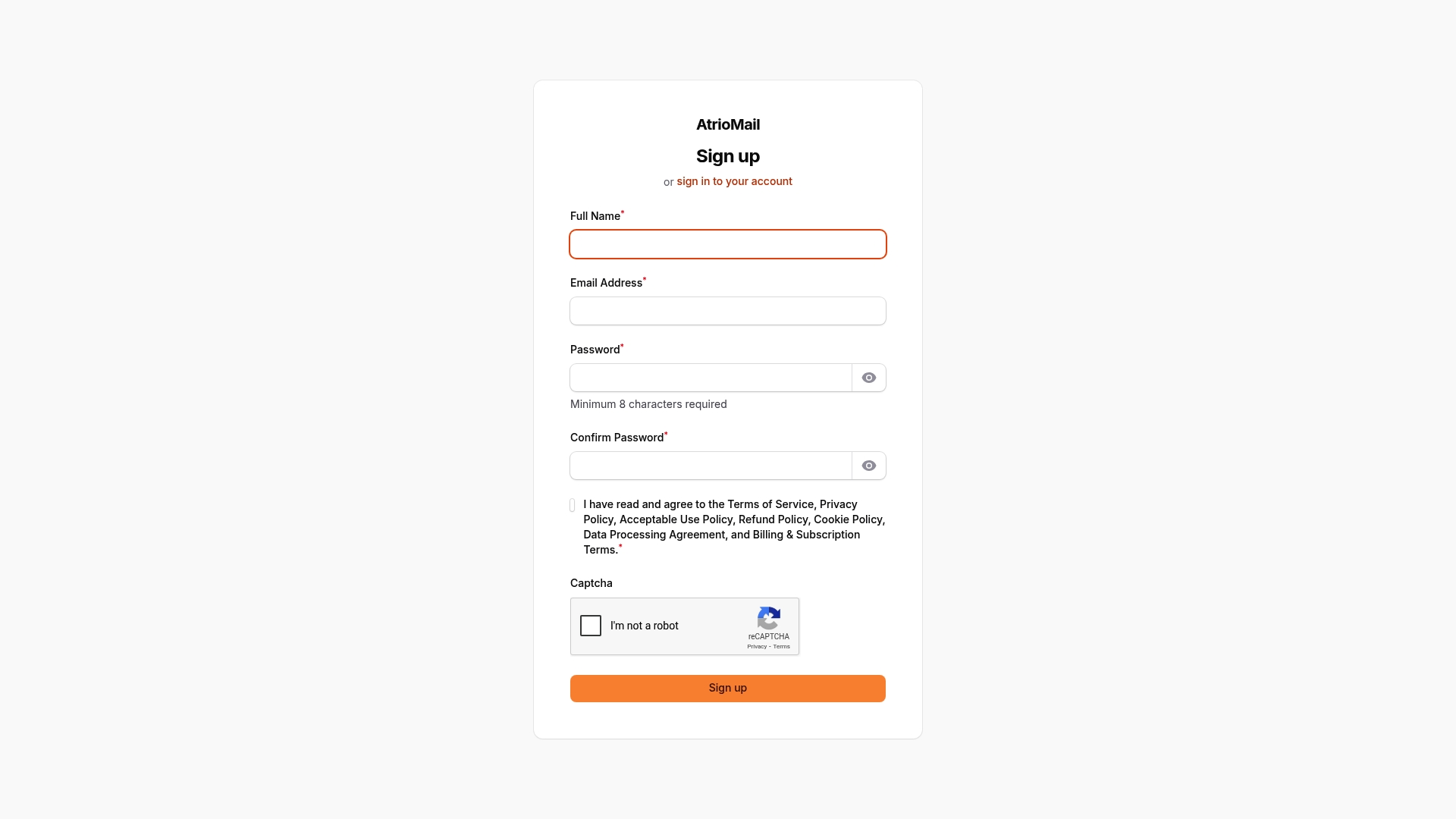
Experience freedom from big ecosystems like Google and Microsoft while maximizing profit margins and maintaining complete brand control. Start building your scalable email infrastructure the smart way now at https://system.atriomail.com/admin/register. Discover how you can accelerate growth while simplifying operations with AtrioMail’s managed email hosting.
Frequently Asked Questions
What is scalable email infrastructure?
Scalable email infrastructure is a technological framework designed to handle increasing communication demands effectively, maintaining performance and reliability. It adapts to escalating workloads without compromising efficiency, allowing organizations to manage email communications efficiently.
What are the main types of email infrastructure deployment models?
The main types of email infrastructure deployment models are Public Cloud, Private Cloud, Hybrid Cloud, and Multi-Cloud. Each model offers different levels of management complexity, security, and scalability. Organizations can choose models based on their specific requirements and growth objectives.
What core features enhance the scalability of email infrastructure?
Core features that enhance the scalability of email infrastructure include distributed queuing systems, intelligent load balancing, automated failover mechanisms, advanced authentication protocols (like SPF, DKIM, and DMARC), real-time analytics, and elastic resource allocation.
Why is security important in scalable email infrastructure?
Security is crucial in scalable email infrastructure because it protects sensitive communications and ensures compliance with data protection regulations. Robust security measures, including authentication protocols and continuous threat monitoring, help mitigate risks associated with unauthorized access and cybersecurity threats.