
Standing out in the crowded digital agency market starts with delivering a memorable and consistent brand experience at every touchpoint. For IT managers and decision-makers, email service branding is more than a visual upgrade—it is a strategic method for creating new, relevant customer categories that make competition less relevant and establish long-term credibility. This guide reveals how branded email platforms can help your agency control identity, enhance client loyalty, and position your offerings for continued growth.
Table of Contents
- Defining Email Service Branding Concepts
- White-Label and Customizable Branding Models
- Key Features Enabling Brand Control
- Client and Reseller Use Cases
- Risks, Costs, and Common Mistakes
Key Takeaways
| Point | Details |
|---|---|
| Email Branding Transforms Communication | Effective email service branding elevates email from a simple tool to a strong representation of an organization’s identity. |
| Customizable Solutions Enhance Flexibility | White-label and customizable email models provide agencies with control and branding opportunities without heavy infrastructure investment. |
| Brand Control Strengthens Recognition | Comprehensive brand management tools help maintain visual consistency and compliance across all digital communications. |
| Awareness of Risks Is Crucial | Understanding potential pitfalls in email branding, such as design inconsistencies and compliance oversights, is essential for maintaining brand credibility. |
Defining Email Service Branding Concepts
Email service branding represents a strategic approach for digital agencies to differentiate their communication platforms by creating unique, recognizable identity systems. At its core, branding transforms email services from mere communication tools into powerful extensions of an organization’s visual and operational identity. Branding strategies create new customer subcategories that establish credibility and market positioning.
Successful email service branding involves multiple interconnected elements that work together to communicate a cohesive visual and functional narrative:
- Visual Identity: Consistent color schemes, typography, and design templates
- Technical Infrastructure: Reliable email routing and infrastructure management
- Customization Options: Flexible domain and subdomain configurations
- Performance Metrics: Measurable engagement and delivery indicators
The strategic importance of email branding extends beyond aesthetic considerations. Branded email platforms enable agencies to create distinctive communication experiences that reinforce organizational values and professional positioning. By integrating design elements, technical capabilities, and user experience principles, agencies can transform standard email services into compelling brand touchpoints.
Email design components play a critical role in establishing brand recognition. Effective email branding improves engagement through consistent visual hierarchies, enabling subscribers to instantly recognize and connect with an organization’s digital presence.

Pro tip: Invest in creating comprehensive email design guidelines that outline precise visual and functional standards for your branded email platform.
White-Label and Customizable Branding Models
White-label email services represent a transformative approach for digital agencies to expand their service offerings without substantial infrastructure investments. White-label email hosting enables entrepreneurs to resell enterprise-grade services under their own brand, providing remarkable flexibility and scalability for growing businesses.
The core components of white-label email branding include:
- Brand Customization: Complete visual and functional rebranding capabilities
- Technical Infrastructure: Robust email routing and management systems
- Scalability Options: Flexible user and domain configurations
- Administrative Control: Comprehensive management tools and reporting
- Performance Tracking: Detailed engagement and delivery metrics
Customizable branding models offer agencies unprecedented control over their email service ecosystem. White-label platforms allow managing multiple independent senders through unique API keys and settings, facilitating granular performance tracking and billing management.
By adopting white-label email solutions, agencies can create professional, branded communication platforms that reinforce their market positioning. These models eliminate the need for complex infrastructure maintenance while providing enterprise-grade email capabilities that enhance customer trust and organizational credibility.
The table below highlights how white-label and customizable email branding models differ in terms of control and operational complexity:
| Model Type | Level of Brand Control | Infrastructure Responsibility | Ideal For |
|---|---|---|---|
| White-Label Email | High | Low | Agencies scaling quickly |
| Customizable Branding | Very High | Moderate | Agencies needing flexibility |
| Standard Hosting | Low | High | Small businesses |
Pro tip: Select a white-label email platform that offers comprehensive customization options and seamless integration with your existing technology stack.
Key Features Enabling Brand Control
Brand control in email services represents a sophisticated approach to maintaining organizational identity across digital communication channels. Centralized email signature management platforms automate branding by ensuring consistent visual representation, legal compliance, and professional messaging across all organizational communications.
The critical features that enable comprehensive brand control include:
- Visual Consistency: Uniform logo placement and design elements
- Signature Management: Automated email footer and contact information
- Compliance Controls: Standardized legal disclaimers and regulatory messaging
- Dynamic Updating: Real-time brand asset modifications
- User Permission Management: Granular access controls for brand elements
Automated brand management tools provide agencies with powerful mechanisms to enforce brand guidelines across complex communication ecosystems. Brand management solutions verify compliance with brand guidelines by automatically applying approved fonts, colors, and templates, reducing manual errors and maintaining professional consistency.
These advanced features transform email from a simple communication tool into a strategic branding instrument. By implementing robust brand control mechanisms, agencies can ensure that every email becomes a precise extension of their organizational identity, reinforcing brand recognition and professional credibility with every sent message.
Pro tip: Implement a centralized brand asset management system that integrates directly with your email platforms to streamline brand consistency.
Client and Reseller Use Cases
Email service branding has emerged as a critical strategy for digital agencies seeking to expand their service offerings and create additional revenue streams. Private label email hosting enables businesses to offer fully customizable user experiences with robust security and comprehensive administrative controls.
Key use cases for client and reseller email branding include:
- Digital Marketing Agencies: Creating branded email solutions for clients
- IT Service Providers: Offering white-label email hosting packages
- Technology Consultants: Developing custom email infrastructure solutions
- Web Hosting Companies: Expanding service portfolios with email branding
- Software Development Firms: Integrating email services into broader platforms
Business-to-business relationships in email reselling depend on strategic brand enablement and mutual collaboration. Successful partnerships require brands to enhance reseller motivation and commitment through comprehensive support mechanisms that build trust and emotional connections.

By implementing sophisticated email branding strategies, agencies can transform email from a basic communication utility into a powerful brand extension. These approaches allow businesses to create unique, professional email experiences that differentiate them in competitive markets and provide tangible value to their clients.
Pro tip: Design your email branding strategy with flexibility that allows clients to customize and evolve their brand identity seamlessly.
Risks, Costs, and Common Mistakes
Navigating the complex landscape of email service branding requires a comprehensive understanding of potential pitfalls and strategic risks. Common email marketing mistakes can dramatically impact brand reputation by reducing engagement rates, increasing spam complaints, and undermining customer trust.
Key risks and potential mistakes in email service branding include:
- Poor Audience Segmentation: Sending irrelevant content to inappropriate subscriber groups
- Design Inconsistencies: Misaligned visual branding across email communications
- Technical Infrastructure Gaps: Inadequate email routing and deliverability mechanisms
- Compliance Oversights: Failing to meet legal and regulatory email communication standards
- Personalization Failures: Generic messaging that lacks targeted communication strategies
Strategic email communication demands meticulous attention to detail and proactive risk management. Email mistakes can significantly reduce campaign effectiveness and subscriber trust by increasing unsubscribe rates and damaging sender reputation through poor content and technical execution.
Successful agencies understand that mitigating risks involves continuous monitoring, robust testing protocols, and adaptive strategies that evolve with changing technological and regulatory landscapes. By implementing comprehensive quality control measures, organizations can transform potential vulnerabilities into opportunities for enhanced brand credibility and customer engagement.
Here is an overview of the most common email service branding risks and their potential business impacts:
| Risk Type | Potential Consequence | Mitigation Strategy |
|---|---|---|
| Design Inconsistencies | Brand confusion, lost trust | Implement brand guidelines |
| Compliance Oversights | Legal issues, regulatory penalties | Regular compliance reviews |
| Technical Infrastructure | Delivery failures, downtime | Invest in reliable systems |
| Poor Segmentation | Reduced engagement, unsubscribes | Audience data analytics |
Pro tip: Develop a systematic review process that regularly audits email communication performance, technical infrastructure, and compliance metrics.
Empower Your Agency With Full Email Service Branding Control
The article highlights the challenges digital agencies face when trying to establish strong email service branding that demands consistent visual identity, technical reliability, and customizable infrastructure. Pain points such as managing white-label branding, automating compliance with DNS validations like SPF and DKIM, and scaling client email platforms without infrastructure headaches resonate deeply with resellers and IT providers looking for seamless solutions. Achieving true brand control while delivering professional, privacy-focused email experiences requires an enterprise-grade platform that removes complexity and boosts operational efficiency.
AtrioMail answers these critical needs by offering a fully managed, white-label email hosting platform designed specifically for agencies and resellers. With features like automatic DNS validation (MX, SPF, DKIM, DMARC), scalable usage-based pricing, and seamless API integration you gain unprecedented freedom to build your own branded email platform that your clients trust. AtrioMail’s domain management and client support tools empower you to maintain complete brand consistency across all communications while freeing you from the burdens of infrastructure maintenance.
Ready to transform your email branding strategy into a scalable, profitable service? Take control now with AtrioMail and experience the freedom from big ecosystems like Google or Microsoft while enhancing your margins and client satisfaction.
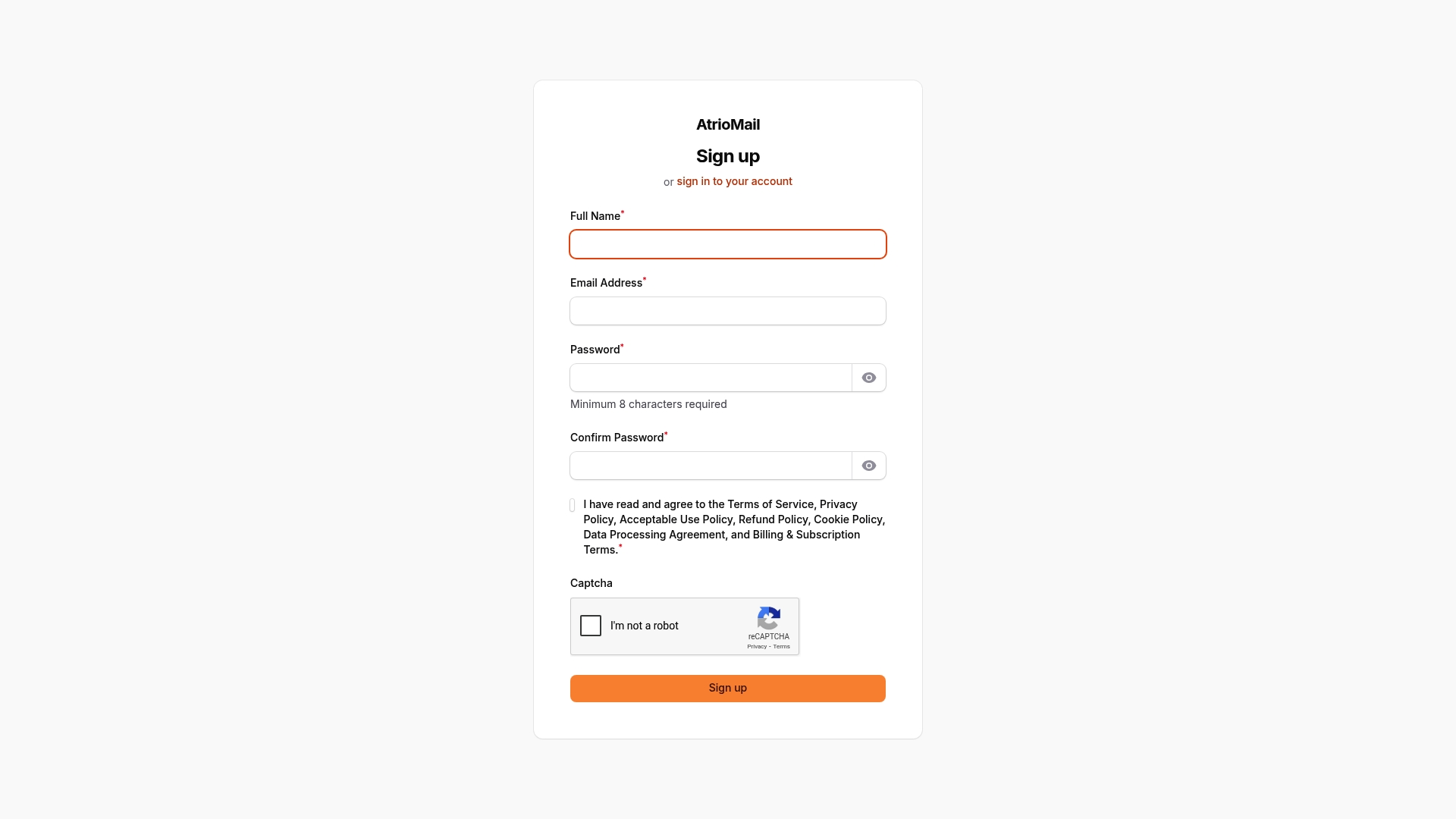
Unlock powerful white-label email branding today and give your agency the competitive advantage it deserves. Visit AtrioMail platform to get started with a solution built for professional email service providers who demand quality, control, and growth.
Frequently Asked Questions
What is email service branding?
Email service branding refers to the strategic approach digital agencies use to create a unique and recognizable identity for their email communications, transforming them into powerful extensions of the organization’s brand.
How can I customize my email service branding?
Customization can be achieved through consistent visual identity, flexible domain configurations, and the implementation of automated brand management tools to ensure uniform branding across all communications.
What are the benefits of using a white-label email service?
White-label email services provide agencies with the ability to offer branded email solutions without the need for extensive infrastructure investments, allowing for scalability and flexibility in managing email platforms.
What are common risks associated with email service branding?
Common risks include design inconsistencies, compliance oversights, technical infrastructure gaps, and poor audience segmentation, which can all negatively impact brand reputation and engagement.