
Managing email compliance as a reseller can feel overwhelming, especially when every country has its own rules and requirements. Getting your emails delivered and accepted by major providers is not just about sending messages, but about proving your legitimacy and building trust at every step. If you do not pay attention to authentication and global privacy laws, your emails might get blocked, flagged as spam, or even lead to costly legal trouble.
This list will give you practical ways to tackle email compliance challenges. You will learn how to handle sender authentication, consent management, and delivery monitoring so your communications stay secure and effective. Each insight is designed to help you protect your business, stay ahead of regulations, and keep your clients happy.
Be ready to discover actionable strategies you can use right away. These tips will help you build a reliable system that adapts to changing standards and keeps your reputation solid in every region you serve.
Table of Contents
- Understand Key Email Regulations And Laws
- Implement Sender Authentication Standards
- Maintain Consent And Opt-In Records
- Automate Compliance With Dns Validations
- Use Accurate Branding And Domain Management
- Monitor And Report Email Delivery Issues
- Educate Clients And Staff On Compliance Risks
Quick Summary
| Takeaway | Explanation |
|---|---|
| 1. Understand Email Regulations | Familiarize yourself with global email laws like GDPR and CASL to ensure compliance and build trust with clients. |
| 2. Implement Sender Authentication | Use SPF, DKIM, and DMARC protocols to prevent spoofing and improve email deliverability. |
| 3. Keep Consent Records Accurate | Maintain detailed documentation of subscriber consent to safeguard against legal challenges and foster transparency. |
| 4. Automate DNS Validations | Use automated tools for DNS validation to streamline compliance and enhance email security efficiently. |
| 5. Educate on Compliance Risks | Conduct ongoing training for staff and clients about email compliance to minimize risks and reinforce data privacy principles. |
1. Understand Key Email Regulations and Laws
Navigating the complex world of email regulations requires a strategic approach for resellers who manage email services across multiple jurisdictions. With global privacy laws becoming increasingly sophisticated, understanding key email compliance guidelines is no longer optional – it’s a critical business imperative.
Email regulations vary significantly across different regions, but several core principles consistently emerge. Global email marketing laws emphasize three fundamental requirements for email communication:
- Explicit Consent: Recipients must willingly opt-in to receive emails
- Clear Unsubscribe Mechanism: Every email must provide an easy way to stop receiving communications
- Transparent Data Handling: Companies must clearly explain how user data will be used
The most prominent international regulations impacting email services include:
- General Data Protection Regulation (GDPR) in the European Union
- CAN-SPAM Act in the United States
- Canadian Anti Spam Legislation (CASL)
- Australia’s Spam Act
Each regulation has nuanced requirements, but they share core objectives of protecting user privacy and preventing unsolicited electronic communications. Resellers must develop robust compliance frameworks that adapt to these evolving legal landscapes.
Compliance is not just about avoiding penalties – it’s about building trust with your clients and their end-users.
For email service providers, understanding these regulations means implementing sophisticated consent management systems, maintaining detailed audit trails, and developing transparent communication protocols. This approach not only ensures legal compliance but also enhances your brand’s reputation as a responsible, trustworthy email service provider.
Pro tip: Invest in comprehensive legal consultation and regularly update your compliance strategies to stay ahead of changing international privacy regulations.
2. Implement Sender Authentication Standards
In the evolving landscape of email communication, sender authentication has become a critical defense against cyber threats and spam. Email authentication requirements are no longer optional – they are mandatory for maintaining email deliverability and protecting your brand’s reputation.
Sender authentication involves three primary protocols that work together to verify email legitimacy:
- SPF (Sender Policy Framework): Validates sending servers
- DKIM (DomainKeys Identified Mail): Ensures email integrity
- DMARC (Domain-based Message Authentication): Provides reporting and policy enforcement
Each protocol serves a unique purpose in the email authentication ecosystem:
- SPF allows domain owners to specify which mail servers can send emails on their behalf
- DKIM adds a digital signature to verify that an email was not tampered with in transit
- DMARC builds upon SPF and DKIM to provide comprehensive email validation
Proper sender authentication is your first line of defense against email spoofing and phishing attempts.
For email resellers, implementing these standards means configuring your DNS records correctly, generating appropriate cryptographic signatures, and establishing clear authentication policies. This process requires technical expertise but dramatically improves email deliverability and trustworthiness.
Modern email providers like Google and Yahoo now require robust authentication mechanisms, making these protocols essential for maintaining reliable email services. Businesses that fail to implement these standards risk having their emails marked as spam or completely rejected.
Pro tip: Regularly audit and update your email authentication configurations to ensure continuous compliance with the latest security standards.
3. Maintain Consent and Opt-In Records
Consent management is the cornerstone of ethical email communication and legal compliance. Global email compliance standards require meticulous documentation of subscriber consent, transforming opt-in records from an administrative task to a critical legal safeguard.
The core principles of consent management include:
- Explicit Permission: Subscribers must actively choose to receive communications
- Transparent Communication: Clearly explain what subscribers are signing up for
- Easy Withdrawal: Provide simple methods to revoke consent at any time
Effective consent management involves several key strategies:
- Implement double opt-in processes
- Record precise consent timestamps
- Maintain comprehensive subscriber metadata
- Create clear audit trails
Consent is not a one-time event but an ongoing relationship of trust and transparency.
Modern email resellers must develop robust systems that capture and document exact consent details. This means recording not just when a user subscribed but also:
- The specific communication channels they agreed to
- The exact wording of the consent statement
- IP address and timestamp of consent
- Source of the original signup
By maintaining detailed consent records, you protect your business from potential legal challenges and demonstrate commitment to subscriber privacy. Different jurisdictions have varying requirements – some mandate explicit written consent while others accept implied consent under specific conditions.
Pro tip: Develop an automated consent management system that generates comprehensive documentation and allows instant subscriber consent verification.
4. Automate Compliance with DNS Validations
DNS validation represents a powerful automated approach to maintaining email security and compliance across complex digital ecosystems. DNS-based email authentication transforms complex compliance requirements into streamlined technical configurations.
The core DNS validation protocols include:
- SPF (Sender Policy Framework): Specifies authorized sending servers
- DKIM (DomainKeys Identified Mail): Ensures message integrity
- DMARC (Domain-based Message Authentication): Provides reporting and policy enforcement
Automated DNS validations offer significant advantages for email resellers:
- Reduce manual verification processes
- Eliminate human error in authentication
- Provide real-time compliance monitoring
- Automatically reject unauthorized email sources
DNS records act as your digital security gatekeepers preventing unauthorized email transmission.
Implementing these protocols requires publishing specific DNS records that email providers use to automatically verify your sending domains. By configuring these records correctly, you establish a transparent trust framework that signals your legitimacy to receiving mail servers.
The technical configuration involves mapping cryptographic signatures and authorized sending infrastructure directly into your domain’s DNS settings. This approach enables receiving servers to instantly validate incoming messages without manual intervention.
Pro tip: Use automated DNS validation tools that can continuously monitor and update your authentication records to maintain maximum email deliverability and compliance.
5. Use Accurate Branding and Domain Management
Domain management and consistent branding are critical for maintaining email credibility and ensuring successful message delivery. Email sender compliance requires strategic approaches that protect your brand’s digital reputation.
Key principles of effective domain management include:
- Brand Consistency: Use authenticated domains for all communications
- Clear Sender Identification: Ensure recipients recognize your brand
- Prevent Domain Spoofing: Implement robust authentication protocols
Effective branding and domain management involve several strategic steps:
- Send emails exclusively from your verified domain
- Configure SPF, DKIM, and DMARC records
- Maintain uniform sender display names
- Align email design with brand visual guidelines
Your domain is your digital identity. Protect it with precision and consistency.
Modern email providers like Gmail and Yahoo now require strict domain authentication practices. This means your email infrastructure must demonstrate clear ownership and legitimacy through technical configurations that validate your sending domains.
Resellers should develop comprehensive domain management strategies that include monitoring sender reputation, regularly updating DNS records, and ensuring all email communications reflect a unified brand identity. This approach not only improves deliverability but also builds trust with recipients.
Pro tip: Conduct quarterly audits of your email domain configurations to ensure ongoing compliance and optimal sender reputation.
6. Monitor and Report Email Delivery Issues
Effective email delivery monitoring is the cornerstone of maintaining a robust and compliant communication infrastructure. Email delivery compliance tracking requires systematic approaches that go beyond basic sending mechanisms.
Key metrics every reseller must monitor include:
- Bounce Rates: Identifying invalid email addresses
- Spam Complaint Rates: Tracking recipient dissatisfaction
- Unsubscribe Actions: Understanding audience engagement
- Delivery Rates: Measuring overall email performance
Comprehensive email delivery monitoring involves several critical strategies:
- Implement real time tracking systems
- Set up automated reporting mechanisms
- Establish clear escalation protocols
- Conduct regular performance audits
Proactive monitoring transforms potential delivery challenges into opportunities for improvement.
Modern email resellers need sophisticated tracking and reporting frameworks that provide granular insights into communication performance. This means developing systems that not only detect issues but also provide actionable intelligence for continuous optimization.
Advanced monitoring goes beyond simple delivery confirmation. It involves understanding complex metrics like sender reputation, inbox placement rates, and engagement patterns that influence overall email ecosystem health.
Pro tip: Develop a standardized monthly reporting dashboard that tracks key delivery metrics and provides clear visualization of your email communication performance.
7. Educate Clients and Staff on Compliance Risks
Knowledge is the most powerful defense against email compliance violations. Comprehensive compliance education transforms potential legal risks into strategic opportunities for organizations.
Effective compliance education should cover multiple critical areas:
- Legal Framework Understanding: Know international regulations
- Risk Identification: Recognize potential compliance challenges
- Consent Management: Learn proper data handling protocols
- Reporting Mechanisms: Understand escalation procedures
A robust educational approach involves several key strategies:
- Develop comprehensive training modules
- Conduct regular compliance workshops
- Create easily accessible reference materials
- Implement periodic knowledge assessments
Compliance education is not a one-time event but an ongoing organizational commitment.
Modern email resellers must treat compliance training as a continuous process. This means creating adaptive learning environments that evolve with changing global regulations. Training should not just focus on rules but on understanding the underlying principles of data privacy and ethical communication.
Successful programs integrate real world scenarios, interactive learning modules, and practical demonstrations that help clients and staff internalize complex compliance requirements. The goal is to transform compliance from a technical obligation into an integrated part of organizational culture.
Pro tip: Design gamified learning experiences that make compliance training engaging and memorable for both staff and clients.
Below is a comprehensive table summarizing the critical email compliance strategies and recommendations discussed throughout the article.
| Topic | Key Points & Actions | Benefits |
|---|---|---|
| Understand Email Regulations | Familiarize with laws like GDPR, CAN-SPAM, CASL, and Australia’s Spam Act. Focus on consent, data transparency, and unsubscribe options. | Ensures legal compliance and builds trust with clients and users. |
| Implement Sender Authentication | Utilize SPF, DKIM, and DMARC protocols for email validation and securing sending domains. | Enhances email credibility, reduces spam risks, and improves deliverability. |
| Consent and Opt-in Management | Employ double opt-ins, record consent details, and provide clear audibility. | Protects against legal challenges and demonstrates transparency with subscribers. |
| Automate DNS Validations | Set SPF, DKIM, and DMARC configurations and use tools for dynamic updates. | Streamlines compliance verification and ensures robust email authentication. |
| Effective Branding Practices | Maintain consistent branding, authenticate domains, and align communication design to be easily recognizable. | Protects brand reputation and ensures recipient recognition, enhancing trust. |
| Delivery Monitoring | Monitor bounce rates, spam complaints, and unsubscribe actions; implement reporting mechanisms. | Identifies issues proactively and optimizes sender reputation and delivery performance. |
| Compliance Education | Conduct workshops, provide resources, and engage staff with compliance scenarios. | Ensures continuous organizational awareness and evolves with changing compliance requirements. |
This table encapsulates the article’s essential considerations for email compliance and management to adhere to regulations while fostering confidence and efficiency.
Accelerate Your Email Compliance with AtrioMail’s White-Label Solutions
Navigating the complex landscape of email compliance is a demanding challenge, especially when managing consent records, automating DNS validations, and maintaining consistent domain branding across multiple clients. AtrioMail understands these critical pain points faced by resellers who must ensure full adherence to global regulations like GDPR, CAN-SPAM, and CASL while protecting their brand reputation and delivering reliable service.
With AtrioMail’s fully managed infrastructure, you can automate key compliance steps including SPF, DKIM, and DMARC configurations, simplifying sender authentication and preventing domain spoofing. Our platform empowers you with complete brand control, enabling white-label email hosting that aligns with your visual identity and audit requirements. Take control of your email delivery with scalable, usage-based pricing and seamless API integration designed specifically for professional resellers.
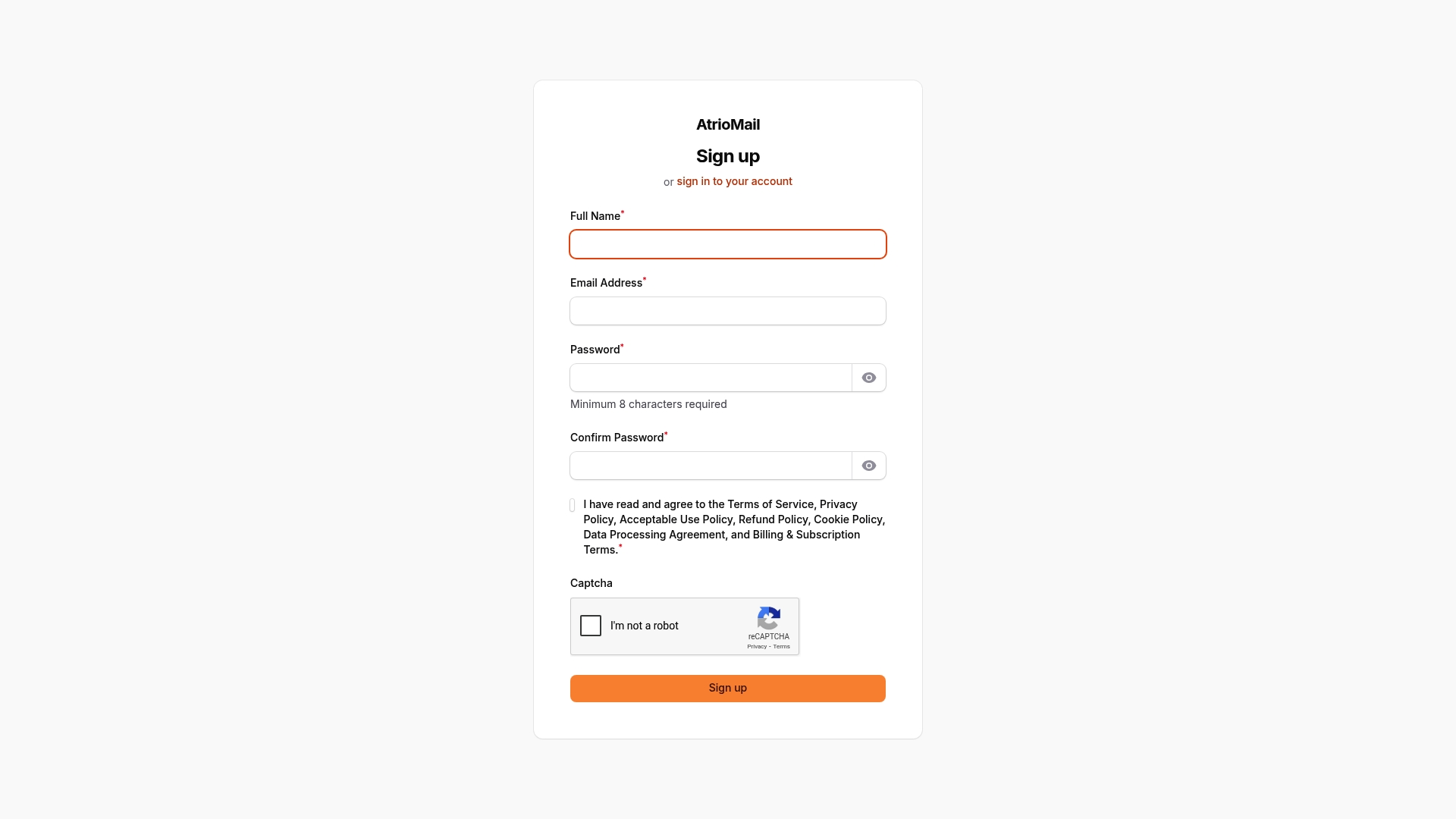
Ready to transform compliance complexity into a competitive advantage Right now is the time to leverage AtrioMail’s enterprise-grade hosting capabilities and compliance automation to build trust with your clients and their users. Discover how our solution can help you stay ahead of evolving regulations and elevate your email service offering by exploring AtrioMail’s platform. Learn more about how to protect your brand while delivering exceptional email experiences by visiting AtrioMail’s homepage. Take the first step toward effortless email compliance today.
Frequently Asked Questions
What are the fundamental email compliance guidelines for resellers?
Understanding key email compliance guidelines involves ensuring explicit consent from recipients, providing clear unsubscribe options, and maintaining transparent data handling practices. Implement these principles by reviewing your email processes and making necessary adjustments within 30 days.
How can resellers implement sender authentication standards?
Resellers can implement sender authentication by configuring SPF, DKIM, and DMARC protocols. Begin by updating your DNS records to include these standards to enhance email legitimacy and protect your brand’s reputation.
What steps should I take to maintain consent and opt-in records?
To maintain consent and opt-in records, first establish a double opt-in process that captures explicit permission from subscribers. Additionally, document timestamps and the specific consent context, and ensure your system allows easy withdrawal at any time.
How do I effectively monitor and report email delivery issues?
Effectively monitor and report email delivery issues by implementing real-time tracking systems and setting up automated reporting mechanisms. Aim to regularly review bounce rates and spam complaint rates, ideally on a monthly basis, to identify and address potential issues promptly.
What are the best practices for educating clients and staff on compliance risks?
Best practices for educating clients and staff on compliance risks include developing comprehensive training modules and conducting regular workshops. Create engaging reference materials that are easy to access and consider implementing periodic knowledge assessments to reinforce learning and understanding.