
Managing professional communications between businesses can be challenging when brand identity and operational precision are vital. For IT leaders at B2B reselling firms, finding customizable white-label email solutions means gaining better control over branding while streamlining enterprise messaging. With options that offer tailored interfaces, strong security, and detailed performance tracking, this overview will clarify how different email platforms help protect your brand and improve efficiency.
Table of Contents
- Core Concepts Of B2B Email Solutions
- Types Of White-Label Email Hosting
- Automation And Integration Essentials
- Benefits Of Branding And Control
- Risks, Costs, And Common Pitfalls
Key Takeaways
| Point | Details |
|---|---|
| B2B Email Solutions Are Essential | They provide targeted communication, brand representation, performance tracking, and security infrastructure for businesses. |
| White-Label Email Hosting Offers Customization | Various hosting types enable businesses to deliver email services under their brand, enhancing control and professional communication. |
| Automation and Integration Enhance Efficiency | Streamlining communication workflows through automation and integration improves response times and data management. |
| Brand Control Strengthens Market Position | Consistent messaging and professional email experiences build customer trust and differentiate businesses in a competitive landscape. |
Core Concepts of B2B Email Solutions
B2B email solutions represent strategic digital communication platforms designed to facilitate professional interactions between businesses. These specialized email services go far beyond basic messaging, serving as critical infrastructure for enterprise communication and brand representation. B2B email marketing enables companies to attract, engage, and communicate with potential and existing business customers through targeted digital outreach.
At their core, B2B email solutions encompass several key functional elements:
- Targeted Communication: Precision messaging tailored to specific business audiences
- Brand Representation: Consistent visual and communication standards across email interactions
- Performance Tracking: Advanced metrics for measuring engagement and conversion rates
- Security Infrastructure: Enterprise-grade protection against digital threats
Understanding the B2B communication landscape requires recognizing that these solutions are fundamentally different from consumer-oriented email platforms. Business-to-business interactions involve complex negotiation processes, requiring email systems that support nuanced professional communication.
The strategic value of robust B2B email solutions lies in their ability to streamline complex business interactions. Effective platforms enable seamless vendor communications, support detailed proposal exchanges, and provide reliable channels for critical business discussions.

Pro tip: When evaluating B2B email solutions, prioritize platforms offering comprehensive analytics, robust security features, and seamless brand customization capabilities.
Types of White-Label Email Hosting
White-label email hosting represents a sophisticated approach to digital communication that allows businesses to offer email services under their own brand identity. Email hosting services can vary significantly in their architecture, offering diverse options for businesses seeking customized communication platforms.
The primary types of white-label email hosting include:
- Shared Hosting: Multiple businesses share server resources and IP addresses
- Cloud-Based Solutions: Externally hosted email platforms with scalable infrastructure
- Dedicated Server Hosting: Exclusive server resources for enhanced performance and security
- Hybrid Email Hosting: Combination of cloud and dedicated server technologies
White-label software models enable resellers to present sophisticated email platforms without developing complex technological infrastructure from scratch. White label software platforms allow original developers to retain intellectual property rights while empowering resellers to market and customize the service.
Enterprise-grade white-label email hosting solutions provide comprehensive features that go beyond basic messaging. These platforms integrate advanced security protocols, comprehensive analytics, and customizable branding options that enable businesses to create professional, unique email experiences.

Pro tip: Evaluate white-label email hosting solutions based on scalability, security features, and the depth of customization options available for your specific business needs.
Here is a summary of how different white-label email hosting types align with common business goals:
| Hosting Type | Best For | Key Benefit |
|---|---|---|
| Shared Hosting | Small businesses | Cost-efficient solution |
| Cloud-Based Solutions | Rapidly growing companies | Scalable infrastructure |
| Dedicated Server | Security-focused enterprises | Enhanced control & reliability |
| Hybrid Email Hosting | Organizations in transition | Flexible resource allocation |
Automation and Integration Essentials
Automation and integration represent critical technological foundations for modern B2B email solutions, transforming how businesses communicate and manage digital interactions. Software integration techniques enable different applications to share data seamlessly, dramatically reducing manual entry and potential errors in communication workflows.
Key automation and integration capabilities include:
- Workflow Automation: Scheduling and triggering communications based on specific customer behaviors
- CRM Integration: Synchronizing email platforms with customer relationship management systems
- Analytics Consolidation: Automatic aggregation of performance metrics across communication channels
- Compliance Tracking: Real-time monitoring of communication protocols and regulatory requirements
Enterprise communication platforms leverage sophisticated integration strategies to streamline complex messaging ecosystems. B2B integration technologies now provide advanced features like automated message mapping, trading partner management, and protocol compliance that enhance operational efficiency.
The most advanced integration solutions go beyond simple data transfer, creating intelligent communication networks that adapt to changing business requirements. These systems enable real-time information exchange, personalized messaging, and seamless cross-platform interactions that transform traditional email communication into dynamic, responsive business tools.
Pro tip: Prioritize integration platforms that offer robust API capabilities, ensuring maximum flexibility and scalability for your evolving business communication needs.
The table below compares how integration features impact B2B email operations:
| Integration Feature | Business Impact | Typical User Benefit |
|---|---|---|
| Workflow Automation | Reduced manual processes | Faster response times |
| CRM Integration | Unified customer records | Improved relationship tracking |
| Analytics Consolidation | Data-driven decision making | Easier campaign optimization |
| Compliance Tracking | Meet regulatory requirements | Lower legal risk |
Benefits of Branding and Control
Brand control represents a critical strategic advantage for businesses leveraging B2B email solutions. Branding in B2B marketing enables organizations to create a unique identity that differentiates their offerings and builds trust among business clients, transforming email communication from a mere utility into a powerful strategic asset.
Key benefits of comprehensive branding and control include:
- Consistent Messaging: Maintaining uniform communication across all customer touchpoints
- Perceived Value Enhancement: Strengthening brand reputation through professional email experiences
- Customer Trust Building: Creating predictable and recognizable communication channels
- Competitive Differentiation: Establishing a distinctive market positioning
Brand identity management goes beyond visual aesthetics, encompassing the entire communication strategy. Effective branding strategies foster emotional connections that transform transactional interactions into meaningful business relationships, enabling resellers to command premium pricing and develop long-term customer loyalty.
Successful B2B email platforms provide granular control mechanisms that allow businesses to customize every aspect of their communication infrastructure. This level of control ensures that email services become an extension of the brand’s strategic identity, reflecting organizational values, professionalism, and commitment to exceptional customer experiences.
Pro tip: Develop a comprehensive brand guidelines document specifically for email communications to ensure consistent, professional representation across all digital interactions.
Risks, Costs, and Common Pitfalls
B2B email solutions present complex challenges that can significantly impact organizational performance and security. Business Email Compromise represents a critical threat landscape where malicious actors exploit communication vulnerabilities to manipulate businesses through sophisticated digital intrusion strategies.
Key risks and potential pitfalls include:
- Security Vulnerabilities: Potential exposure to phishing, malware, and unauthorized data breaches
- Compliance Challenges: Navigating complex regulatory requirements across different jurisdictions
- Cost Management: Unexpected infrastructure and maintenance expenses
- Performance Inconsistencies: Reliability and scalability limitations
Relationship management becomes increasingly complex as businesses navigate digital communication challenges. B2B relationship risks often emerge from inadequate personalization, insufficient understanding of customer needs, and failure to maintain ongoing engagement strategies that support long-term business connections.
Mitigating these risks requires a comprehensive approach that combines technological safeguards, continuous employee training, and proactive relationship management. Successful organizations implement multi-layered security protocols, invest in robust authentication mechanisms, and develop adaptive communication strategies that anticipate and address potential vulnerabilities.
Pro tip: Conduct quarterly comprehensive security audits and maintain an evolving risk management framework to stay ahead of emerging digital communication threats.
Unlock Full Brand Control with Enterprise-Grade B2B Email Solutions
The article highlights key challenges like maintaining consistent branding, managing security risks, and ensuring seamless automation and integration in B2B email communications. If you want to eliminate the complexities of infrastructure management while offering your clients a fully customizable, white-label email experience, AtrioMail is designed just for you. Our platform empowers resellers and IT agencies to build trusted, scalable email services under their own brand, addressing pain points such as DNS validation automation, multi-layered security, and comprehensive API integration.
Take control of your email hosting with features tailored for branding power and operational efficiency. Enjoy benefits like scalable usage-based pricing, freedom from reliance on major ecosystems, and enhanced profit margins — all with enterprise-grade reliability.
Take the first step to elevate your business email offerings through AtrioMail’s white-label email hosting and see how effortless brand control and automation can transform your service portfolio.
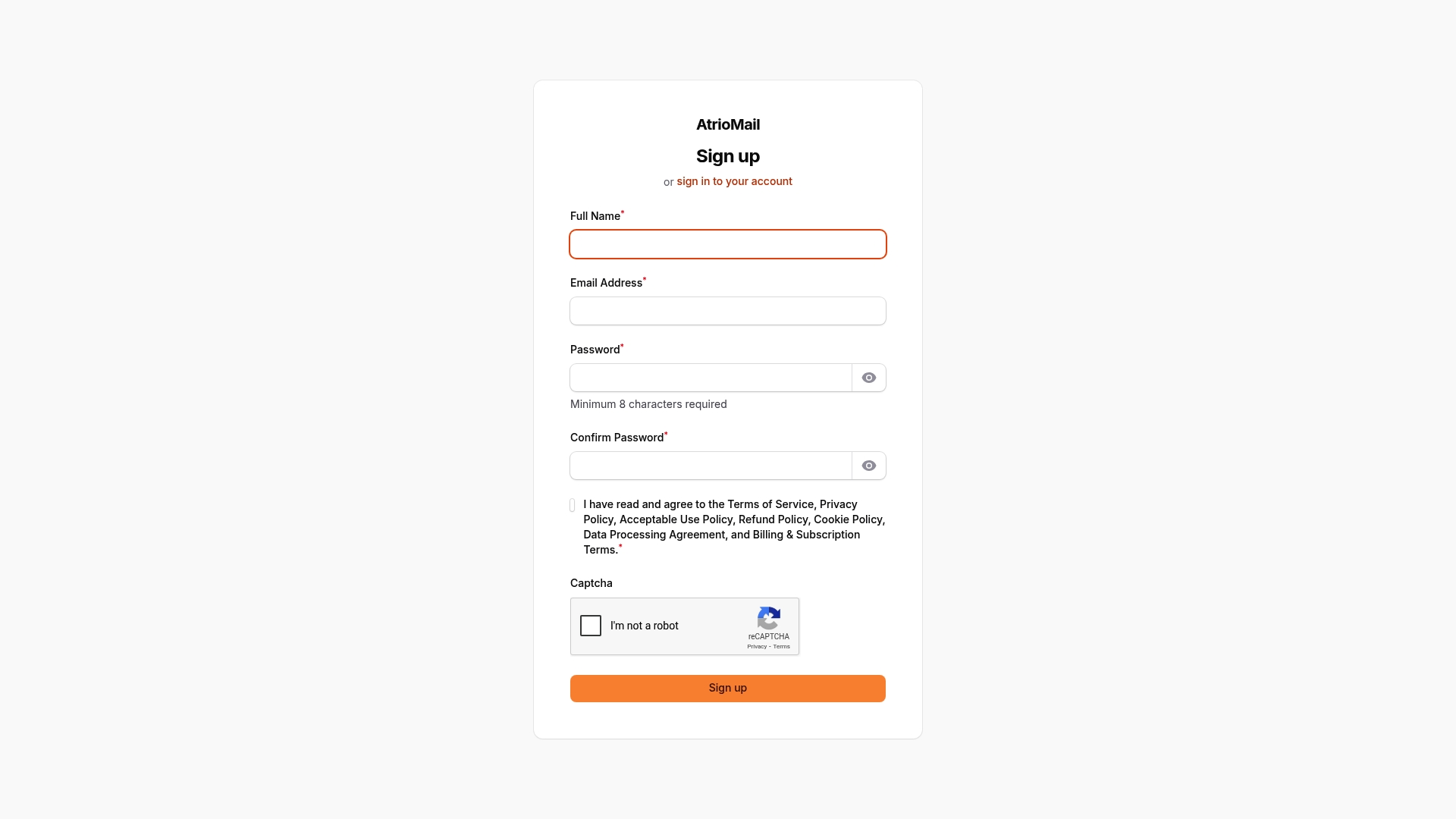
Ready to leverage the full potential of branded email solutions for your clients? Visit AtrioMail registration now and start building powerful, secure, and automated email platforms without the overhead. Discover why more resellers trust AtrioMail to simplify their operations while delivering exceptional branding and control.
Frequently Asked Questions
What are B2B email solutions?
B2B email solutions are specialized digital communication platforms designed for professional interactions between businesses. They provide functionalities such as targeted communication, brand representation, performance tracking, and security infrastructure to streamline business communications.
How does white-label email hosting benefit resellers?
White-label email hosting allows resellers to offer customized email services under their own brand identity without needing to develop complex technology from scratch, enabling them to achieve brand recognition and client trust.
What key features should I look for in a B2B email solution?
When evaluating B2B email solutions, prioritize features like comprehensive analytics, robust security protocols, customizable branding options, and seamless integration with other enterprise systems to meet your business needs effectively.
What are the risks associated with B2B email solutions?
The main risks include security vulnerabilities (like phishing and data breaches), compliance challenges with regulations, unexpected costs, and performance inconsistencies. Implementing strong security measures and continuous employee training can help mitigate these risks.
Recommended
- 7 Essential Email Branding Best Practices for Resellers – Atriomail
- What Is Reseller Email Hosting and Why It Matters – Atriomail
- Email Hosting in B2B: Empowering Brand Control – Atriomail
- Unlocking Growth: The Strategic Edge of Offering Branded Email Services – Atriomail
- Best CRM for B2B | Optimize Your Business | Singleclic