
Choosing how you manage email makes a big difference for your business, agency, or client offering. Some platforms focus on security, while others promise easy branding or powerful automation. You might be looking for total control, better privacy, or simple ways to grow without adding tech headaches. The right service can help you stand out and handle customer needs with less effort. With so many options and unique features, discovering what each solution does best can spark new ideas for how you serve your clients and secure your communications.
Table of Contents
Atriomail
At a Glance
Atriomail is a fully managed, white-label email platform built for resellers, hosting providers, and IT agencies that want to own their email offering without operating servers. It combines automated infrastructure maintenance with branded domain and pricing control, making rollout fast and repeatable. The platform emphasizes privacy, transparency, and affordability while shifting operational burden away from your team. If you need a scalable, turnkey backbone for a branded email product, Atriomail is designed for exactly that.
Core Features
Atriomail delivers fully managed infrastructure with maintenance, monitoring, and security updates handled by the platform so you don’t babysit servers. White-label branding supports custom logos, domains, and your own pricing structure. DNS validation is automated across MX, SPF, DKIM, and DMARC to reduce configuration errors and speed deployment. A 24/7 support bot enables self-service assistance for client-level issues, and a usage-based pricing model charges per mailbox so costs scale with growth. Finally, robust API integration lets you connect Atriomail to your billing, provisioning, and management systems for automated workflows.
Pros
- Complete control over email branding and infrastructure: You can present a true white-label service under your own name and domain while Atriomail manages the backend.
- Automated and scalable platform reduces operational burden: Routine maintenance, monitoring, and security updates are managed centrally so your team focuses on sales and support.
- Transparent, pay-as-you-go pricing: Usage-based billing per mailbox aligns costs with customers and removes large upfront commitments.
- Strong focus on privacy and ownership of data: Atriomail is positioned to give partners ownership and control over their clients’ communications.
- Ease of integration with existing systems: The platform’s API supports automation for provisioning, reporting, and custom workflows.
Who It’s For
Atriomail is ideal for resellers, hosting providers, and IT agencies that want to add or replace an email product with a branded, managed solution. If you sell value-added hosting or managed IT services and need an email offering that scales with customer count, this platform gives you the control and operational simplicity to onboard new clients quickly without expanding your infrastructure team.
Unique Value Proposition
Atriomail’s distinctive strength is combining full white-label control with a genuinely managed backend. That means you keep the customer relationship, branding, billing, and pricing while Atriomail handles the technical complexity: maintenance, security updates, and DNS automation (MX, SPF, DKIM, DMARC). The usage-based per-mailbox model minimizes financial risk and aligns unit economics with client growth. API-first integration ensures Atriomail fits into existing provisioning and billing stacks rather than forcing workflow changes. Design choices—like focusing on core managed infra and automation—prioritize reliability and speed of deployment over surface-level customization. In practice, that trade-off makes Atriomail superior for partners who value time-to-revenue, operational predictability, and clear unit economics.
Real World Use Case
A reseller deploys Atriomail to offer branded email to dozens of small-business clients. The reseller configures custom domains and pricing, uses the API to automate account creation at signup, and relies on Atriomail’s DNS automation to prevent setup errors. The support bot handles routine client questions, while the reseller retains the brand relationship and billing margin.
Pricing
From 1.39 USD per mailbox, based on usage and scale of deployment.
Website: https://atriomail.com
Atmail
At a Glance
Atmail is a veteran cloud email hosting provider with more than 25 years of market experience, offering a secure, accessible platform tailored for businesses and telco providers that need white-label email at scale. Its strengths are enterprise-grade compliance (ISO 27001), WCAG 2.1 accessibility, and a 99.99% uptime commitment that keeps mission-critical communications reliable. For IT agencies and resellers, Atmail focuses on brand control, predictable operational overhead, and features built for multi-tenant deployments.
Core Features
Atmail provides cloud webmail and email hosting with full white labeling, real-time sync, lazy loading, and a device-responsive user interface that supports one-click archiving and multiple languages. The platform emphasizes accessibility and compliance, aligning with ISO 27001 standards and WCAG 2.1 guidelines, and it integrates with telco platforms and multi-account environments. These features combine to reduce client support friction and streamline rollout across customer fleets.
Pros
- Trusted long-term provider: Atmail brings over 25 years of email hosting experience, which shows in mature platform stability and operational practices.
- Strong reliability SLA: The advertised 99.99% uptime minimizes service interruptions for your end customers and reduces incident-related SLAs.
- Security and compliance baked in: ISO 27001 certification and accessible design under WCAG 2.1 help you meet corporate and regulatory requirements for many clients.
- White-label readiness: Full white labeling lets you present email services under your own brand, preserving client relationships and recurring revenue.
- Scalable and cost-effective cloud model: Designed to scale with growing accounts, the cloud approach reduces on-premise maintenance costs and simplifies capacity planning.
Cons
- Reliance on a third-party provider for critical communications can create operational dependency and potential vendor lock-in, which you must weigh against operational savings.
- Pricing transparency is limited because details are not listed publicly, so you’ll need direct engagement with sales to model margins and TCO for reselling.
- Integration complexity may arise when connecting legacy systems or bespoke identity platforms, requiring planning and development resources.
- Feature-by-plan limitations are not explicit on the site, so specific capabilities could vary by subscription and require careful contract review.
Who It’s For
Atmail is ideal for IT agencies, email resellers, and Telco providers that want a reliable, compliant, and fully brandable email platform without running the underlying infrastructure. If you need enterprise compliance, accessibility, and multi-tenant white labeling to deliver email services to business customers, Atmail fits that profile.
Unique Value Proposition
Atmail’s unique value is the combination of decades of email hosting experience with enterprise compliance and out-of-the-box white-labeling—allowing resellers to scale branded email offerings quickly while avoiding the complexity of managing mail infrastructure.
Real World Use Case
A telecommunications company migrates its customer email services to Atmail’s cloud to consolidate disparate mail systems, improve security posture, enable branded interfaces, and cut maintenance costs—resulting in faster deployments and fewer support tickets.
Pricing
Pricing details are not explicitly provided on the website; interested users are encouraged to contact sales to get tailored quotes and reseller margin models.
Website: https://atmail.com
OpenSRS
At a Glance
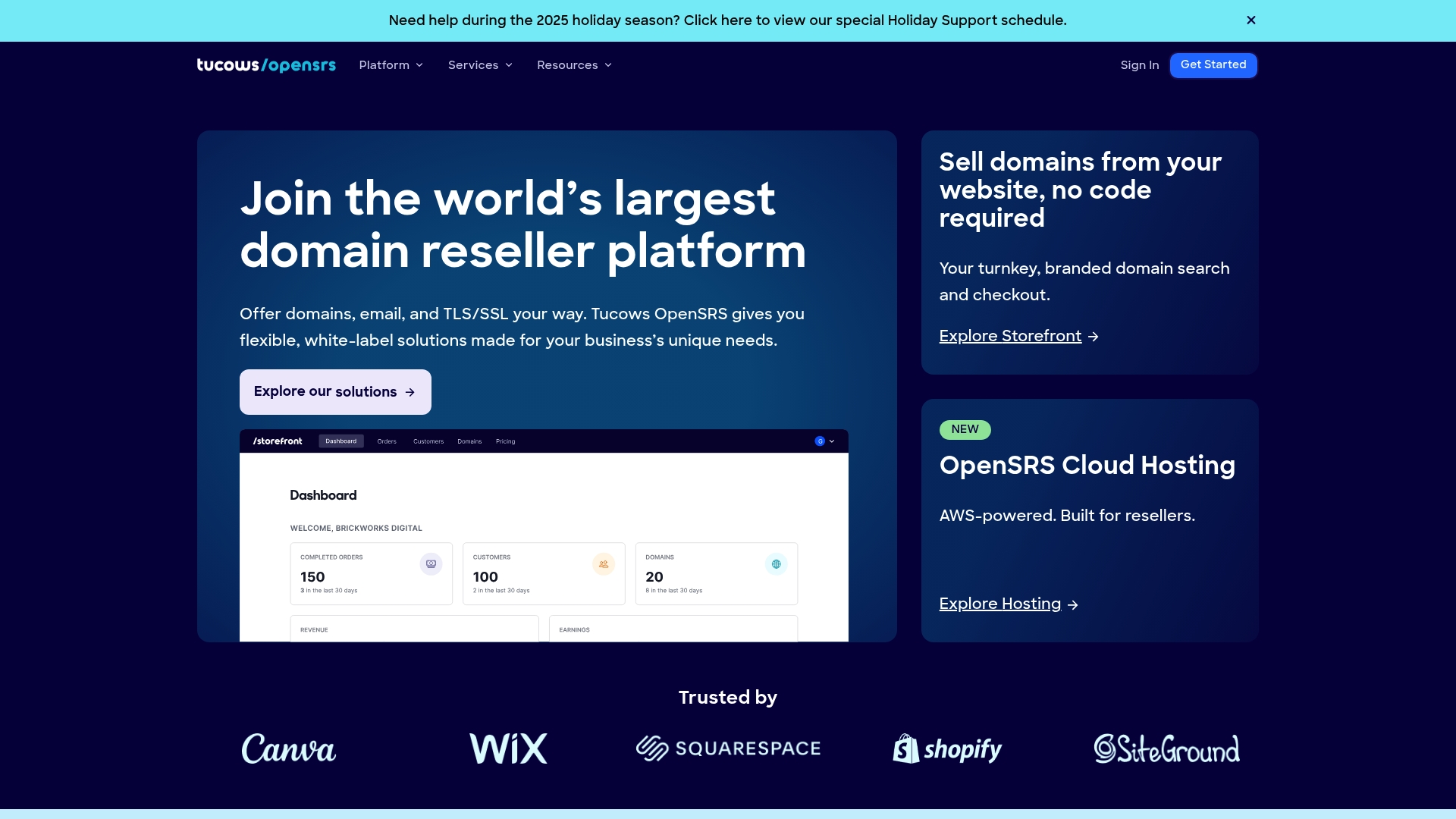
OpenSRS is a mature white-label reseller platform that lets you sell domains, email, and SSL with deep automation and brand control. Trusted by over 13,000 resellers and managing 18 million domains plus 4 million mailboxes across more than 150 countries, it’s built for scale. You get storefronts, control panels, and APIs with no monthly fees or minimum purchases, which makes getting started low-risk. That said, pricing details and some advanced feature specifics often require account setup or direct inquiry.
Core Features
OpenSRS combines white-label storefronts, a reseller control panel, and programmable APIs to automate sales and provisioning. Supported services include domain registration across a wide set of TLDs, email mailbox provisioning, SSL certificates, and SiteLock security services. Multiple integration vectors—plugins and custom APIs—help you automate validation, order fulfillment, and customer self-management without exposing vendor branding.
Pros
- Proven industry track record: OpenSRS brings long-term experience and market knowledge that reduces onboarding friction for resellers with enterprise-grade expectations.
- Flexible, all-in-one reseller platform: You can sell domains, email, and security products from a single, white-label interface that adapts to different business models.
- Transparent pricing and no recurring account fees: There are no monthly fees or minimum purchase requirements, which lowers your fixed cost and preserves margin flexibility.
- Broad TLD and SSL selection: A wide catalog of domain extensions and certificate options gives you product breadth to serve diverse client needs.
- Strong global reseller ecosystem and support: The platform’s large reseller base and support resources make it easier to find peer advice and operational best practices.
Cons
- Pricing specifics often gated behind account setup: You may need to create an account or contact sales to get detailed pricing or feature matrices, which slows rapid evaluation.
- Onboarding complexity for newcomers: Resellers without domain or API experience can face a learning curve integrating control panels and custom automation.
Who It’s For
OpenSRS suits resellers, digital agencies, hosting companies, managed service providers, and website builders that want a white-label, scalable platform to add domains, email, and SSL to their service stack. If you are an IT agency owner or email service reseller aiming to preserve brand control while automating provisioning and billing, OpenSRS matches that brief.
Unique Value Proposition
OpenSRS packages white-label flexibility, global scale, and automation into a single reseller-ready offering without monthly account fees. That combination lets you launch or expand domain and email products quickly, scale with tiered discounts, and keep full brand ownership—helpful when you want to sell under your own label and protect margins.
Real World Use Case
A digital agency integrates OpenSRS API into its client portal so customers can search and buy domains, request SSL certificates, and provision mailboxes in one flow. Orders auto-provision and appear in the agency’s branded control panel, eliminating manual steps and preserving a consistent client experience.
Pricing
Pricing is tier-based with increasing discounts as volume grows, quoted annually per transaction in USD. Example domain price points include $3.00 for store, $4.00 for shop, and $11.50 for .com domains. There are no hidden costs and no minimum purchases.
Website: https://opensrs.com
Luxsci
At a Glance
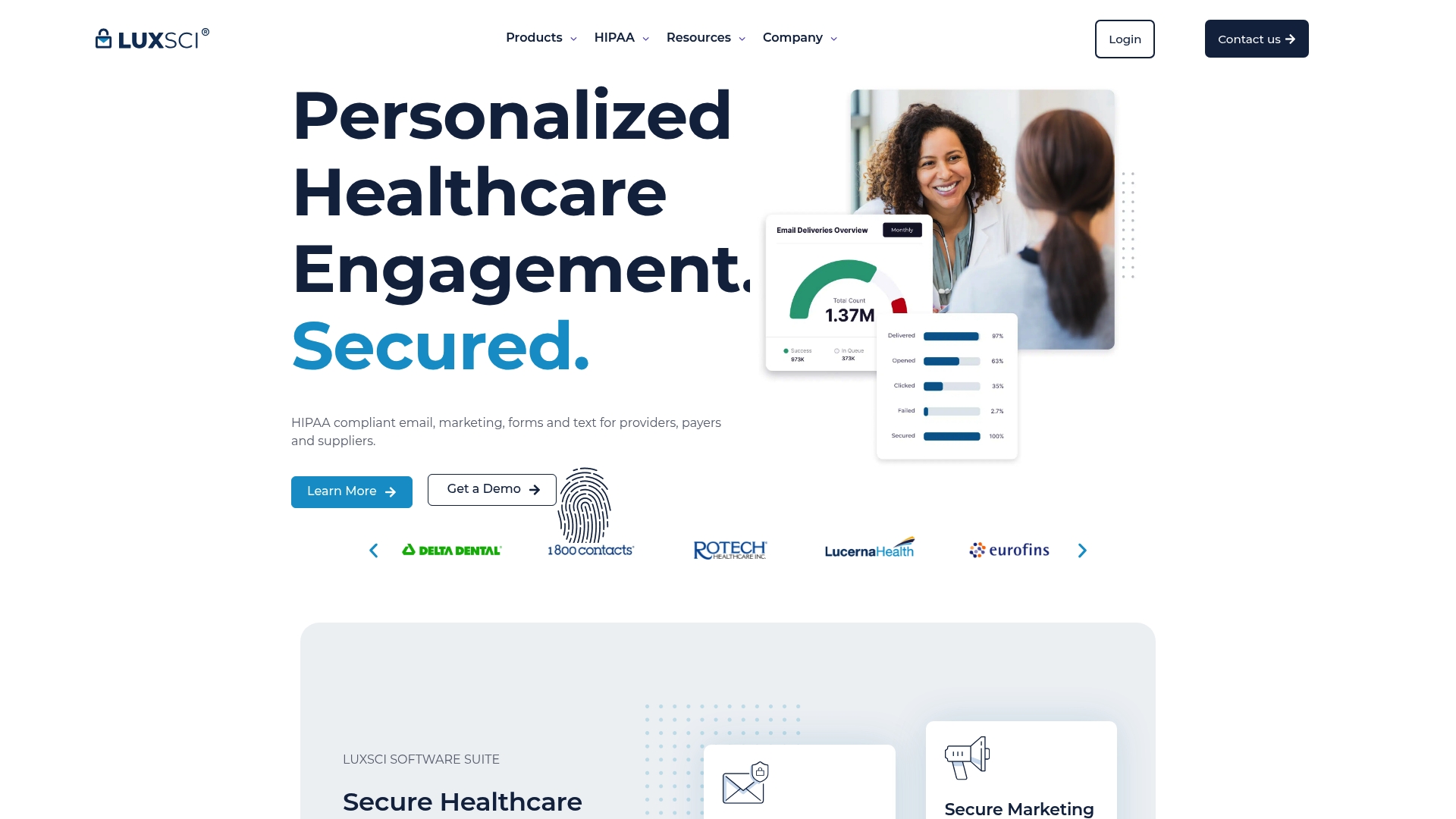
Luxsci is a focused, compliance-first communication platform built for healthcare organizations that need HIPAA and HITRUST-level protections. It combines secure email, forms, text messaging, and marketing tools with encryption options designed to keep protected health information private. The platform emphasizes personalization and high-volume delivery for large patient populations, although some public-facing metrics—like deliverability percentages—are left unclear. If your priority is airtight compliance and integration with clinical systems, Luxsci lands squarely in that sweet spot.
Core Features
Luxsci provides HIPAA-compliant email, marketing, secure forms, and text messaging with content encryption and multiple secure channel options. It supports automated workflows and hypersegmentation to tailor messages by patient cohort, and it integrates with CDP, EHR, and RCM systems for smoother data flow. The product is positioned for high-volume sending with detailed reporting capable of handling millions of messages per month, and it offers flexible encryption choices such as SecureLine™, PGP, and S/MIME to protect replies and threaded conversations.
Pros
- Comprehensive Compliance Focus: Luxsci explicitly targets healthcare compliance with HIPAA and HITRUST certifications so organizations can prioritize privacy and regulatory adherence without piecing together point solutions.
- Multiple Encryption Options: The platform offers SecureLine™, PGP, and S/MIME, giving IT teams and security officers options to match institutional policies and recipient capabilities.
- Reply-Safe Encryption: Luxsci can ensure messages remain encrypted even when recipients reply, reducing the risk of accidental data exposure in back-and-forth communications.
- Scales to High Volumes: The architecture is built to handle millions of messages with detailed reporting, which is important for enterprise campaigns and population health outreach.
- Integration-Friendly: Native integration with CDP, EHR, and RCM systems helps reduce manual workflows and supports more personalized, data-driven communications.
Cons
- Deliverability Metrics Are Unclear: The website lists a high deliverability claim but shows a 0% placeholder for deliverability percentages, which raises questions about transparency and benchmarks.
- Potential Setup Complexity: The platform’s compliance and encryption options likely require careful configuration, which can be complex for teams without dedicated email security expertise.
- Limited Public Support Details: There is scarce information on customer support responsiveness or managed services on the public site, making it harder to evaluate post-sale operational support.
Who It’s For
Luxsci is best suited to Healthcare organizations that must protect patient data while sending operational and marketing communications at scale. It will also appeal to IT agencies and resellers who specialize in regulated industries and need a platform that integrates with clinical systems and enforces strict encryption and audit requirements.
Unique Value Proposition
Luxsci’s value lies in combining enterprise-grade encryption choices, compliance certifications, and integrations geared specifically for healthcare workflows, enabling secure, personalized outreach without sacrificing scale or reporting depth.
Real World Use Case
A hospital network uses Luxsci to send HIPAA-compliant appointment reminders, care plan updates, lab results notifications, and targeted wellness campaigns—keeping patient communications personalized, encrypted, and trackable across EHR-integrated workflows.
Pricing
Pricing is not specified on the website, so interested buyers should contact Luxsci for custom quotes and enterprise options.
Website: https://luxsci.com
Email Hosting Platforms Comparison
Below is a comprehensive comparison of the leading email hosting platforms, summarizing key features, strengths, and pricing models for informed decision-making.
| Platform | Summary | Key Features | Pros | Pricing |
|---|---|---|---|---|
| Atriomail | A fully managed email platform designed for resellers and hosting providers to offer branded email service without server maintenance. | Managed infrastructure, white-label branding, automated DNS validation, API integration | Transparent usage-based pricing, strong focus on privacy, automated operations, scalable solutions. | From $1.39 USD per mailbox |
| Atmail | Long-standing cloud email hosting offering scalable, compliant solutions with white-label capabilities. | ISO 27001 compliant, WCAG 2.1 accessibility, multi-language support, and responsive UI | Offers enterprise-grade compliance, impressive uptime SLA, scalable cloud design. | Contact sales for details |
| OpenSRS | White-label reseller platform allowing sale of domains, email, SSL, and associated services. | Reseller control panel, automation, broad TLD and SSL catalogs, no monthly fees or minimum purchase requirements | Transparent pricing, established global reseller support, wide feature scope encompassing domains and email. | Tiered pricing, no fees |
| Luxsci | Compliance-focused platform designed for healthcare organizations requiring secure communication solutions. | HIPAA-compliant email, flexible encryption options, EHR integration, high-volume messaging capabilities. | Prioritizes data privacy and regulatory adherence, advanced encryption options, suitable for healthcare use. | Contact sales for details |
Own Your White-Label Email Solution with AtrioMail
Choosing the right private label email service comes down to control, scalability, and hassle-free management. As the article highlights, resellers and IT agencies face challenges like managing DNS validation, maintaining infrastructure, and balancing operational costs while preserving brand identity and customer trust. AtrioMail answers these pain points by offering a fully managed, white-label platform that automates MX, SPF, DKIM, and DMARC setup to eliminate setup errors and reduce onboarding time. With usage-based pricing aligned to your growth, AtrioMail lets you scale without large upfront investments or hidden fees.
Take advantage of a platform designed specifically for businesses who want complete brand ownership, seamless API integration, and strong privacy controls—all while leaving the backend complexity to us. If you are ready to boost your reseller business with enterprise-grade email hosting that prioritizes your brand and clients, seeing AtrioMail in action is a smart next step.
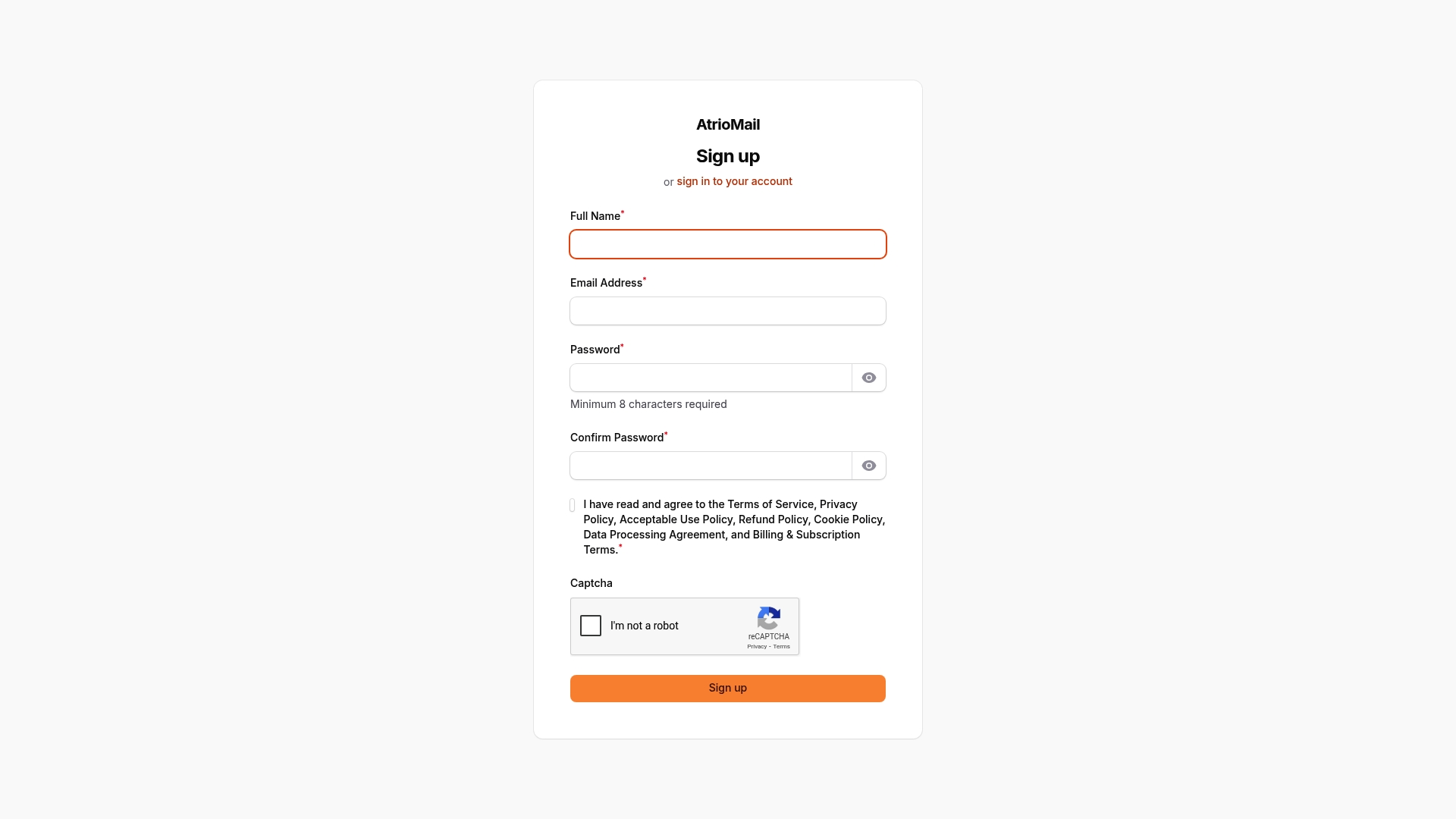
Discover how easy it is to create your own branded email offering today. Visit AtrioMail’s registration page and start your free trial. Explore the benefits of fully managed email infrastructure and experience the freedom of building a scalable, independent email platform. Act now to increase your margins and delight your clients with a trusted solution tailored to your needs.
Frequently Asked Questions
What are private label email services?
Private label email services allow companies to rebrand and offer email solutions under their own name. These services manage the technical details while enabling businesses to maintain control over branding and pricing. Evaluate features like white labeling and customer support to determine the best fit for your needs.
How can I determine the pricing model for private label email services?
Pricing models for private label email services often vary between providers, typically including flat rates, usage-based pricing, or tiered pricing based on mailbox numbers. Contact potential service providers to get detailed quotes and compare offerings. This approach can help you understand potential costs as you scale your email services.
What features should I look for in a private label email service?
Key features to consider include white labeling, automated infrastructure management, compliance with privacy standards, and integration options with existing systems. Make a checklist of must-have features to streamline your evaluation process and ensure the service meets your operational requirements.
How long does it take to set up a private label email service?
Setting up a private label email service can typically be completed within 30–60 days, depending on the provider and complexity of your needs. Follow up with your chosen provider to confirm timelines and ensure a smooth onboarding experience for your clients.
Can I integrate a private label email service with my existing systems?
Yes, many private label email services offer API support for integration with your existing billing, provisioning, and management systems. Prioritize providers that allow seamless integration, which can reduce manual workflows and enhance operational efficiency.
What support options are usually available with private label email services?
Most private label email services offer 24/7 customer support, self-service resources, and often an automated support bot for client-level issues. Review the support documentation of each provider to ensure they align with your organization’s needs and response expectations.