
Managing professional email for diverse clients often means battling constant security demands and complex brand requirements. For IT providers and resellers aiming to deliver scalable, white-label email solutions without the headaches of infrastructure management, the challenge is staying both secure and uniquely branded. This guide breaks down managed email options and features so you can offer flexible, high-impact communication environments tailored to your clients’ needs.
Table of Contents
- Defining Managed Email Service Solutions
- Types of Managed Email Hosting Models
- Core Features And Automation Explained
- Branding, Integration, And Client Control Benefits
- Comparing Managed Vs. Unmanaged Email Hosting
- Risks, Cost Impact, And Common Pitfalls
Key Takeaways
| Point | Details |
|---|---|
| Managed Email Services Enhance Communication | These services provide more than just basic email; they offer advanced security and automation to support organizational communication needs. |
| Choosing the Right Hosting Model is Critical | Organizations must assess their specific needs, security requirements, and operational scale to select the appropriate managed email hosting model. |
| Automation is Key to Efficiency | Implementing automated features in email services significantly reduces manual overhead and improves operational efficiency. |
| Management of Risks is Essential | Organizations must recognize potential cybersecurity threats and operational pitfalls, establishing robust risk management strategies to protect their email services. |
Defining Managed Email Service Solutions
Managed email services represent sophisticated web-based applications designed to streamline organizational communication while ensuring robust security and operational efficiency. These comprehensive solutions enable businesses to send and receive emails securely from virtually anywhere, offering far more than basic message transmission. Specialized email infrastructure tools now provide advanced capabilities that transform email from a simple communication channel into a strategic business asset.
The core functionality of managed email services extends well beyond traditional email hosting. These platforms typically offer a comprehensive suite of features that address complex organizational needs:
- Secure data storage with enterprise-grade encryption
- Automated backup and archiving capabilities
- Advanced scheduling and email management tools
- Comprehensive threat detection and prevention systems
- Seamless integration with existing business software ecosystems
Businesses leveraging managed email services gain significant operational advantages by offloading complex technical infrastructure management. Instead of dedicating internal resources to maintaining email systems, organizations can focus on core business objectives while professional service providers handle the intricate details of email architecture, security, and compliance.
Managed email services transform email from a basic communication tool into a strategic, secure, and scalable business asset.
Professional email management requires more than just sending and receiving messages. Modern solutions provide intelligent routing, comprehensive compliance tracking, and sophisticated access controls that protect sensitive organizational communications. These services help businesses maintain professional communication standards while mitigating potential security risks.
Pro tip: When selecting a managed email service, prioritize providers offering robust security features, scalable infrastructure, and comprehensive compliance capabilities.
Types of Managed Email Hosting Models
Managed email hosting models represent sophisticated solutions designed to meet diverse organizational communication and security requirements. These models vary significantly in their approach to infrastructure management, support coverage, and customization options. Managed IT service providers offer multiple frameworks that enable businesses to select precisely aligned email hosting strategies matching their operational needs.
The primary managed email hosting models can be categorized into several distinct types:
-
Business-Hours Coverage Model
- Support available during standard office hours
- Lower cost option for smaller organizations
- Suitable for businesses with predictable communication patterns
-
24/7 Full-Service Model
- Continuous security monitoring
- Comprehensive incident management
- Dedicated security operations center (SOC)
- Ideal for global or mission-critical enterprises
-
Hybrid Flexible Coverage Model
- Customizable support windows
- Scalable infrastructure
- Adaptable to changing business requirements
Each hosting model presents unique advantages and trade-offs. Comprehensive email security models balance operational requirements against potential risk factors, allowing organizations to make strategic decisions based on their specific technological landscape and budgetary constraints.
Here’s a side-by-side comparison of the primary managed email hosting models:
| Hosting Model | Typical Use Case | Support Level | Customization Potential |
|---|---|---|---|
| Business-Hours Coverage | Small firms, office hours | Standard business hours | Limited customization |
| 24/7 Full-Service | Global, mission-critical orgs | Continuous monitoring | High security and incident response |
| Hybrid Flexible Coverage | Growing or dynamic businesses | Customizable support windows | Scalable and adaptable features |
Selecting the right managed email hosting model is less about finding a universal solution and more about identifying the perfect fit for your unique organizational ecosystem.
Enterprise-grade email hosting goes beyond simple message transmission. Modern models incorporate advanced security protocols, intelligent routing mechanisms, and comprehensive compliance tracking. These sophisticated systems transform email from a basic communication tool into a strategic business asset that protects sensitive organizational information.
Pro tip: Evaluate your organization’s communication complexity, global presence, and security requirements before selecting a managed email hosting model to ensure optimal alignment with your strategic objectives.
Core Features and Automation Explained
Managed email services have revolutionized organizational communication through sophisticated automated email management tools. These advanced platforms transform traditional email infrastructure by integrating intelligent automation capabilities that dramatically reduce manual administrative overhead and enhance operational efficiency.
The core features of modern managed email services encompass several critical automation domains:
-
Email Backup and Recovery
- Automatic periodic data preservation
- Instant restoration capabilities
- Comprehensive archival systems
-
Security Automation
- Real-time threat detection
- Automated SSL/TLS encryption
- Intelligent spam filtering
- Continuous security monitoring
-
Workflow Optimization
- Automatic email sorting
- Scheduled message sending
- Intelligent routing mechanisms
- Custom rule-based processing
These automated features represent more than simple technological conveniences. They fundamentally reshape how organizations approach email communication, transforming it from a basic messaging platform into a strategic business intelligence tool.
Automation in email services isn’t just about efficiency—it’s about creating intelligent, responsive communication ecosystems that adapt to organizational needs.
Enterprise-grade email automation goes far beyond basic message management. Modern systems incorporate machine learning algorithms that can predict communication patterns, identify potential security risks, and streamline complex organizational workflows. These intelligent platforms provide granular control while simultaneously reducing human error and operational complexity.

Pro tip: Implement multi-layered automation rules that balance organizational security with communication flexibility to maximize your managed email service’s potential.
Branding, Integration, and Client Control Benefits
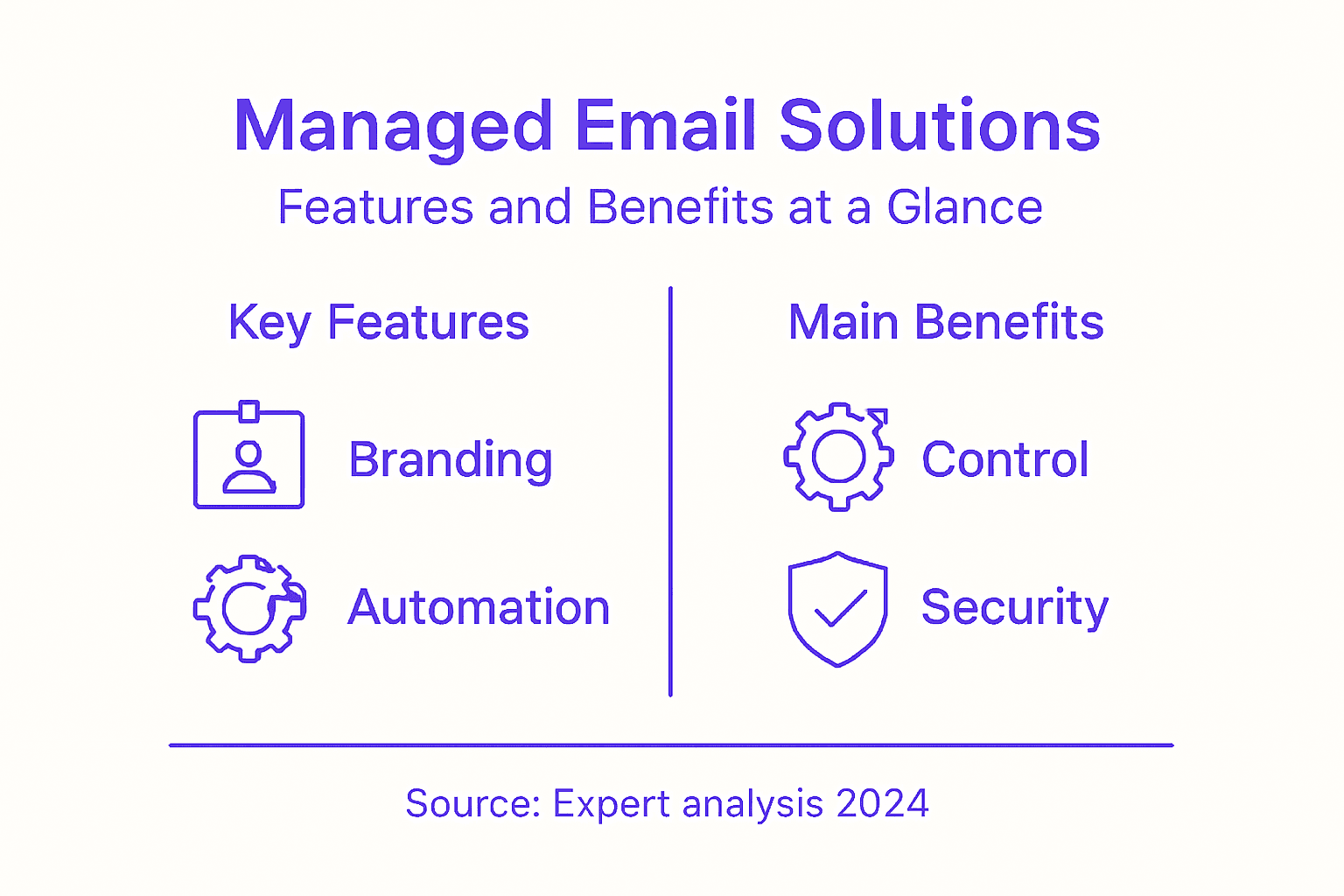
Managed email services have evolved to offer unprecedented levels of client infrastructure integration, transforming how businesses approach email communication and brand representation. These sophisticated platforms enable organizations to create seamless, professional email environments that reflect their unique organizational identity and operational requirements.
Key branding and control features include:
-
Custom Domain Branding
- Personalized email domains
- Company-specific email templates
- Consistent visual identity across communication channels
-
Client Control Mechanisms
- Configurable security policies
- Granular user management
- Comprehensive data access controls
- Customizable administrative dashboards
-
Integration Capabilities
- Seamless connection with existing infrastructure
- API-driven extensibility
- Compatible with multiple business software ecosystems
These advanced features go beyond simple email hosting, providing businesses with a strategic tool for maintaining brand consistency and operational control. The ability to customize and integrate email services allows organizations to create a unified, professional communication platform that reflects their unique organizational culture.
White-label email solutions are not just a technological service—they’re a powerful extension of your brand’s digital identity.
Enterprise-grade branding solutions offer unprecedented flexibility in email service management. Modern platforms enable businesses to create fully customized email environments that can be tailored to specific organizational needs, from security configurations to user interface design. This level of control transforms email from a basic communication utility into a sophisticated brand management tool.
Pro tip: Design your email branding strategy with a holistic approach, considering visual consistency, security requirements, and seamless user experience across all communication channels.
Comparing Managed vs. Unmanaged Email Hosting
The landscape of email hosting presents businesses with a critical choice between comprehensive managed services and hands-on unmanaged solutions. This decision fundamentally impacts an organization’s operational efficiency, security posture, and technical resource allocation.
Key differences between managed and unmanaged email hosting include:
-
Managed Email Hosting
- Comprehensive security monitoring
- Automatic software updates
- Dedicated technical support
- Predictable operational costs
- Reduced internal IT burden
-
Unmanaged Email Hosting
- Direct infrastructure control
- Lower initial costs
- Requires extensive technical expertise
- Higher operational complexity
- Complete responsibility for maintenance
-
Comparative Performance Metrics
- Security responsiveness
- Compliance capabilities
- Resource investment
- Scalability potential
- Risk management
Businesses must carefully evaluate their internal capabilities, technological requirements, and risk tolerance when selecting between these hosting models. The choice directly influences an organization’s communication infrastructure, cybersecurity resilience, and operational flexibility.
Choosing between managed and unmanaged email hosting is not just a technical decision—it’s a strategic business choice that impacts productivity, security, and long-term technological adaptability.
Enterprise email infrastructure demands sophisticated considerations beyond basic hosting. Modern organizations require solutions that balance technical control, security requirements, and operational efficiency. Managed hosting emerges as a compelling option for businesses seeking robust, low-maintenance email ecosystems that minimize internal technical overhead.
Pro tip: Conduct a comprehensive internal audit of your technical capabilities, compliance requirements, and resource constraints before selecting between managed and unmanaged email hosting solutions.
Risks, Cost Impact, and Common Pitfalls
Managed email services present a complex landscape of potential cybersecurity and operational risks that organizations must carefully navigate. Understanding these challenges is critical for making informed decisions about email infrastructure and protecting organizational communication channels.
Key risks and potential vulnerabilities include:
-
Security Threats
- Phishing attacks
- Business email compromise
- Ransomware infiltration
- Data leakage scenarios
-
Financial Exposure
- Incident response costs
- Potential compliance penalties
- Unplanned downtime expenses
- Reputation damage mitigation
-
Operational Pitfalls
- Inadequate threat monitoring
- Insufficient staff training
- Unclear service agreements
- Poor integration planning
The financial implications of these risks extend far beyond immediate monetary costs. Organizations face potential long-term consequences including damaged reputation, client trust erosion, and significant operational disruptions that can fundamentally impact business continuity.
The following table summarizes key risks and their organizational impact for managed email services:
| Risk Type | Example Threat | Potential Business Impact |
|---|---|---|
| Security Threat | Ransomware, phishing | Data loss, exposure of sensitive info |
| Financial Exposure | Compliance penalties | Costly fines, reputational damage |
| Operational Pitfall | Inadequate training | Service disruptions, errors |
Effective risk management in email services is not about eliminating all potential threats, but developing a robust, adaptive security strategy that anticipates and mitigates potential vulnerabilities.
Enterprise email risk management requires a proactive, comprehensive approach that goes beyond basic security protocols. Successful strategies integrate continuous monitoring, rapid incident response, and adaptive security frameworks that can evolve with emerging technological challenges.
Pro tip: Conduct regular comprehensive risk assessments and maintain flexible, multi-layered security protocols to effectively manage potential email service vulnerabilities.
Enhance Your Managed Email Services with AtrioMail’s White-Label Solutions
The article highlights challenges like maintaining secure, branded email platforms while managing complex infrastructure and compliance. If you want to overcome issues such as manual DNS validation, limited brand control, and costly operational overhead, AtrioMail offers a powerful alternative. Our platform empowers resellers and IT agencies to effortlessly deploy fully managed, scalable email hosting under their own brand without sacrificing security or control.
Experience automation of DNS settings including MX, SPF, DKIM, and DMARC plus seamless API integration that simplifies onboarding and long-term management. AtrioMail allows you to focus on growing your business, not on backend complexities. If you are ready to turn email hosting into a strategic advantage with enterprise-grade infrastructure and customizable branding, explore our platform now.
Elevate your managed email offerings with AtrioMail today.
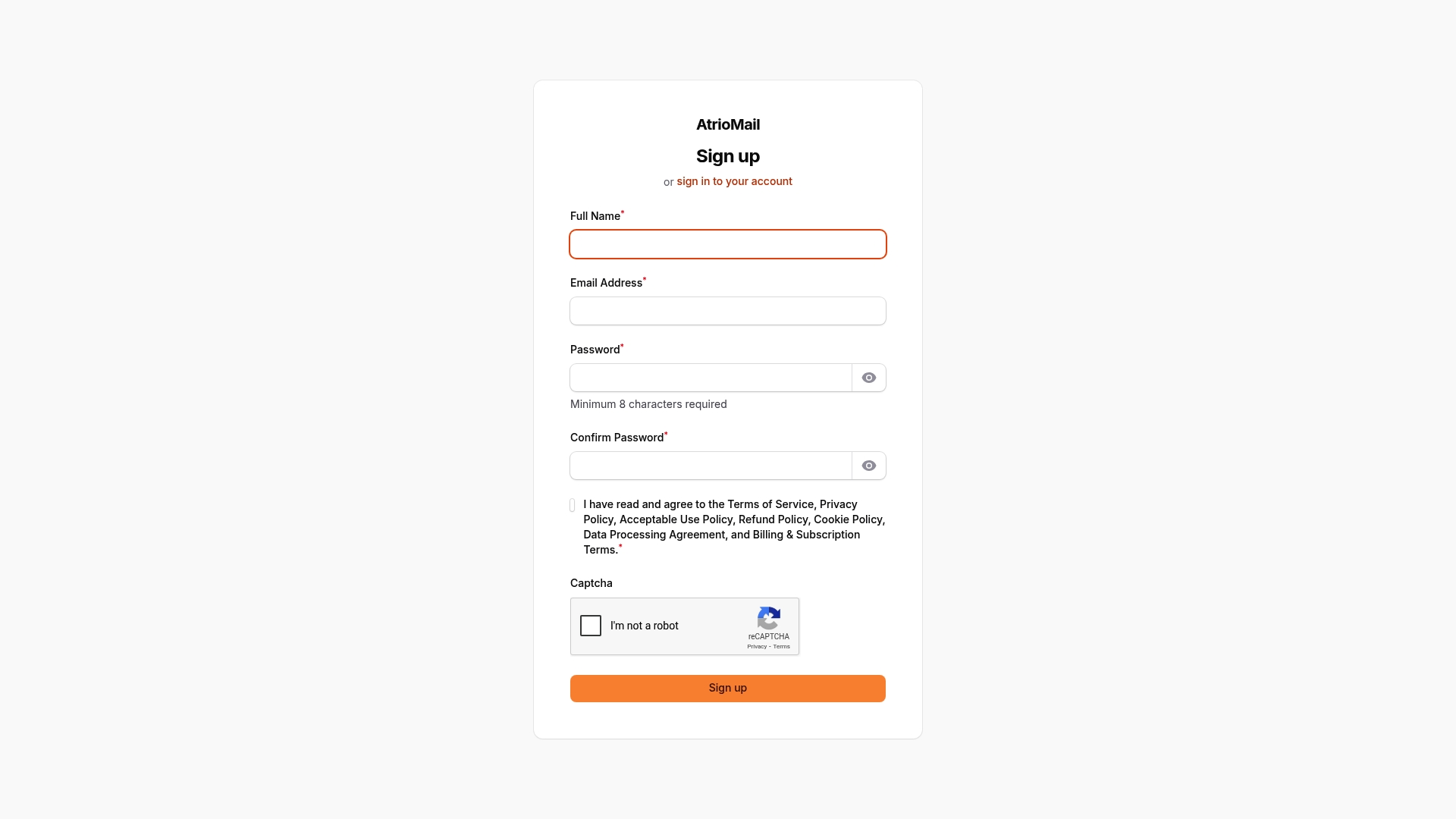
Discover how AtrioMail can transform your email service business with complete brand control and scalable pricing. Take the first step and register to launch your white-label email platform now at AtrioMail Registration. Find out why providers who choose us enjoy higher profit margins and freedom from major ecosystems like Google and Microsoft. Start building your independent email hosting solution today.
Frequently Asked Questions
What are managed email services?
Managed email services are sophisticated web-based applications designed to enhance organizational communication by providing secure and efficient methods for sending and receiving emails, along with additional features like encryption, backup, and threat detection.
How do managed email services differ from unmanaged email hosting?
Managed email services offer comprehensive security monitoring, ongoing technical support, and automatic updates, while unmanaged hosting provides direct infrastructure control but requires extensive technical expertise and has a higher operational complexity.
What key features should I look for in a managed email service?
Look for features such as robust security measures (like encryption and threat detection), automated backup and recovery, workflow optimization tools, seamless integration capabilities, and customizable branding options to ensure the service meets your organizational needs.
What are the risks associated with using managed email services?
Key risks include security threats such as phishing and ransomware, financial exposure related to incident response and compliance penalties, and operational pitfalls from inadequate staff training or unclear service agreements. A proactive risk management strategy is essential to mitigate these vulnerabilities.