
Managing client email platforms using outdated tools can slow down even the most innovative digital agencies. For agencies and IT service providers wanting true brand control and seamless operations, traditional email hosting falls short. By adopting API-driven email integration, you gain the power to automate workflows, offer custom branding, and connect directly with modern platforms like CRM and ERP—all while maintaining security and flexibility in your white-label solutions.
Table of Contents
- Defining Email API Integration For Email Hosting
- Types Of Email API Integrations Explained
- How Email APIs Streamline White-Label Solutions
- Security, Compliance, And Data Privacy Risks
- Common Pitfalls And Key Integration Best Practices
Key Takeaways
| Point | Details |
|---|---|
| Email API Integration Enhances Control | Embracing email API integration allows businesses to automate email tasks, improve synchronization, and seamlessly connect with other systems like CRM and ERP. |
| Diverse API Types for Specific Scenarios | Agencies can choose from various types of email APIs, such as transactional, marketing, and contextual, each tailored for unique communication needs. |
| Security is Crucial | Implement robust security measures, including secure authentication protocols and encryption, to mitigate risks associated with email API integrations. |
| Planning is Essential for Success | Careful provider selection and operational monitoring are vital to ensuring effective and resilient email API integration within digital agencies. |
Defining Email API Integration for Email Hosting
Email API integration represents a powerful technological approach that enables digital agencies and IT service providers to programmatically interact with email hosting infrastructure through modern software interfaces. Unlike traditional email management methods, API-driven email integration allows developers to send, receive, and manage email services using standardized programming protocols.
At its core, email API integration provides a sophisticated mechanism for automating email-related tasks through RESTful protocol interactions. These integrations enable software applications to communicate directly with email servers, offering unprecedented control and flexibility in managing email hosting environments. The key advantages include:
- Automated email sending and receiving processes
- Real-time synchronization across multiple platforms
- Secure authentication using OAuth and API keys
- Seamless workflow integrations with CRM and ERP systems
- Enhanced monitoring and scalability of email infrastructure
The technical architecture of email API integration fundamentally transforms how businesses approach email hosting. Instead of relying on traditional SMTP or IMAP protocols, modern solutions leverage comprehensive API frameworks that abstract complex server interactions into simple, programmable endpoints. Secure authentication mechanisms like OAuth2 ensure that these integrations maintain robust security standards while providing granular access controls.
Pro tip: When evaluating email API integration solutions, prioritize platforms offering comprehensive documentation, robust security features, and flexible authentication mechanisms to streamline your implementation process.
Types of Email API Integrations Explained
Email API integrations are not a one-size-fits-all solution, but rather a diverse ecosystem of specialized tools designed to address specific communication needs. Developers and digital agencies can choose from multiple integration types that provide unique capabilities for different email management scenarios.
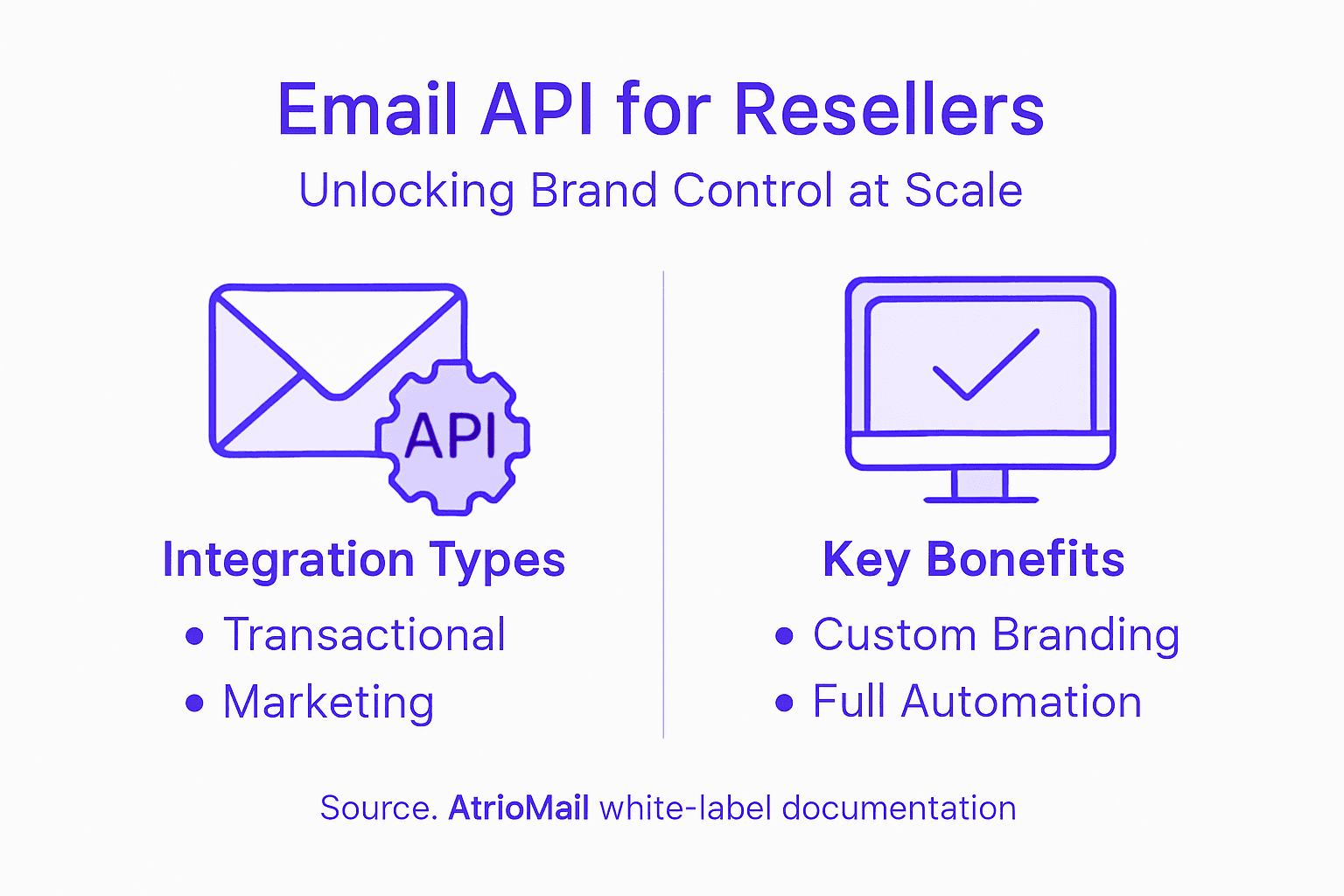
The primary categories of email API integrations include transactional and contextual email APIs. These integration types offer distinct approaches to email communication and automation:
-
Transactional Email APIs
- Designed for automated, triggered messaging
- Ideal for sending notifications, receipts, and password resets
- Focuses on high deliverability and real-time message tracking
-
Marketing Email APIs
- Supports bulk email campaign management
- Provides advanced analytics and segmentation tools
- Enables dynamic content personalization
-
Contextual/On-Behalf Email APIs
- Offers direct access to user email inboxes
- Enables real-time message synchronization
- Supports sending and reading emails programmatically
Unlike traditional SMTP protocols, modern email APIs deliver advanced developer-friendly interfaces that transform how businesses manage electronic communication. These APIs abstract complex email infrastructure interactions, providing seamless integration capabilities that dramatically improve operational efficiency.

Here’s a comparison of key types of email API integrations and their ideal use cases:
| Integration Type | Typical Use Cases | Notable Benefits |
|---|---|---|
| Transactional Email API | Order confirmations, alerts | Ensures fast, reliable delivery |
| Marketing Email API | Campaigns, newsletters | Provides analytics, segmentation |
| Contextual/On-Behalf | Inbox access, sync tasks | Enables real-time interaction |
Email API integrations represent a sophisticated approach to digital communication, enabling unprecedented levels of automation and control.
Pro tip: When selecting an email API integration, carefully evaluate your specific use case and choose a solution that provides the most aligned feature set for your operational requirements.
How Email APIs Streamline White-Label Solutions
White-label email solutions represent a critical strategic approach for digital agencies seeking to provide branded email services without managing complex infrastructure. By leveraging advanced email API technologies, businesses can create fully customized email hosting environments that maintain complete brand identity and operational control.
The key mechanisms through which email APIs enable white-label solutions include:
-
Brand Customization
- Complete visual and functional branding
- Custom domain email configurations
- Seamless integration with existing client interfaces
-
Operational Flexibility
- Automated user provisioning
- Scalable email infrastructure
- Independent management of email services
-
Technical Independence
- Elimination of dependency on major email providers
- Full control over email routing and management
- Advanced security and compliance controls
White-label email APIs transform traditional email hosting by abstracting complex backend technologies, allowing digital agencies to present a fully integrated, professional email solution. This approach enables businesses to offer enterprise-grade email services without substantial infrastructure investments or technical complexity.
White-label email APIs represent a revolutionary approach to email service delivery, empowering agencies to create unique, branded communication platforms.
Pro tip: Prioritize email API providers offering robust documentation, comprehensive customization options, and flexible authentication mechanisms to maximize your white-label email solution’s potential.
Security, Compliance, and Data Privacy Risks
Email API integrations introduce complex security challenges that demand rigorous strategic planning and robust protective mechanisms. Digital agencies must navigate a sophisticated landscape of potential vulnerabilities that could compromise sensitive client communication infrastructure and expose organizations to significant legal and reputational risks.
Secure authentication protocols represent the first line of defense in mitigating potential email API security threats. The critical risk areas include:
-
Authentication Vulnerabilities
- Weak API credential management
- Inadequate access control mechanisms
- Potential unauthorized system penetration
-
Data Privacy Concerns
- Potential unencrypted data transmission
- Improper user data handling
- Cross-jurisdictional compliance challenges
-
Regulatory Compliance Risks
- GDPR data protection requirements
- HIPAA healthcare information safeguards
- SOC2 operational security standards
Comprehensive security strategies must incorporate multi-layered protection mechanisms that address authentication, encryption, access management, and continuous monitoring. This holistic approach ensures that email API integrations maintain the highest standards of data protection and regulatory compliance.
Below is a summary of common security risks versus mitigation strategies in email API integrations:
| Security Challenge | Example Risk | Mitigation Strategy |
|---|---|---|
| Credential Management | Stolen API keys | Enforce strong secret rotation |
| Data Transmission | Unencrypted email contents | Use transport layer encryption |
| Compliance Requirements | Regulatory audit failures | Regular policy and log reviews |
| Access Control | Unauthorized mailbox access | Apply principle of least privilege |
Effective email API security is not about eliminating risks entirely, but systematically managing and mitigating potential vulnerabilities through proactive, comprehensive strategies.
Pro tip: Implement a rigorous API security assessment protocol that includes regular penetration testing, comprehensive access audits, and continuous compliance monitoring to maintain robust protection.
Common Pitfalls and Key Integration Best Practices
Email API integration demands strategic precision, with numerous potential challenges that can derail digital agency operations. Successful implementation requires a comprehensive understanding of both technical and operational considerations that can make or break the integration process.
API integration best practices demand meticulous planning and systematic execution. Digital agencies must navigate complex technical landscapes by focusing on critical implementation strategies:
-
Provider Selection Criteria
- Comprehensive feature compatibility
- Scalability and performance metrics
- Robust security infrastructure
- Transparent pricing models
-
Technical Configuration Considerations
- Precise domain verification processes
- Secure credential management
- Error handling and logging mechanisms
- API endpoint configuration
-
Operational Performance Monitoring
- Regular performance audits
- Tracking delivery and bounce rates
- Implementing redundancy strategies
- Continuous integration testing
Effective email API integration transcends mere technical implementation, requiring a holistic approach that balances technical sophistication with operational efficiency. Agencies must develop adaptive strategies that can evolve with changing technological landscapes and emerging security requirements.
Successful email API integration is not about perfect execution, but about creating flexible, resilient systems that can adapt to complex technological challenges.
Pro tip: Develop a comprehensive integration checklist that includes technical validation, security assessments, and performance benchmarking to ensure smooth and reliable email API deployment.
Take Full Brand Control with AtrioMail’s White-Label Email API Integration
The article highlights the challenges digital agencies and resellers face when trying to implement flexible, secure, and fully branded email services through email API integration. Key pain points include managing complex infrastructure, ensuring robust security like OAuth authentication, and maintaining granular brand customization without relying on major email providers. If you want to unlock the true potential of your reseller business with scalable, automated, and white-label email hosting solutions, AtrioMail is designed for you.
AtrioMail offers a powerful platform that addresses all these challenges by providing:
- Fully managed infrastructure with automated DNS validations (MX, SPF, DKIM, DMARC)
- Seamless API integration for smooth deployment and operational efficiency
- Complete domain management and white-label branding to keep your identity front and center
- Scalable pricing based on usage to maximize profitability without upfront costs
Partnering with AtrioMail means freedom from the big ecosystems and the ability to grow your business with confidence knowing your email services are secure, compliant, and easy to customize.
Start scaling your branded email hosting platform today with AtrioMail Register now.
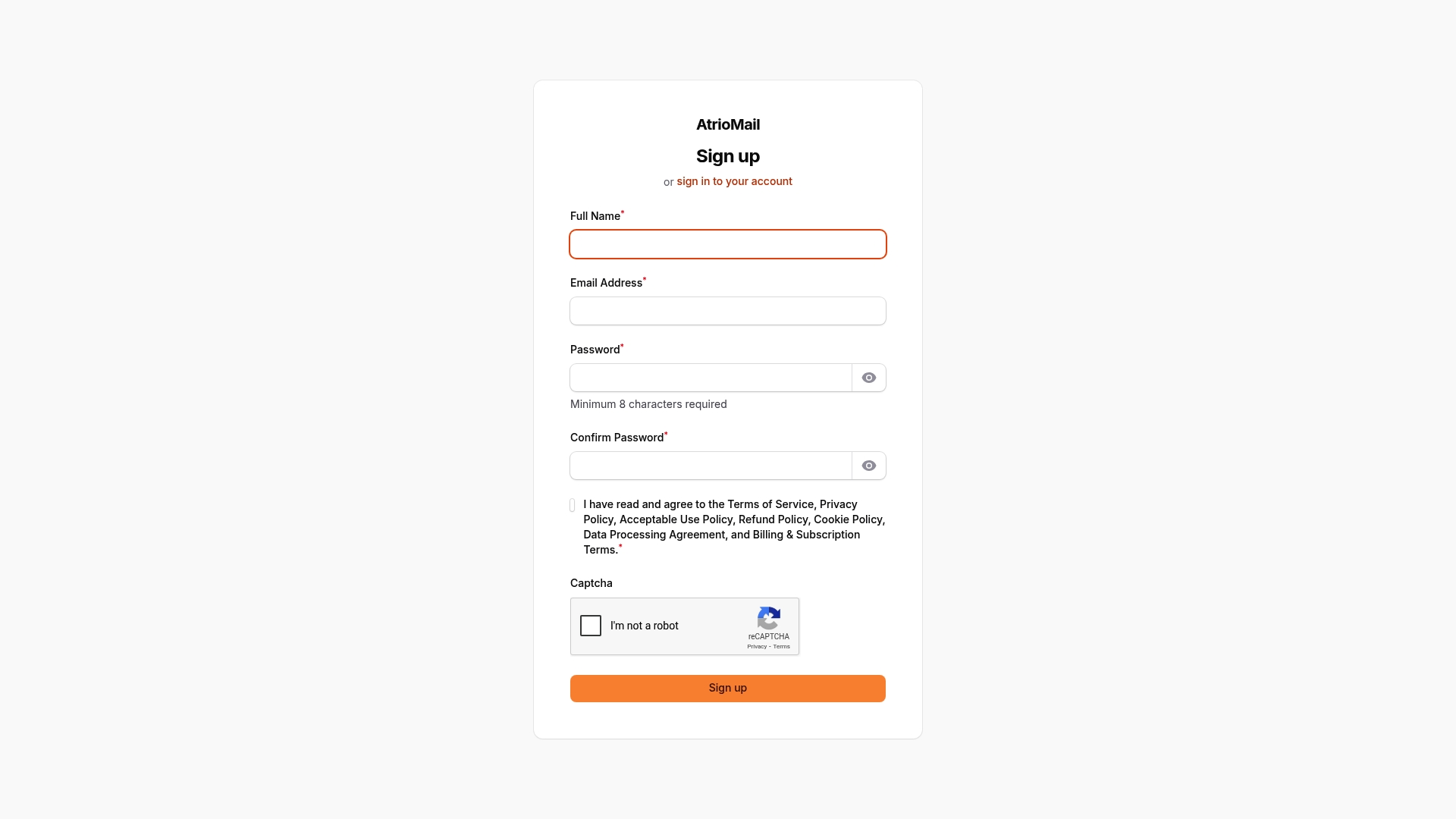
Discover how to streamline your email API integration and empower your brand control by joining AtrioMail’s platform. Don’t wait to elevate your reseller services. Get started at AtrioMail Registration and explore the full potential of white-label email hosting built for digital agencies and resellers.
Frequently Asked Questions
What is Email API integration?
Email API integration allows developers and digital agencies to programmatically manage email hosting systems through standardized programming protocols, enabling automated email sending and receiving, real-time synchronization, and more.
What are the types of Email API integrations available?
The primary types of Email API integrations include Transactional Email APIs for automated messaging, Marketing Email APIs for bulk campaigns, and Contextual Email APIs for real-time inbox access and synchronization.
How do Email APIs facilitate white-label solutions?
Email APIs empower agencies to provide branded email services without managing complex infrastructure, allowing for custom branding, automated user provisioning, and independent management of email services.
What security considerations should be taken into account for Email API integrations?
Key security considerations include authentication vulnerabilities, data privacy concerns, and compliance with regulations such as GDPR and HIPAA. Employing secure authentication protocols and regular audits can help mitigate these risks.