
Choosing between mainstream email providers and white-label solutions often comes down to a single priority: brand control. Many IT agencies in the United States and Canada realize that relying on popular platforms like Google or Microsoft limits their ability to create a branded experience and protect client data. With private email hosting offering deeper security, full customization, and direct client management, agencies can finally break away from generic services and deliver a premium communication solution that boosts both trust and profits.
Table of Contents
- Defining Private Email Hosting And Common Myths
- White-Label Email Vs. Mainstream Providers
- Key Features Enabling Brand And Client Control
- Privacy, Compliance, And Legal Considerations
- Risks, Costs, And Comparisons With Big Tech
Key Takeaways
| Point | Details |
|---|---|
| Private Email Hosting Offers Enhanced Security | Private email hosting prioritizes data protection with protocols like end-to-end encryption and multi-factor authentication, ensuring confidentiality over standard webmail services. |
| White-Label Solutions Provide Customization | White-label email hosting allows agencies full control over branding and pricing, distinguishing their services from mainstream providers. |
| Compliance is Essential for Privacy | IT agencies must adhere to global data protection regulations and implement stringent compliance frameworks to safeguard client information. |
| Avoid Vendor Lock-in with Private Hosting | Relying on big tech providers can lead to high costs and limited customization; private hosting offers flexibility and better control over email management. |
Defining Private Email Hosting and Common Myths
Private email hosting represents a specialized approach to email services designed specifically for organizations seeking enhanced security, control, and privacy beyond standard webmail platforms. Unlike mainstream email providers that prioritize data collection and advertising, private email hosting focuses exclusively on protecting sensitive communication infrastructure for businesses and agencies.
At its core, private email hosting involves managing email services on dedicated servers with comprehensive security protocols. Secure email infrastructure requires more than just basic encryption – it demands a holistic approach to data protection that prevents unauthorized access and maintains strict confidentiality standards. This means implementing advanced security measures such as:
- End-to-end email encryption
- Zero-knowledge architecture
- Comprehensive access controls
- Multi-factor authentication
- Regular security audits and compliance checks
Many IT agencies mistakenly believe that popular email platforms like Gmail or Outlook provide sufficient protection. However, these services fundamentally operate on business models that involve scanning and monetizing user data. Private email hosting breaks this paradigm by offering a fundamentally different approach where client privacy becomes the primary objective.
Private email hosting isn’t just a technical solution – it’s a commitment to protecting organizational communication integrity.
The misconception that all email services offer equivalent privacy levels can expose businesses to significant risks. Protecting email privacy goes beyond simple password protection, requiring sophisticated infrastructure that prevents data breaches and maintains strict confidentiality protocols.
Pro tip: When evaluating private email hosting solutions, always request detailed documentation about their security architecture and compliance certifications.
White-Label Email vs. Mainstream Providers
White-label email hosting represents a strategic alternative to mainstream email providers, offering IT agencies unprecedented control and branding opportunities. White-label email solutions fundamentally transform how organizations approach email infrastructure by allowing complete customization and brand integration.
Unlike popular platforms like Google Workspace or Microsoft 365, white-label solutions provide businesses with comprehensive control over their email ecosystem. The key differences between white-label and mainstream providers include:
- Total brand control and customization
- Independent pricing structures
- Deeper client relationship management
- Elimination of third-party branding
- Flexible infrastructure adaptation
Mainstream email providers typically offer standardized services with limited personalization options. These platforms prioritize ease of use and integration with productivity tools, but they inherently limit an organization’s ability to create a unique customer experience. White-label email hosting shifts this paradigm by enabling IT agencies to deliver email services that feel entirely native to their brand.
White-label solutions transform email from a utility into a strategic business asset.
Comprehensive white-label email strategies empower IT agencies to create differentiated service offerings that go beyond simple email transmission. By managing infrastructure while presenting a fully customized client experience, these solutions provide a powerful mechanism for building trust and generating additional revenue streams.
Here’s a concise comparison of mainstream and white-label email hosting from an IT agency perspective:
| Criteria | Mainstream Providers | White-Label Hosting |
|---|---|---|
| Brand Identity | Limited customization | Full brand integration |
| Pricing Flexibility | Fixed pricing tiers | Agency-controlled pricing |
| Data Ownership | Provider controls data | Agency/Client controls data |
| Client Relationship | Provider intermediary | Direct agency-client link |
Pro tip: Evaluate white-label email providers based on their infrastructure flexibility, not just their feature list.
Key Features Enabling Brand and Client Control
Private email hosting provides IT agencies with an arsenal of sophisticated features designed to maximize brand control and client management capabilities. Private label email hosting solutions empower organizations to create fully customized email ecosystems that reflect their unique brand identity and operational requirements.
The most critical features enabling comprehensive brand and client control include:
- Dedicated IP address management
- Full domain customization options
- Advanced administrative control panels
- Robust multi-client management tools
- Scalable infrastructure with granular user permissions
- Comprehensive security and compliance frameworks
Branded email platforms transform traditional email infrastructure by allowing IT agencies to present a completely seamless customer experience. Unlike generic email services, these solutions provide deep customization that extends beyond simple logo placement, enabling agencies to control every aspect of the email interaction.
Effective brand control turns email from a commodity into a strategic business asset.
Comprehensive email hosting strategies unlock powerful administrative capabilities that go far beyond basic communication tools. These solutions offer sophisticated features like multi-factor authentication, custom webmail interfaces, and advanced spam filtering that help IT agencies differentiate their service offerings and build stronger client relationships.

Pro tip: Select email hosting providers that offer API integrations and white-label dashboards for maximum operational flexibility.
Privacy, Compliance, and Legal Considerations
Navigating the complex landscape of data privacy requires IT agencies to implement rigorous compliance frameworks that protect client information and mitigate legal risks. Legal and privacy challenges have become increasingly sophisticated, demanding comprehensive strategies that go far beyond basic data protection protocols.
Key regulatory considerations for IT agencies managing email hosting include:
- Global data protection regulations (GDPR, CCPA)
- Jurisdiction-specific compliance requirements
- Data processing agreement frameworks
- Breach notification mandates
- Client data protection protocols
- Cross-border data transfer restrictions
Comprehensive privacy frameworks require more than technical safeguards. They demand a proactive approach to understanding and implementing complex legal requirements that vary across different jurisdictions and industry sectors.
Legal compliance is not a checkbox – it’s an ongoing commitment to protecting client data integrity.
Information security legal responsibilities encompass multiple dimensions of risk management. IT agencies must develop robust vendor management processes, implement strict data handling protocols, and maintain transparent documentation to demonstrate compliance and minimize potential financial penalties.
Pro tip: Conduct quarterly compliance audits and maintain detailed documentation of your data protection practices to stay ahead of evolving regulatory requirements.
Risks, Costs, and Comparisons With Big Tech
The landscape of email hosting is rapidly transforming as businesses recognize the significant risks associated with relying on big tech email providers. Private email hosting trends reveal a growing movement away from mainstream platforms due to critical concerns about data privacy, vendor control, and escalating operational costs.
Key comparative risks between big tech and private email hosting include:
- Extensive data mining practices
- Limited customization capabilities
- High subscription costs
- Reduced operational control
- Potential government surveillance exposure
- Inflexible service agreements
Vendor lock-in represents a substantial hidden cost for organizations trapped in mainstream email ecosystems. Large providers design their platforms to create dependency, making migration challenging and expensive. Private email hosting breaks this cycle by offering modular, flexible infrastructure that adapts to specific business requirements.
Breaking free from big tech email means reclaiming control over your digital communication strategy.
Secure email hosting comparisons demonstrate that privacy-focused solutions can provide comparable, and often superior, functionality to mainstream providers. The true value lies not just in cost savings, but in enhanced security, brand control, and operational autonomy.
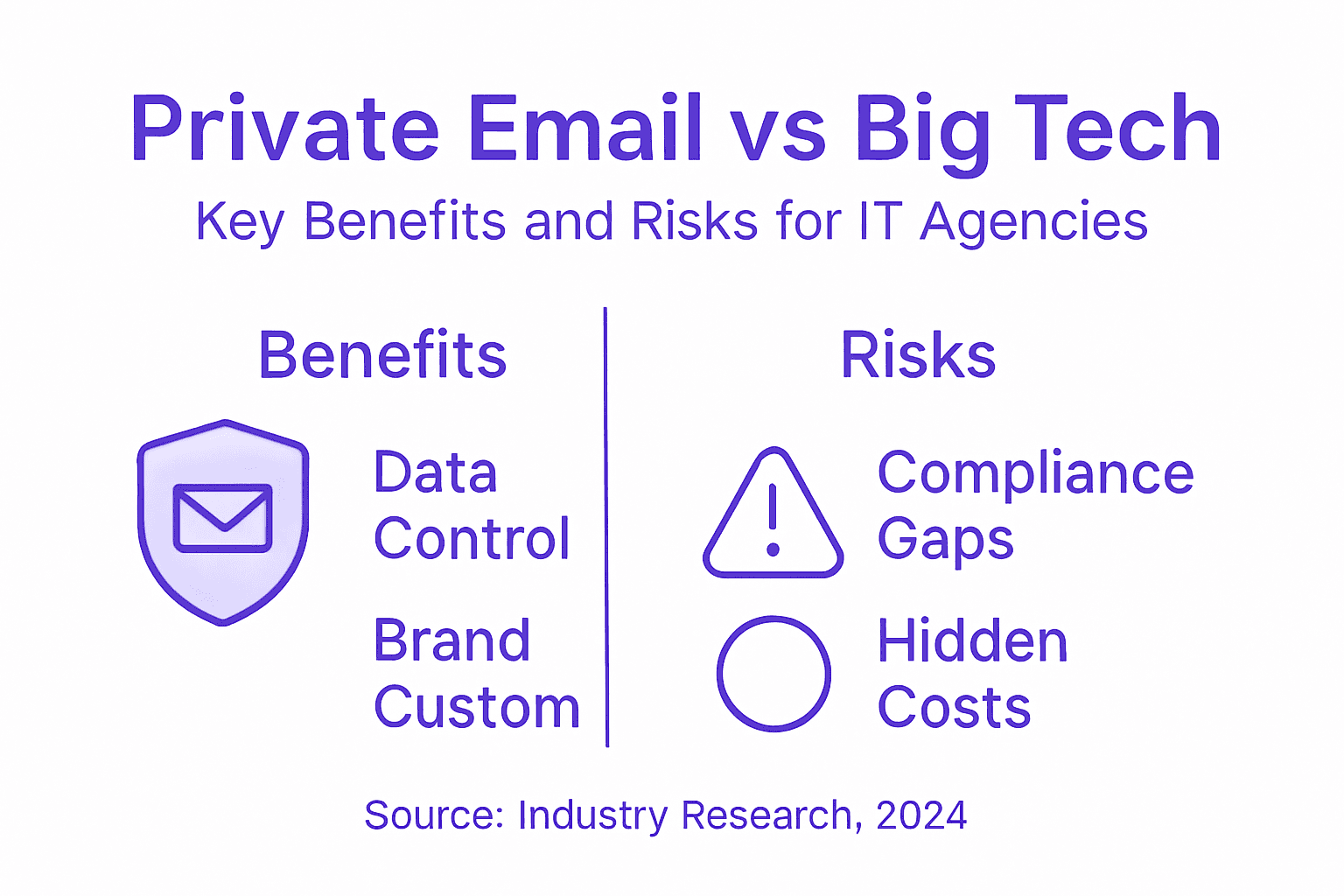
Here are common risks of big tech email platforms versus potential private hosting advantages:
| Risk Area | Big Tech Email | Private Email Hosting |
|---|---|---|
| Data Privacy | Scanned for ads | Not scanned for ads |
| Migration Ease | Hard to migrate away | Flexible migration options |
| Service Customization | Standardized features | Highly customizable |
| Regulatory Compliance | Generic global standards | Tailored to client needs |
Pro tip: Calculate your total cost of ownership, including hidden migration and compliance expenses, when comparing email hosting solutions.
Take Full Control of Your Email Hosting with AtrioMail
The article “Why Private Email Hosting Matters for IT Agencies” highlights the growing need for privacy, brand control, and operational freedom that mainstream providers cannot deliver. If you are an IT agency or reseller struggling with vendor lock-in, limited customization, or concerns about data privacy and compliance, AtrioMail offers a powerful solution tailored precisely to these challenges. Our platform empowers you with a white-label, fully managed email hosting service that puts your brand and client needs first, eliminating the risks of big tech ecosystems while boosting profit margins and scalability.
With AtrioMail you get automated DNS validation, seamless API integration, and a scalable pricing model that grows with your business. Enjoy features like dedicated domain management and advanced client support tools that enable you to build a unique, trusted email platform for your clients. Discover how IT agencies are reclaiming control and elevating their businesses by choosing AtrioMail’s enterprise-grade platform.
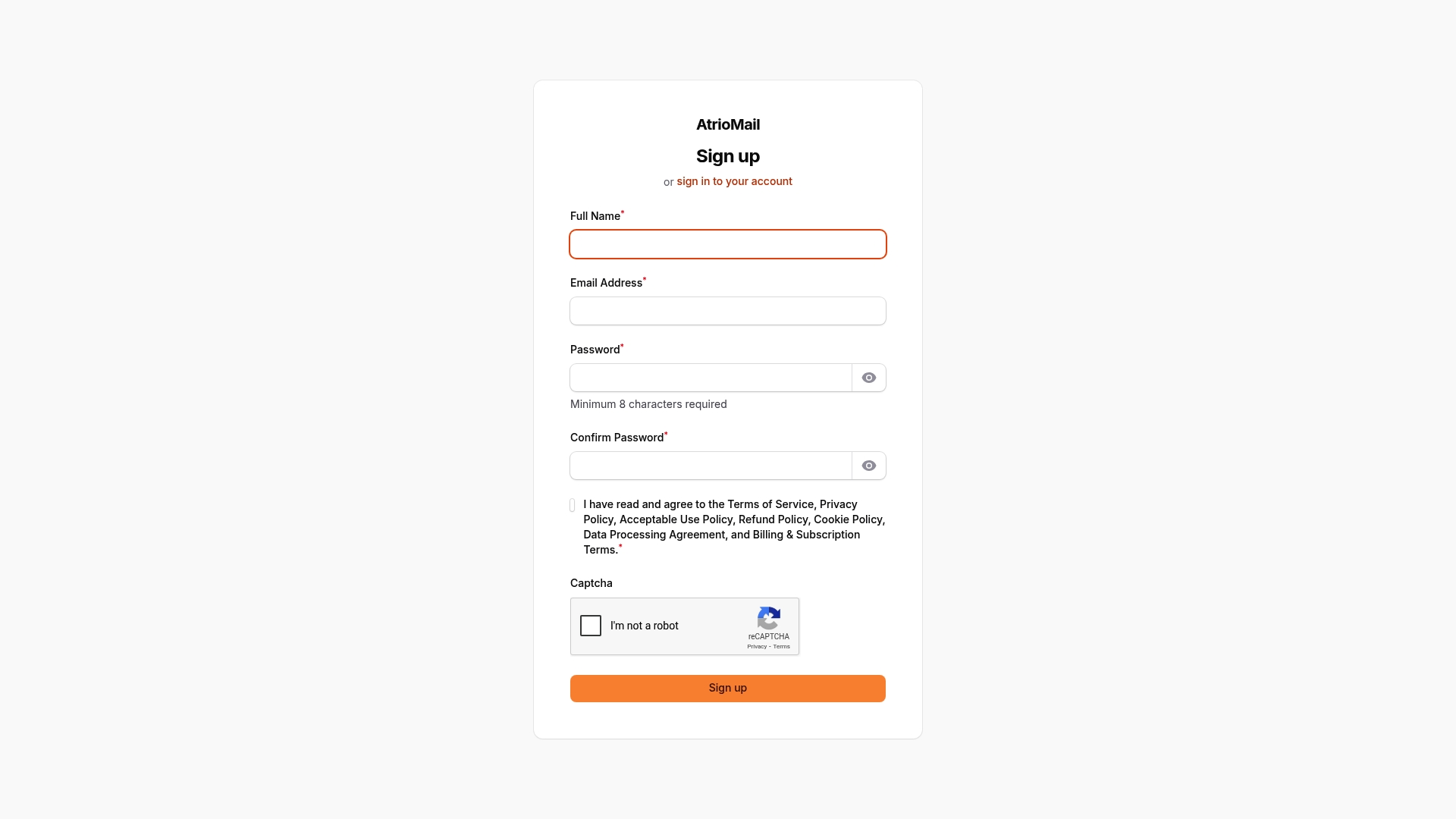
Ready to break free from generic email hosting and deliver true value through your own branded solution? Visit AtrioMail today and see how our white-label hosting can transform the way you serve clients. Secure your competitive advantage now with a platform built for agencies that demand privacy, control, and growth.
Learn more about our solutions at AtrioMail and start your journey toward email independence.
Frequently Asked Questions
What is private email hosting?
Private email hosting is a specialized email service designed to enhance security, control, and privacy for organizations. Unlike mainstream providers, it focuses on protecting sensitive communications and operates on dedicated servers with comprehensive security protocols.
How does private email hosting enhance data security?
Private email hosting enhances data security through advanced measures like end-to-end encryption, zero-knowledge architecture, multi-factor authentication, and regular compliance checks, ensuring that unauthorized access is prevented and confidentiality standards are maintained.
What are the advantages of white-label email hosting compared to mainstream providers?
White-label email hosting offers full brand control, independent pricing structures, and deeper client relationship management. Unlike mainstream providers, it allows for comprehensive customization, enabling IT agencies to deliver email services that align with their brand identity.
What compliance considerations should IT agencies be aware of with email hosting?
IT agencies must navigate global data protection regulations (like GDPR and CCPA), jurisdiction-specific compliance requirements, and maintain detailed documentation on data handling. Establishing a robust compliance framework is essential to protect client data and mitigate legal risks.