
Managing dozens of client inboxes can quickly spiral into confusion without the right systems in place. As american agencies and international IT service providers juggle expanding portfolios, the need for advanced white-label email management has never been greater. With over 60 percent of professional teams reporting email overload, mastering multi-client email handling not only safeguards your brand identity but also transforms operational efficiency for every client you serve.
Table of Contents
- Defining Multi-Client Email Management
- Types of White-Label Email Solutions
- Core Features And Automation Tools
- Branding, Privacy, And Control Advantages
- Pricing Models, Risks, And Common Pitfalls
Key Takeaways
| Point | Details |
|---|---|
| Multi-Client Email Management | It involves sophisticated strategies to manage multiple email accounts, enhancing productivity and maintaining clear communication boundaries. |
| White-Label Email Solutions | These platforms empower agencies with flexible branding and operational control, enhancing their ability to offer comprehensive email services. |
| Core Features and Automation Tools | Advanced email management software streamlines workflows through automation, improving response consistency and client engagement. |
| Pricing Models and Risks | Navigating diverse pricing structures is essential for sustainability, requiring adaptive strategies to meet client needs and mitigate risks. |
Defining Multi-Client Email Management
Multi-client email management represents a sophisticated approach to handling multiple email accounts simultaneously, designed specifically for agencies and professional service providers who manage communications across diverse client portfolios. Strategic email handling techniques have become increasingly critical as businesses navigate complex communication landscapes that demand precision and efficiency.
At its core, multi-client email management involves systematic strategies for organizing, prioritizing, and responding to email communications from multiple separate client accounts. This approach goes beyond simple inbox management, requiring advanced tools and behavioral practices that enable professionals to maintain high communication standards without experiencing cognitive overload. Key components typically include robust sorting mechanisms, automated filtering systems, collaborative inbox features, and privacy-preserving communication protocols.
The primary objectives of multi-client email management center on enhancing productivity, maintaining clear communication boundaries, and preventing information fragmentation across different client streams. Academic email management systems highlight the importance of integrated platforms that support sorting, automated responses, and collaborative workspace functionalities. Successful implementations often leverage specialized software that can seamlessly segregate client communications, track response times, and provide comprehensive oversight without manual intervention.
Pro tip: Implement a color-coding or tagging system across your email management platform to instantly visually distinguish between different client accounts and prioritize communications effectively.
Types of White-Label Email Solutions
White-label email solutions represent a diverse ecosystem of technological platforms designed to empower agencies with flexible, branded communication infrastructure. White-label email software encompasses multiple specialized categories that address distinct operational requirements, enabling businesses to deliver comprehensive email services without extensive in-house development.
The primary categories of white-label email solutions include email warmup platforms, marketing platforms, email verification tools, and infrastructure providers. Email hosting solutions can be strategically classified into three primary models: reseller hosting platforms, backend infrastructure providers, and specialized outreach tools. Each solution type offers unique advantages, from improving sender reputation and deliverability to supporting complex multi-account management and advanced automation capabilities.
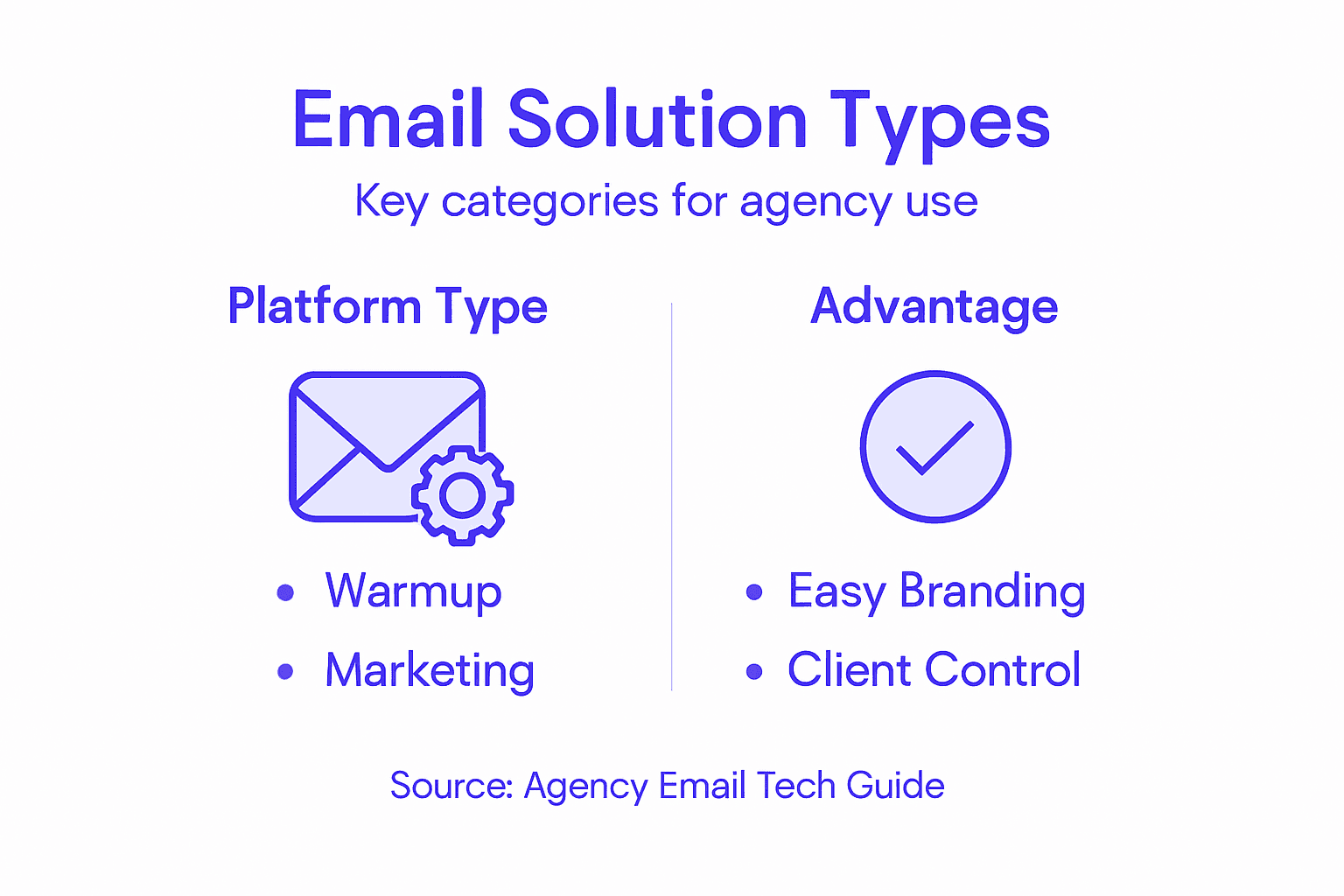
These solutions differ significantly in their technical complexity, control mechanisms, and client management features. Reseller hosting platforms typically provide complete mailbox management under agency branding, while infrastructure providers focus on delivering core components like SMTP servers and robust API integrations. Marketing-oriented platforms emphasize campaign management, list hygiene, and automated communication workflows, giving agencies unprecedented flexibility in designing their email service offerings.
Here’s a summary comparing the main types of white-label email solutions and their agency benefits:
| Solution Type | Technical Complexity | Best Fit Use Case | Distinctive Advantage |
|---|---|---|---|
| Email Warmup Platforms | Moderate | Improving email deliverability | Boost sender reputation efficiently |
| Marketing Platforms | Advanced | Running campaigns and automation | Advanced segmentation and workflows |
| Infrastructure Providers | High | Customizable backend integration | Full control over email delivery |
| Reseller Hosting Platforms | Moderate | Branded mailbox management | Allows client-facing white-label mail |
| Email Verification Tools | Low | List hygiene and validation | Reduces bounce rates and spam issues |
Pro tip: Conduct a comprehensive feature comparison across different white-label email solution types, prioritizing platforms that offer seamless API integration, scalable pricing models, and robust multi-client management capabilities.
Core Features and Automation Tools
Multi-client email management platforms have evolved to offer sophisticated email management software that transform how agencies handle complex communication ecosystems. These advanced tools integrate multiple powerful features designed to streamline workflow, enhance productivity, and maintain exceptional client communication standards across diverse email environments.
The core features of modern email management platforms typically encompass a comprehensive suite of automation and collaboration tools. Email management solutions provide critical capabilities such as shared collaborative inboxes, automated email routing, intelligent tagging and labeling systems, customizable email templates, and AI-powered prioritization mechanisms. These functionalities enable agencies to dramatically reduce manual processing time, improve response consistency, and maintain high-quality communication standards across multiple client accounts.

Advanced automation tools have become particularly transformative for agencies managing complex email workflows. Key capabilities include automated email sequences, intelligent drip campaigns, real-time performance analytics, and seamless integration with customer relationship management (CRM) and calendar systems. These tools not only reduce administrative overhead but also provide unprecedented insights into communication patterns, client engagement metrics, and overall team performance, allowing agencies to continuously optimize their email management strategies.
The following table highlights key automation tools and their primary business impacts for agencies managing multiple clients:
| Automation Tool | Main Function | Business Impact |
|---|---|---|
| Shared Inboxes | Team collaboration | Faster, more consistent responses |
| AI-Powered Tagging | Smart email categorization | Reduces manual sorting and errors |
| Automated Sequencing | Follow-up scheduling | Boosts engagement and client satisfaction |
| CRM Integration | Contact sync and tracking | Centralized client relationship records |
| Performance Analytics | Track communication stats | Enables data-driven process improvements |
Pro tip: Implement a robust email management platform with granular permission settings and comprehensive activity tracking to ensure consistent communication quality and maintain clear accountability across your team.
Branding, Privacy, and Control Advantages
White-label email solutions offer agencies unprecedented opportunities to maintain comprehensive brand control and privacy protection through advanced email signature management technologies. These sophisticated platforms enable businesses to create consistent, professionally branded communication channels that reinforce organizational identity across multiple client interactions while preserving critical data security standards.
Multi-client email management systems provide robust privacy controls that go far beyond traditional email platforms. These advanced solutions enforce granular access permissions, implement sophisticated data encryption protocols, and generate comprehensive audit trails to maintain confidentiality. Agencies can now establish precise communication boundaries, control information flow, and ensure that each client’s sensitive data remains completely segregated and protected from unauthorized access.
The branding advantages of white-label email solutions extend well beyond simple logo placement. Modern platforms allow agencies to customize every aspect of email communication, from signature templates and domain configurations to communication tone and visual design elements. This level of customization ensures that each client interaction feels native and professionally aligned with the agency’s unique brand identity, creating a seamless and cohesive communication experience that builds trust and reinforces brand perception.
Pro tip: Implement a comprehensive email management strategy that includes regular security audits, dynamic permission management, and consistent branding guidelines to maximize both client trust and operational efficiency.
Pricing Models, Risks, and Common Pitfalls
White-label email service providers must navigate complex multi-client pricing models that balance operational sustainability with client value propositions. These pricing strategies typically encompass per-user, per-mailbox, tiered, and usage-based approaches, each presenting unique challenges in maintaining profitability while delivering competitive service offerings.
Dynamic pricing strategies demand sophisticated risk assessment and continuous market adaptation. Agencies frequently encounter operational risks such as misaligned pricing structures that fail to reflect actual service costs, customer usage patterns, or market dynamics. The most successful providers implement adaptive pricing frameworks that can dynamically adjust to changing client needs, technological developments, and competitive landscapes while maintaining transparent and predictable billing mechanisms.
Navigating the intricate landscape of multi-client email management requires a nuanced approach to pricing and risk mitigation. Critical considerations include developing granular pricing tiers that accommodate diverse client scales, implementing robust usage tracking mechanisms, and creating flexible contracts that protect both service providers and clients. Agencies must anticipate potential revenue leakage points, design scalable pricing models that incentivize client growth, and maintain sufficient margin protection against potential overuse or service exploitation.
Pro tip: Develop a flexible pricing model with clear usage thresholds, implement real-time usage monitoring, and create transparent overage policies to maintain predictable revenue streams and client satisfaction.
Take Control of Multi-Client Email Management with AtrioMail
Managing multiple client email accounts demands precision, robust privacy controls, and seamless branding to stand out in today’s crowded market. The article highlights key challenges such as preventing information fragmentation, maintaining high communication standards, and implementing effective white-label solutions with scalable pricing models. AtrioMail directly addresses these pain points by offering a fully managed white-label email hosting platform that empowers agencies and resellers with complete brand control and automation of critical DNS validations. Enjoy freedom from large ecosystems like Google and Microsoft while increasing profit margins and operational efficiency.
AtrioMail’s scalable, usage-based pricing combined with easy API integration lets you build customized email platforms without the headache of infrastructure management. Its secure, privacy-focused environment helps maintain clear communication boundaries and protects sensitive client data exactly as recommended in multi-client email management strategies. Start elevating your agency’s brand and revenue through advanced automation, domain management, and tailored client support tools.
Discover how to streamline your white-label email services now.
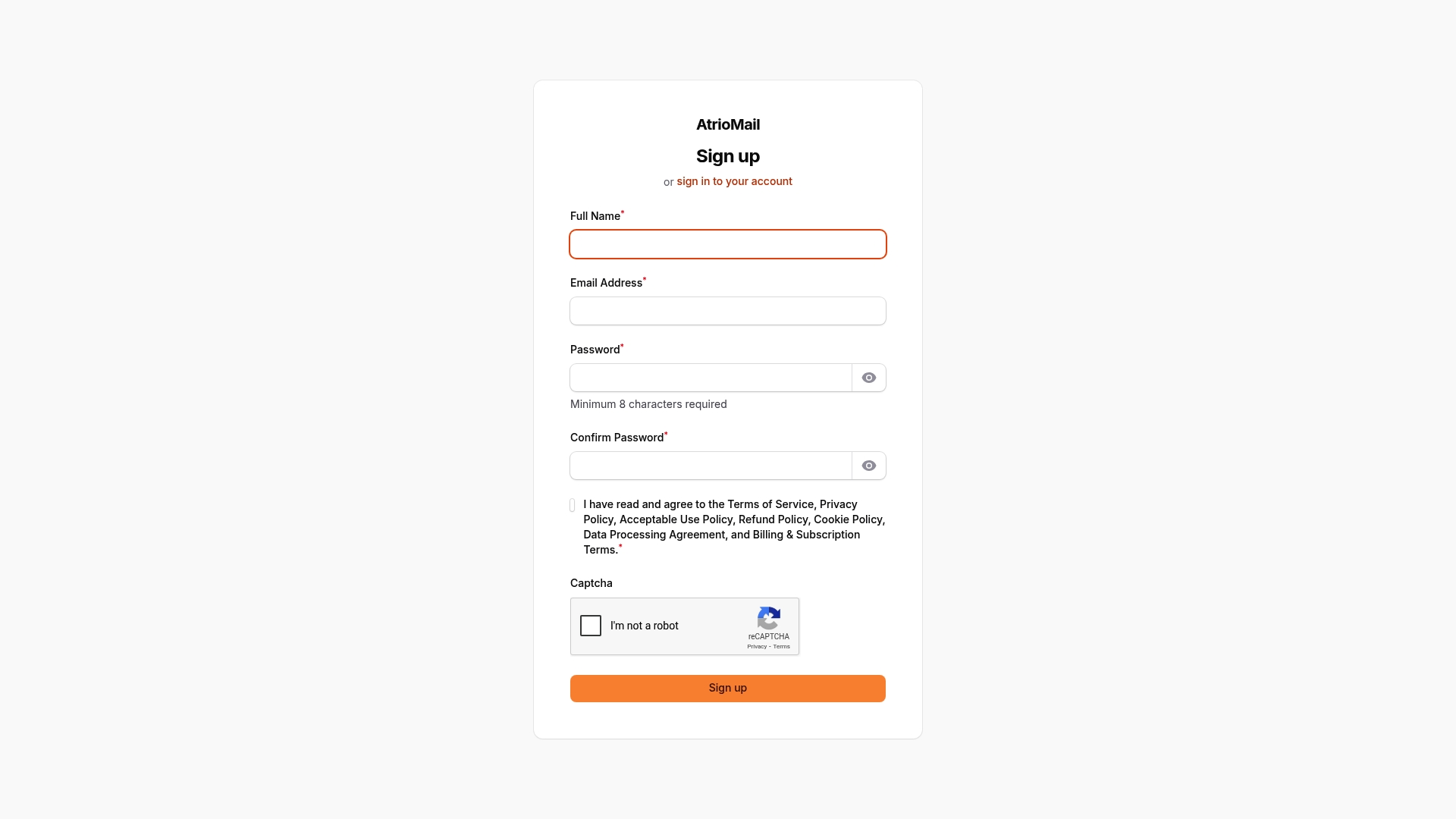
Unlock full control over your multi-client email solutions today. Visit AtrioMail Signup to get started, streamline your operations with managed email hosting, and explore how to scale your agency’s offerings with confidence and privacy at the core.
Frequently Asked Questions
What is multi-client email management?
Multi-client email management is a structured approach that enables agencies and professional service providers to manage multiple email accounts simultaneously. It involves organizing, prioritizing, and responding to communications from different client accounts while maintaining productivity and communication standards.
What are the benefits of using white-label email solutions for agencies?
White-label email solutions allow agencies to offer branded email services without extensive development costs. They help improve sender reputation, deliverability, and provide the flexibility to manage complex communication strategies across various clients.
How can automation tools enhance email management for agencies?
Automation tools streamline workflows by enabling features such as automated email routing, intelligent tagging, and performance analytics. These functionalities reduce manual processing time and improve communication consistency, allowing agencies to respond to clients more effectively.
What should agencies consider when selecting a pricing model for email services?
Agencies should evaluate pricing models that balance sustainability with client value. Important factors include developing granular pricing tiers, implementing usage tracking for accurate billing, and maintaining flexible contracts that protect both parties from potential revenue leakage.